
Water Damage Drywall Repair in Conroe, TX | Conroe Drywall Co.
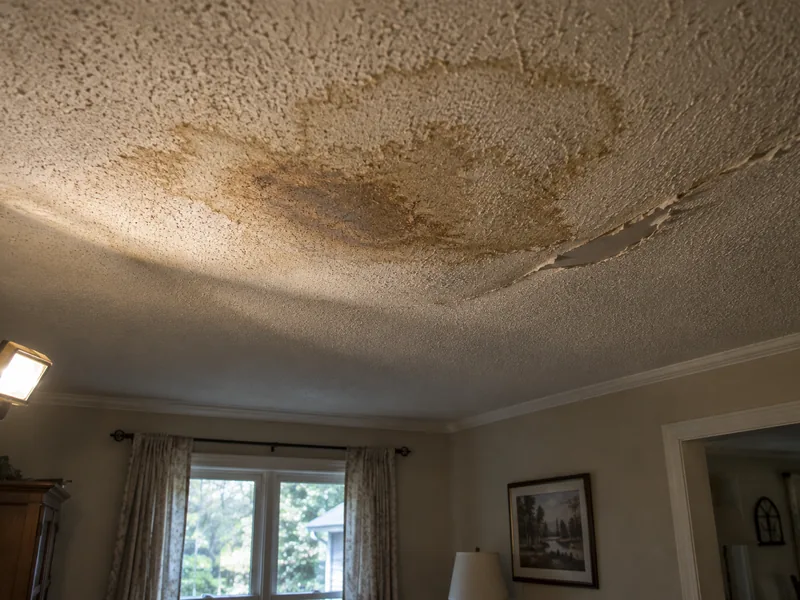
Conroe Drywall Co. has provided water damage drywall repair to homeowners and property managers in Conroe, Texas for over 15 years. Even after a wall has been dry for weeks, the damage can remain in board that swelled as it absorbed water, buckled away from the studs behind it, or softened until the gypsum core crumbles under your thumb. On a ceiling, the same water leaves brown staining and sagging, separates the paper face from the gypsum core, opens taped seams between panels, and rusts the screws until their heads push through the finish.
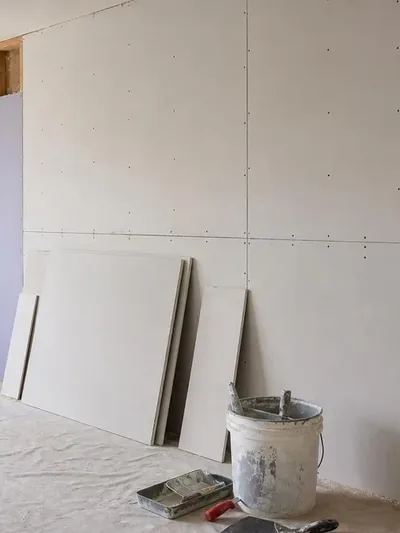
Sound, firmly bonded board can stay, while softened, swollen or contaminated board has to come out. The first step is determining how much of your wall falls into each category. We remove the damaged board, meter the exposed framing, and leave the wall open until the wood reads dry. New board is installed to ASTM C840, the standard that governs how drywall is hung and finished, then filled with setting-type compound and texture-matched along the edges.
Finding the leak, drying the structure and addressing active mold are jobs for other trades. Removing an entire textured ceiling and painting the finished repair are services we handle separately and quote on their own. Across Willis, Montgomery, the Lake Conroe communities and the surrounding county, we leave you with sound board beneath the finished surface. Call us at (346) 706-5743 or use the quote form for a free on-site estimate and a written price.
Get A Free Estimate
What Water Does to Gypsum Board
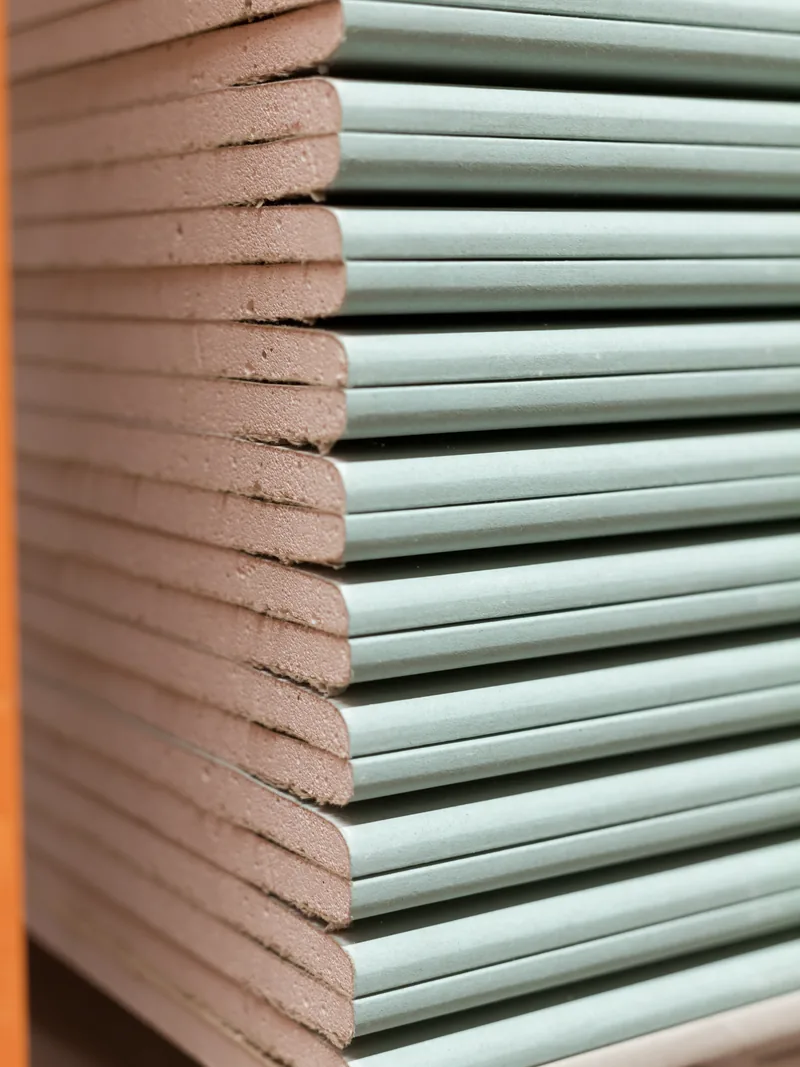
Gypsum board has a mineral core cast between two sheets of heavy paper. The gypsum core gives the board its thickness and fire resistance, while the paper faces add strength and create the smooth surface your paint sits on. The paper is not glued to the core. As the wet gypsum sets, crystals grow into the paper fibers and lock the two together. Water damages each part differently: the core softens and loses the internal bond that holds it together, while the paper separates from the gypsum beneath it. That is why water damaged drywall appears as a brown stain in one room, a bowed wall in another, and a peeling surface in a third.
It also explains the point most owners get wrong: a wall can feel dry to your hand while the sheet itself is still damaged, because the surface dries first and the core behind it holds the damage. Walls are usually 1/2 inch board, while ceilings use 1/2 or 5/8 inch board depending on the spacing of the framing. In every case, water enters fastest through cut edges and fastener holes, where the paper does not cover the mineral core. Once that core has broken down, drying does not restore it, which is different from board that got damp but remains firm.
Swelling, Buckling and a Crumbling Core
Three changes tell you a sheet has taken on water, and you can see or feel each one without a tool. Swollen drywall has absorbed enough water for the core to expand, usually first along the bottom edge of a wall where standing water reaches, and sometimes enough at a seam to open the tape. Buckled drywall no longer sits flat and bows outward between the screws that hold it to the framing. Crumbling drywall has lost the bond inside its core and breaks away as powder.
That last sign settles the question by itself, because a powdering core will hold neither a screw nor a coat of joint compound. Press your thumb into the board: sound drywall pushes back, while spent board dents and stays compressed.
When the Paper Face Lets Go
The drywall paper face provides much of the sheet’s strength because the mineral core is brittle on its own. Water softens the crystal bond between them, allowing the paper to lift away from the core beneath it. Once that separation happens, filling and sanding will not bring the wall back to flat because the finish no longer has a solid surface to hold onto. This is the type of water damage most often missed. A slow leak usually leaves a blistered area about the size of a dinner plate, and tapping it produces a hollow sound compared with the surrounding board. Repainting afterward is handled through our priming and painting service.
Seams, Corner Bead and Fasteners After a Soak
Joints and hardware fail in their own ways, and that damage is what makes a repair extend farther than it first appears. Drywall seams are bedded in compound beneath paper tape, and when the compound gets wet, the tape releases from the wall. If the corner bead, the strip that forms the straight edge where two walls meet, is paper-faced, it swells with moisture and the corner loses its straight line.
Steel screws rust, and that rust is not just a surface problem: the stain keeps bleeding through ordinary primer and the paint above it, even months after the wall has dried. Because the screws follow framing spaced at 16-inch centers, the repair extends back to the next stud instead of stopping at the visible stain.
Ceilings, Where It Gets Heavy Before It Gets Obvious
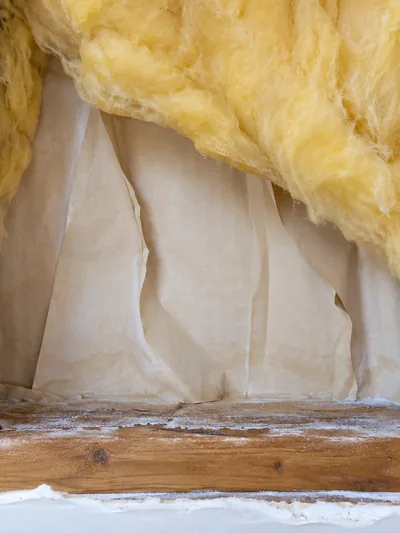
Yes, we repair water damaged ceilings. A ceiling is where water damage becomes a safety issue rather than just a finish problem, because the top of the sheet is hidden and water can collect there for days after the leak stops. Ceiling board is often 5/8 inch where framing runs at 24-inch centers, and wet gypsum is heavy; if the blown-in insulation above it is also wet, that added weight bears on the same sheet. So ceiling water damage that shows as a sag or bulge is a sign of load, not just a stain. Do not stand underneath it or poke it to release the water.
How Water Damage Drywall Repair Differs From an Ordinary Patch
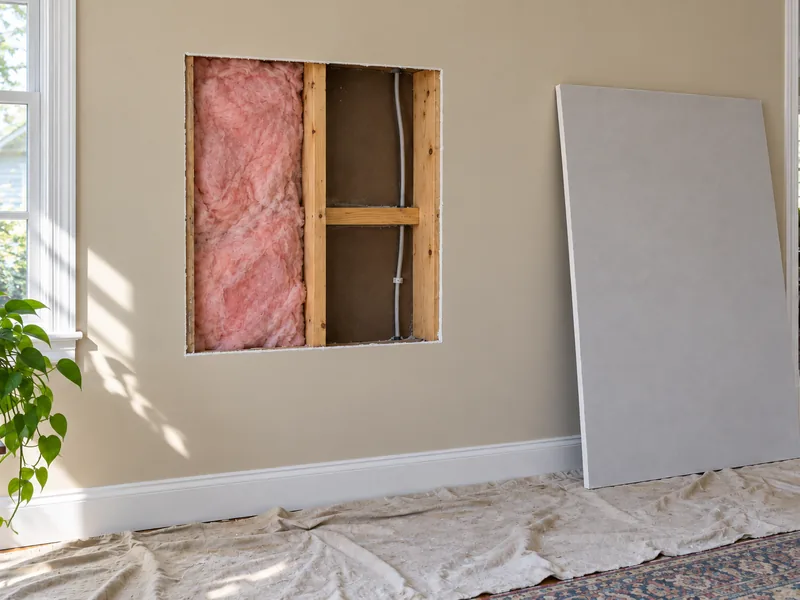
Our drywall repair service handles dry damage such as holes, dents, nail pops and cracks. Water damage drywall repair starts differently because the stain you see on the surface does not show the full extent of the problem. The wet area is almost always larger than the stained area, so we size the opening by where the moisture actually stops rather than by the visible mark alone.
That changes three parts of the job. We cut beyond the discoloration, inspect what is behind the sheet instead of replacing only its face, and return for a second visit rather than finishing everything in one trip. Behind the gypsum board is a wall cavity that contains framing and often batt insulation, and both stay wet long after the surface looks dry.
Why the Cut Runs Wider Than the Stain
Gypsum board pulls water sideways and upward through its core, much like the corner of a paper towel drawing water out of a puddle. This movement is called capillary wicking, and it is why the damp edge extends beyond the visible discoloration, sometimes by a significant distance.
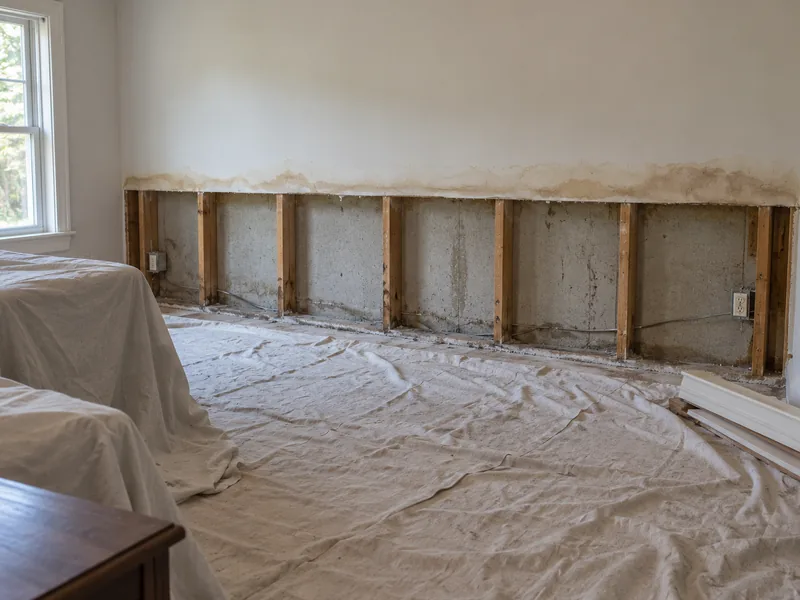
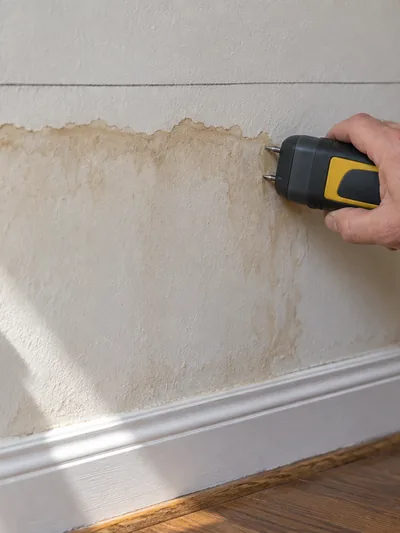
We set the cut line at the first framing member beyond the damp line, not at the stain, and with framing set on 16-inch centers, that member sits a predictable distance away. A moisture meter shows us where the damp line ends. Cutting only to the visible stain is the most common reason water damaged drywall has to be opened a second time.
Clean Water, Gray Water and Why the Source Changes the Scope
Where the water came from, more than how much there was, usually determines how much board has to come out. A supply line or rain leak is clean water. Water from a dishwasher, washing machine or water heater pan is gray water, while air conditioner condensate is clean at the coil but becomes gray after standing in the pan below it. Anything from a sewer line or ground-water backup is contaminated, which the restoration trade classifies as Category 3.
The Gypsum Association's GA-231 is the industry's own guidance for assessing water-damaged board, and it starts with two conditions: the source has been identified and stopped, and the water is not contaminated. Clean water gives the sheet a chance to dry and remain in place. Contaminated water does not, regardless of what a moisture meter reads, so the cut runs above the waterline rather than at it. That is a flood cut, which means removing everything from 12 to 24 inches above the visible waterline down to the floor, including batt insulation. We remove and replace. We do not clean, sanitize or treat anything.
Verifying the Framing Is Dry Before Anything Closes Up
New board can go up in an afternoon, but the wood behind it holds water long after the surface feels dry to the touch. Fastening drywall over a wet stud means that board will have to come off again, so the wait is what separates paying for water damage drywall repair once from paying for it twice. Drying the structure itself is mitigation work and belongs to a separate trade. We measure the moisture at each visit and wait until the readings show that the wall is ready to be closed.
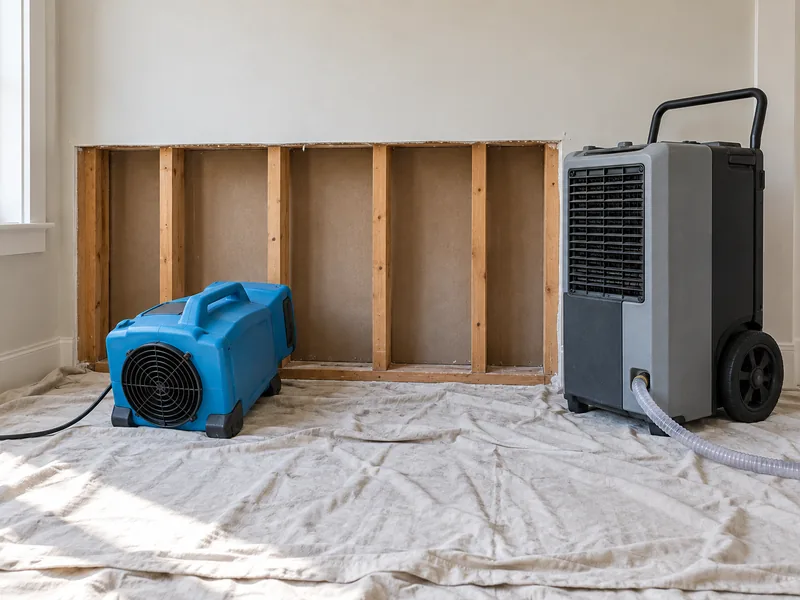
We take the reading from the wood itself, not from the surface: the studs, the plate beneath them and the sheathing behind them. We treat framing at 19 percent moisture content or higher as too wet to close, and we look for readings in the mid-teens before the board goes back on. Your schedule follows the moisture meter, not the calendar.
What a Moisture Meter Actually Reads
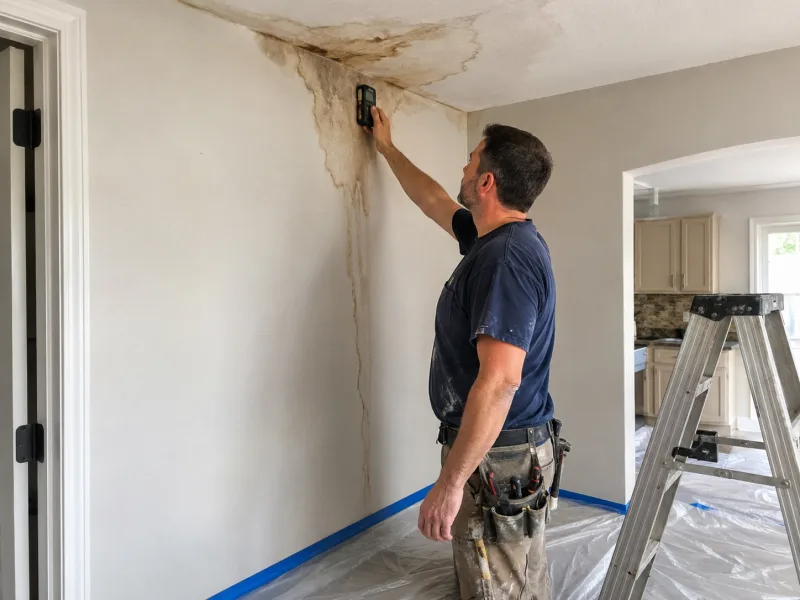
Two instruments answer that question, and each suits a different stage of water damaged drywall work. A pin moisture meter uses two small probes driven into the wood to measure the electrical resistance between them; wet wood carries current more easily, so the reading rises as the wood holds more water. A pinless moisture meter sits flat against the surface and reads a short distance below it without leaving a mark. We use pins on exposed framing and the pinless meter on finished surfaces we do not want to puncture.
The percentage is measured against the wood's own weight once fully dried, not against the size of the stud. Moisture reads highest at the base of the stud, where it meets the bottom plate.
Opening the Cavity and Looking at What Is In It
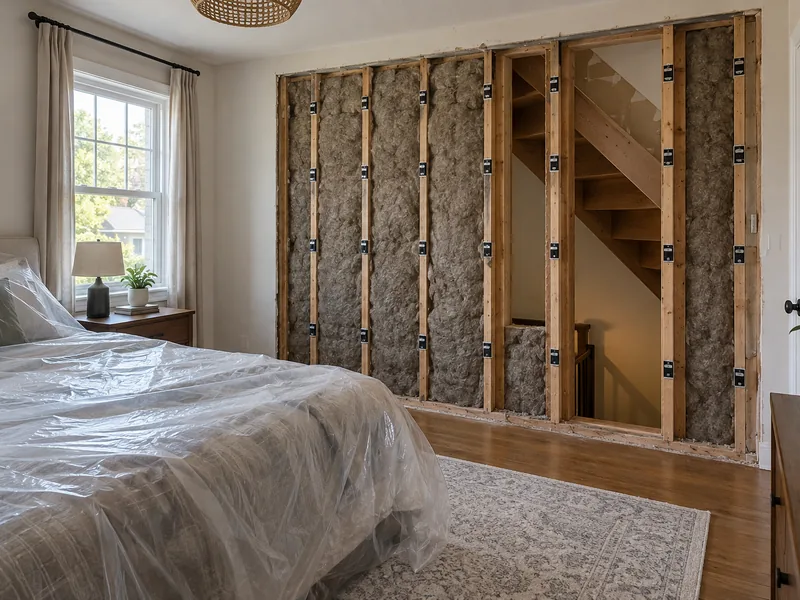
With the board off, we inspect the stud bay instead of assuming what is behind it. Batt insulation depends on its loft, or the air trapped within its thickness, to insulate the wall. Once soaked, the batt mats down, loses that insulating value, and holds water against the framing beside it. Because a soaked batt rarely returns to its original thickness, we remove it; batt runs about R-13 in a 2x4 wall and R-21 in a 2x6 wall, and we quote its replacement under drywall insulation.
We also check the edge of the subfloor where the wall meets the floor and report any area that still reads wet.
Why a Conroe Wall Takes Longer to Read Dry
Wood dries by releasing water into the surrounding air, and air already heavy with moisture takes less. Conroe has a humid subtropical climate, so for much of the year a wall is drying into moisture-laden air, which means the same wall in the same condition takes longer to read dry in August than it does in January.
The dew point is the temperature at which air begins releasing the moisture it holds, and summer dew points around Houston commonly sit in the low seventies. From about May through September, that turns the usual advice on its head: opening windows and running a fan brings more outdoor moisture into the cavity. A closed, air-conditioned house dries an open wall faster, while the moisture meter determines how far apart the follow-up visits need to be.
How a Water-Damage Rebuild Runs Across Two or Three Visits
Water damage drywall repair follows a fixed order from start to finish, and the condition of the wall sets that order, not our schedule. The framing behind the board has to dry before anything covers it again, so the job is divided into work before the drying period and work after it. Conroe Drywall Co. follows the five steps below on every job:
-
1
Assess and Meter the Damage
We come to your house and inspect the wall in person at no charge, because a phone description cannot show how far the water traveled. We take moisture meter readings along the damp line to determine how much board needs to come out, and nothing is cut until you have a written scope in hand.
-
2
Protect the Room and Remove Unsound Board
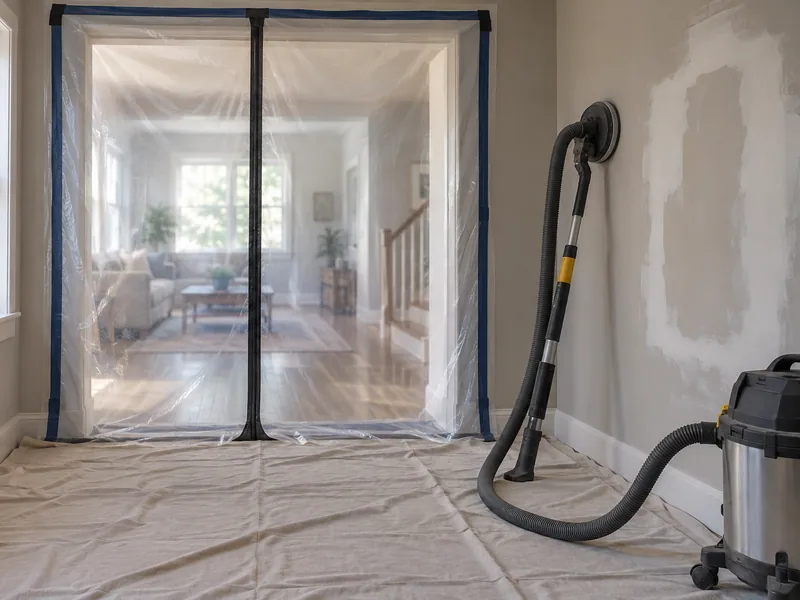
Before any cutting starts, we cover the room. Dust containment means floors, furniture and doorways are protected with plastic sheeting, and HVAC returns are covered so cutting dust does not travel through the ductwork into other rooms. Then we remove the damaged board. We make a square cut with the edges landing on the studs or joists behind it, which sit about 16 inches apart in a wall and 24 inches apart in a ceiling, so the replacement sheet has solid wood to fasten to. If an edge falls in open space, we add a backing block behind it; an unbacked butt seam is the most common place for a repair to crack later. The opening we leave is larger and cleaner than the damage you first reported, and we sweep the room broom-clean before we leave.
-
3
Leave the Cavity Open Until the Framing Reads Dry
Water-damage rebuilds usually require 2 to 3 visits because the coats dry between visits. During that wait, the wall stays open with the studs exposed, and we schedule the return from the moisture meter reading rather than the calendar. You can help the cavity dry by keeping the air conditioning running and the house closed. Drying the structure itself, where needed, is handled by a separate trade.
-
4
Install and Finish Replacement Board
The replacement board is chosen for the room instead of simply matching the sheet we removed. We install moisture resistant drywall in rooms where the air stays damp, though no gypsum panel is waterproof; specifying it room by room is part of our moisture-resistant drywall service. We fasten the sheet to the framing at the ASTM C840 spacing, roughly 12 inches apart on ceilings and 16 on walls, then tape the joints and build them up in coats. Setting-type compound hardens by chemical reaction on a fixed clock instead of drying by evaporation, so it can be recoated sooner and shrinks less. Three coats is usual, with each one feathered wider than the last.
-
5
Match Texture, Prime and Inspect
Texture matching is done wet, working across the boundary where the patch meets the surrounding wall so the same pattern carries across the joint. Every square inch of fresh compound and new paper is primed, because bare compound absorbs paint differently and leaves the finish patchy against the rest of the wall. We walk the repair with you afterward under the room's own light, because low light across a wall is what reveals a patch. Retexturing an entire room and the finish painting afterward are separate services that we quote on their own.
To book that first visit, call us at (346) 706-5743 or send the quote form.
Where Water Damage Drywall Repair Stops and Another Trade Starts
Our part of a water-damaged wall is the drywall itself: removing the ruined gypsum board, hanging new sheets, taping and finishing the joints, and matching the surrounding texture. Three jobs come before ours, and they need to happen in order: stop the water at its source, dry the soaked structure behind the wall, and address anything growing on a damp surface. If your next call needs to be to one of those trades instead of us, we will tell you.
Stopping the Water Is Somebody Else's Job, and It Comes First
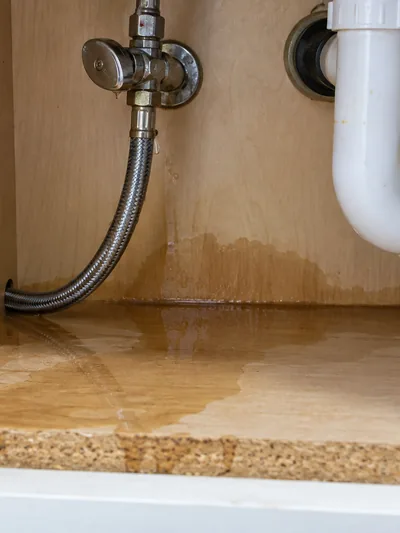
The trade you need depends on which line failed. A plumber handles a supply or waste line, a roofer handles anything that passes through the roof, and an HVAC company handles the condensate drain line and the pan beneath it. Stopping the leak at its source is a separate trade. We do not guess which of the three it is, and until one of them stops the water, installing new board over an active leak means paying for the same repair twice.
Mold Remediation Is Its Own Licensed Trade, and It Is Not Ours
Texas treats mold work as a separate trade. The Texas Department of Licensing and Regulation licenses mold assessors and remediators once an affected area reaches 25 contiguous square feet, and we do not hold that license or perform mold work. Active mold or the moisture source itself may need another qualified trade first. Our work begins with removing the ruined board and installing new board once the framing reads dry.
Why Choose Conroe Drywall Co. for Water Damage Repair
What sets us apart on water damage repair is what we refuse to rush. A wall can look finished before it is truly dry, and those are two different things. We would rather make a third visit than leave you with a patch that has to be opened again.
Five things follow from that approach, and they are what you are actually paying for:
- No wall is closed until the framing behind it meters dry.
- You receive a written scope before any cutting starts, with the price broken out line by line instead of rolled into one figure.
- We match the finish at the edge of the repair so you are not left staring at a visible rectangle.
- over 15 years of drywall work in Conroe and Montgomery County.
- We are an insured drywall contractor and can send our certificate of insurance before work begins.
Our on-site estimates are free, and financing is available for larger projects. Call us at (346) 706-5743 or request an estimate, and we will walk your damage and put the scope in writing.
What Water-Damage Drywall Repair Costs
We price a water-damage rebuild based on how much wet board and framing the crew finds once the wall is open, which is why an accurate price cannot be given over the phone. Most drywall repairs in Conroe run $250 to $1,800, with the average job landing near $600. If a room needs new board instead of a patch, the pricing is measured by square footage. New installation runs about $2.00 to $3.50 per square foot installed.
Those figures reflect the range for this market rather than a fixed rate card, and the on-site inspection is what turns that range into a firm price. We walk the damaged area, check how far the damp line extends, measure the square footage that needs to come out, and put a written scope together. The on-site estimate is free.
What Affects the Price
Repair size is based on the full damaged area, not just the visible stain, and that is the biggest factor in the price. The same square footage costs more to repair on a ceiling than on a wall.
If the framing stays wet, we make additional return trips, and each visit adds labor to the price. Soaked batt insulation behind the board is removed and replaced, while a hand-applied texture costs more to match than a sprayed one. Height and access matter too, because working in a two-story entry is different from working in a hallway.
Repair or Replace the Whole Wall
A small, isolated wet area costs less to patch, and that is usually the right approach. Once the damage reaches a certain size, the math changes because a standard sheet of gypsum board is 4 feet by 8 feet, and replacing one full sheet leaves fewer seams to finish and hide than making three separate patches close together.
A few conditions usually tip the choice toward replacement. If the damage runs along the bottom of several stud bays, the whole sheet comes out. Several seams close together are harder to finish cleanly than one continuous plane, and a texture that is difficult to match is another reason to carry the new board to a corner, where the transition can disappear at the break. When either approach makes sense, the written scope lists both options with a price beside each.
Call us at (346) 706-5743 or use the quote form, and we will look at the damage and give you the price in writing.
Rain, Humidity and the Water That Reaches a Conroe Wall
Conroe sits in the East Texas Piney Woods, where the humid subtropical climate brings warm, moisture-heavy air through much of the year and roughly 51 inches of rain. Water reaches a wall here in two main ways: weather drives it in from outside, while the equipment cooling your house removes moisture from the indoor air. Neither problem is limited to one season. Rain falls throughout the year, and the air conditioner works hardest during the hottest, driest stretches, so calls for water damage drywall repair come in across the calendar instead of clustering after one bad week.
Rain, Roofs and the Slow Leak Nobody Sees
A long, soaking rain finds the small openings in a roof or wall, including metal flashing at a joint, a roof vent or pipe penetration, or the head of a window. Once water gets past that opening, it travels along the framing inside the wall cavity, following the top plate or a stud until something stops it.
That path is why water damaged drywall rarely shows a stain directly below the entry point, and why a leak that appears only during rain points to the exterior of the house. After a wet week, check ceiling corners and the wall below each window. Repairing the roof itself is a roofer's job.
The Attic Air Handler and the Water It Makes
An air conditioner cools your house partly by pulling moisture from humid air, and on a humid day the indoor unit can produce gallons of water. In a slab-on-grade house, built on a concrete pad with no basement, the attic air handler usually sits directly above the finished ceiling.
That water is supposed to leave through the condensate drain line, with a secondary drain pan and float switch behind it. If the line clogs and the pan fills, the water spills into the ceiling instead. A water damaged ceiling from this cause is most common in the hottest months rather than the wettest, because that is when the unit runs longest. Servicing the HVAC equipment is handled by another trade.
Documenting Water Damage Before the Board Comes Out
Once a wet sheet is cut out and removed, the clearest evidence of what the wall looked like goes with it. That makes the few minutes before demolition more valuable than any description written afterward. We document what we find as we go, including moisture readings at the estimate and again before the wall is closed, along with a written description of the board being removed. We do not speak for your insurer or say what your policy will cover. You can also make your own record with your phone, and it costs nothing.
What to Photograph, and When
Start by photographing the stain before anything is touched, with something of known size in the frame, such as a tape measure or door edge, so the image shows the true scale of the damage. Photograph the same wall again once it is open. That second image is the only record of how far the water traveled behind the finish, and it cannot be recreated after the debris is removed.
Before the cavity is cleared, photograph the space between the studs and the insulation inside it. If a ceiling or fixture sits above the water damaged drywall, photograph that as well. The timing matters more than the image quality, and your phone records the date of each photo automatically.
What a Written Scope Puts in Writing
A written scope breaks the work down line by line instead of giving you one price for the entire job. Board, tape and float, texture, and primer each appear separately, so you can distinguish material from labor and see exactly what each part of the job costs.
The line-item scope also records the square footage of board being removed, where the cut line stops, the moisture readings and the dates they were taken, and how many visits the rebuild is expected to require along with what would add another. It documents the work in the order we perform it, using the measurements we took on site.
What Texas Law Says a Contractor Cannot Do With Your Claim
Texas draws a clear line between repairing a property and adjusting the insurance claim tied to it. Section 4102.163 of the Texas Insurance Code bars a contractor who provides, or may provide, contracting services on a property from acting or advertising as a public insurance adjuster on that same claim. House Bill 2102, in force since 2019, makes it an offense for a contractor to pay, waive, absorb, rebate, credit, or offset your deductible. A contractor who offers to handle your claim or make the deductible disappear is showing you how it operates.
Coverage is between you and your insurer, and it depends on where the water came from. Policies commonly treat a sudden and accidental discharge, such as a burst pipe, differently from seepage that has been occurring slowly for months. Water rising from a creek or a lake release falls under a flood policy rather than a homeowners policy. If your property sits in a mapped Special Flood Hazard Area, a substantial damage determination can require work beyond replacing the board. Ask your insurer and the county floodplain office about both before demolition begins. We document what we found and what we repaired; we do not interpret your policy.
Older Conroe Homes: Ceiling Texture and Water Damage
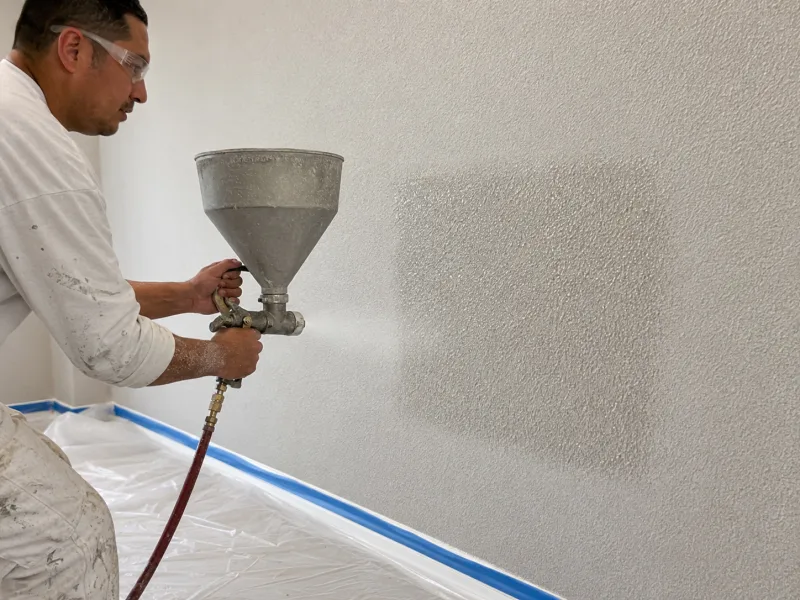
Ceilings in older houses around Conroe are rarely smooth. Most have a finish that was applied wet and left textured, either as a sprayed acoustic texture blown on through a hopper or a hand texture worked across the surface with a trowel or brush. When a water damaged ceiling is cut out and rebuilt, that finish is opened up around the patch, so the material it is made from needs to be identified before work begins rather than afterward. Removing an entire textured ceiling down to flat board is a separate job and belongs to our popcorn ceiling removal service.
Testing Before Anything Is Disturbed
A small piece of the finish is removed first and sent to a laboratory for testing. Texture installed before 1990 can contain asbestos, so we arrange lab testing before any scraping begins and remove only material the results clear as safe. The date that matters is when the texture was installed, not when you bought the house. You wait a few days for the written result. If the result does not clear the material, the ceiling is turned over to the trade regulated by the Texas Department of State Health Services for that work, and we return to rebuild once they are finished.
Matching a Texture That Was Never Sprayed
Skip-trowel, slap brush, and hand knockdown finishes were created by someone moving a tool across the ceiling, so the pattern naturally changes from one end of the room to the other. No machine reproduces that variation. We do the texture matching on this type of finish by hand while it is wet, working it into the surrounding finish until the two read the same, then judging the result under the room's own lamps rather than a work light that flattens the surface.
On a large hand-finished area, the honest expectation is a very close match rather than an invisible one. Retexturing an entire room to match is booked separately as finishing and texturing.

Water Damage Drywall Repair Across Conroe and Montgomery County
Conroe is the county seat of Montgomery County, and the same humid subtropical climate extends across the surrounding county, bringing about 51 inches of rain a year to both lake-side and in-town homes. What changes is the wall in front of you. Older in-town houses and many lake-area homes carry hand texture, while newer subdivisions more often have sprayed finishes and taller ceilings, which changes the reach and equipment more than the skill involved. Your existing finish determines how we close the repair.
The Communities We Cover
Conroe Drywall Co. provides water damage drywall repair in 21 communities across Conroe, Montgomery County, and the surrounding towns.
Conroe Neighborhoods and Communities
- Grand Central Park
- Graystone Hills
- Rivershire
- Stewarts Forest
- Downtown Conroe
- Wedgewood
- West Fork
- Tejas Creek
Surrounding Cities and Communities
- Willis
- Montgomery
- New Caney
- Splendora
- New Waverly
- Cut and Shoot
- Panorama Village
- Grangerland
- Plantersville
Lake Conroe Communities
- Lake Conroe
- Bentwater
- Walden on Lake Conroe
- April Sound
FAQ
Water Damage Questions
Can water damaged drywall be repaired?
Sometimes, and the condition of the board determines that rather than the size of the stain. Drywall that is still firm with the paper face fully bonded can stay in place. Softened gypsum, a lifted paper face, and board soaked by contaminated water all need to come out. We press the board and meter the framing behind it before deciding how far the repair needs to extend.
Does water damaged drywall need to be replaced?
That decision is made sheet by sheet, not room by room, so one damaged sheet does not mean the wall beside it has to come out. A soft core or lifted paper face means the sheet is removed. The same is true for drywall exposed to contaminated water, regardless of what the meter reads afterward, because the issue is what the water carried with it. Once several stud bays are affected, the sheet usually comes out as one piece.
How long does it take for drywall to dry after water damage?
Drywall that needs to come out is replaced rather than dried in place. What has to dry is the framing behind it, and that framing must read under 19 percent before we close the wall. In Conroe, that commonly takes several days once the cavity is open. Opening the windows in summer only extends the drying time, because the outside air carries more moisture than the air already inside.
How quickly can mold grow on wet drywall?
The Environmental Protection Agency puts the drying window at 24 to 48 hours after material gets wet and describes that timeframe as a guideline rather than a rule because conditions vary from one house to the next. That is why wet board is removed quickly instead of being left to dry in place. We remove and replace drywall; we do not find, test for, treat, or remove mold, which is separate licensed work.
Can I paint over water damaged drywall?
No. Paint is only a thin film, so it covers damage without repairing it, and a soft gypsum core continues to deteriorate underneath. A stain-blocking primer keeps a dry stain from bleeding through but does nothing to repair the board itself. A rusted screw head will bleed back through latex primer within weeks. The correct order is board first, then primer, then paint, and we quote the painting separately.
How can you tell if drywall has water damage?
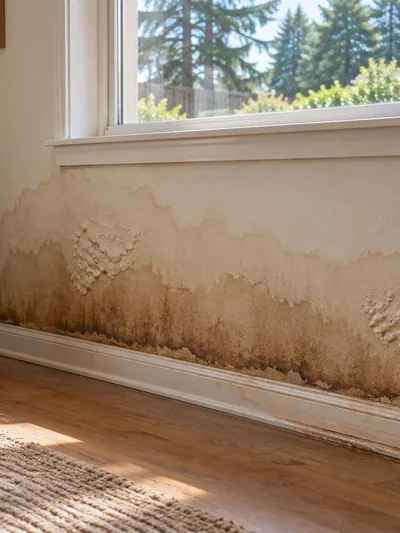
Several signs are easy to check yourself. A brown or yellow stain usually has a ring around the edge where the water stopped, while the wall itself feels soft or spongy where it should be firm or starts to bulge out of plane. You may also see tape lifting along a seam or rust around a fastener head. A musty smell in a closed room points to the cavity behind the surface rather than the finish itself.
Do you repair water-damaged ceilings?
Yes, and ceilings make up a large share of the water damaged drywall we replace in this climate. Ceiling board is heavier, has to be held overhead while it is fastened, and, where the house allows access, we also work from the attic above. Texture matching matters most on a ceiling because light travels across the surface at a low angle.
Get Water-Damaged Drywall Assessed
When you call Conroe Drywall Co. for water damage drywall repair, one of us comes to your home anywhere in Conroe and Montgomery County, takes a moisture meter reading, and gives you a written scope with the price. The visit is free. Call (346) 706-5743, or use the quote form if you prefer to start there.