
Popcorn Ceiling Removal in Conroe, TX | Conroe Drywall Co.
Conroe Drywall Co. has provided popcorn ceiling removal for homeowners and property managers in Conroe, Texas for over 15 years. The bumpy white coating overhead is usually older than the room around it, staying in place through new paint, new floors and new light fixtures. Popcorn ceilings come in several forms, and each one reacts differently once a knife touches it. Sprayed acoustic texture was blown on wet through a hose and dries into loose popcorn-shaped lumps, while hand-applied texture was troweled on and bonds much more tightly. Any acoustic ceiling texture that has been painted since resists water, and a ceiling put up before 1990 goes to a laboratory for testing before anything is disturbed.
Scraping is the short part of the job. We wet the surface with a pump sprayer, remove the softened texture with a broad knife held at a low angle, and seal off the room so the mess stays contained. The longer part is rebuilding the ceiling surface with two or three skim passes of joint compound to build a smooth ceiling, sanding, applying a sealing coat of ceiling primer, and finishing it as either a flat plane or a light texture. GA-214, the Gypsum Association's grading system for how far board is finished, provides the language used to describe a flat ceiling. A ceiling 8 feet high and one 18 feet high are different jobs in both time and access.
Repairing an existing texture without removing it is ceiling repair, a new ceiling is ceiling installation, and finish painting is a separate service. We work throughout Willis, Montgomery, the Lake Conroe communities and Montgomery County, and we settle what goes back on your ceiling before anything comes off. Call (346) 706-5743 for a free on-site estimate and a written price.
Get A Free Estimate
Popcorn Ceiling Removal Involves More Than the Scrape
Only one part of this job involves a scraper. We first identify the texture, test it when its age requires it, and protect the room before scraping the texture away. Once the ceiling is exposed, we repair any damage underneath, skim the surface flat with joint compound, sand it smooth, and apply primer. A skim coat is a thin layer of joint compound spread across the entire ceiling to fill the shallow dips and knife marks left behind, and that finishing work accounts for most of the hours.
Scraping a single room takes about one working day, but bringing that same room to a smooth ceiling finish takes several visits because joint compound has to dry between coats, and sanding cannot begin until the final coat is dry.
Finish work accounts for the larger share of labor on every one of these jobs, so a quote that covers only the scraping prices the smaller part of the work. The condition of the ceiling determines how much finishing follows: a textured ceiling that releases cleanly leaves less repair behind, while texture that resists water takes more time to remove and smooth. That difference shows up in the labor hours, not just in the scraping. What you are paying for is a finished, paint-ready ceiling, not a bare surface with the texture knocked off.
The Three Textures That Come Off Differently
Three different ceiling finishes get called popcorn, and each one behaves differently under a scraper. True sprayed acoustic texture was blown onto the board wet, so it sits proud of the surface and crumbles when it is wetted again. Hand-applied texture was worked on with a tool instead of sprayed, and although it can look almost identical from the floor, it comes off differently and at a different pace. A painted popcorn ceiling is the third and most difficult case because the paint film sheds water instead of letting it soak in.
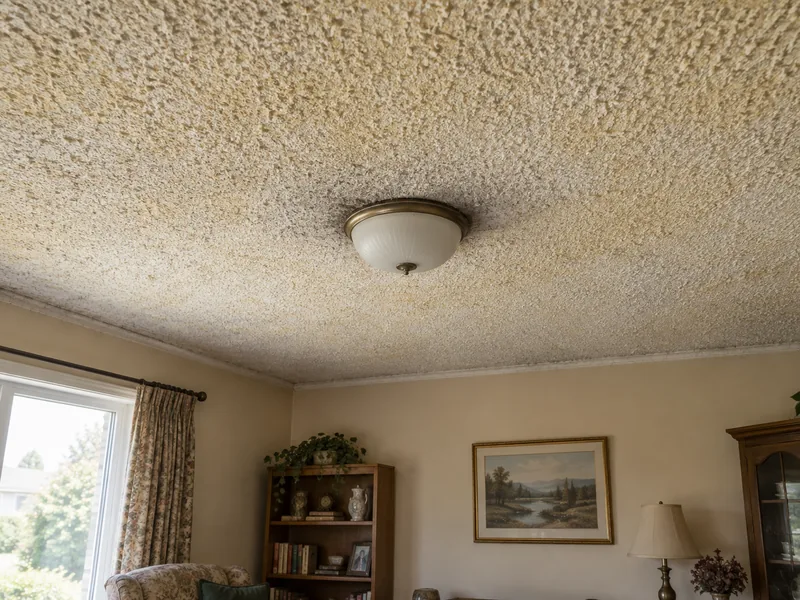
You can tell a great deal from the floor without going near a ladder. Acoustic ceiling texture has sharp, irregular peaks with no shine, while a painted surface has softer tips and picks up a faint sheen where light crosses it. What settles the question is a coin-sized scratch in a closet corner where no one looks. That small test patch shows how the material sits on the board and how readily it releases, which a photograph cannot. Which of the three is overhead determines both the removal method and the number of labor hours.
From Scrape to Paint-Ready, and Where We Stop
Our work on your ceiling ends with a flat, sanded and primed surface. Ceiling primer is the sealing coat rolled over the bare board and dried joint compound so the finish paint sits evenly across both, and we include it because a paint-ready ceiling is not ready without it. The finish coat itself is a separate service, quoted on its own, so it is not included in this price and there is no confusion about where our ceiling work ends.
Two related jobs are quoted separately from popcorn ceiling removal: repairing an existing texture while leaving it in place, and hanging a new ceiling. We cover and protect your walls and trim throughout the work, but restoring them to finished condition is outside this scope as well. Each item appears as its own line on the written scope, so you know exactly what the price includes and what it does not before you agree to the work.
One Room, One Level, or the Whole House
A single room ceiling is a complete job on its own, and we do not require a minimum that pushes you into more work than you want. Connected rooms are usually better handled together because an open-plan living and dining area shares one continuous ceiling plane that your eye follows from end to end. Where a finished ceiling meets one that still has texture, the transition remains visible from anywhere in the room, and careful work at the junction does not make that line disappear.
Whole-house popcorn removal in a single-story home with around 1,800 square feet of ceiling is handled as a multi-day sequence, working room by room so you can keep part of the house in use throughout. Plastic sheeting goes up and comes down once per work area rather than once per ceiling, which lowers the protection cost per room as the project moves through more of the house.
When Covering Beats Popcorn Ceiling Removal
Removing the texture is not always the right answer. Another option is to leave the old surface in place and build a flat plane over it, and that method comes out ahead on two types of ceiling. The first is texture sealed under paint, which resists the water used to soften it and turns an afternoon of scraping into hours of dry chipping. The second is a ceiling already covered with old patchwork, where years of repairs have left ridges and hollows that still need to be flattened after the texture comes off, so you pay once for removal and again for the finish work.
If either condition describes your ceiling, we will tell you that covering it is the better buy before quoting the larger removal job. A positive lab result is a separate issue and is not a reason to cover popcorn ceiling texture.
Skimming Straight Over the Texture
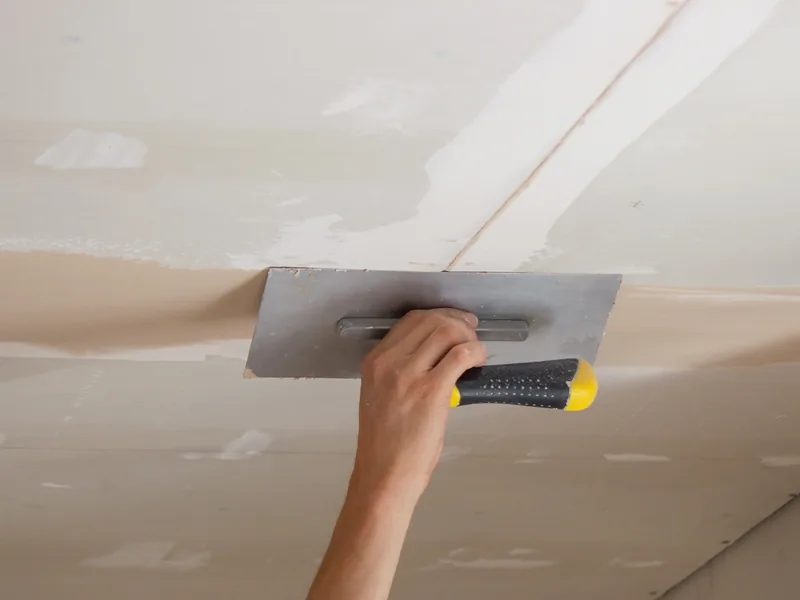
Covering over texture begins with a bonding primer, a liquid coat that grips the rough, dusty surface and gives the next material a firm base. Joint compound then goes over it with a wide trowel in two or three passes, with each coat filling more of the valleys between the bumps until the ceiling sits flat. The original material remains sealed underneath and undisturbed.
The ceiling underneath has to be sound and dry before covering begins, because a skim coat over popcorn adds weight and thickness and will not fix a surface that is already loose. Deep texture takes more passes to flatten than shallow texture, and beyond a certain depth those extra coats cost more than scraping the ceiling would. Either way, the finished result is the same flat plane.
When a Positive Test Ends Our Part of the Job
When an asbestos test result comes back positive, the ceiling is no longer part of our work. We do not scrape it or cover it, because sealing that material in or building a new surface over it still means handling it, and we do not work with asbestos at all.
A contractor qualified to handle that material takes over next and uses the method they determine is appropriate. Once that work is complete and the ceiling is ready to hand back, we take over again with the same finishing work we perform on any bare ceiling: skim coating, sanding and primer.
Testing First, Then Wet Scraping Under Containment
Popcorn ceiling removal follows a fixed order, and each step matters. Before we touch the ceiling, we determine how old the texture is and what it is made of, because that answer decides whether the work moves forward at all. Once it does, we seal off and protect the room before wetting the texture and lifting it down. That sequence protects you twice: you know what is overhead before anything is disturbed, and when the material comes down, it is damp and heavy instead of hanging in the air as dust.
Why a Pre-1990 Ceiling Is Tested Before Anything Is Disturbed
Texture installed before 1990 can contain asbestos, so we arrange lab testing before any scraping begins and remove only material the results clear as safe.
The dates people find online are earlier, but we use 1990 on purpose because sprayed stock continued to be installed for years after it stopped being made. We would rather test a ceiling that comes back clean than miss one that does not. Neither the age of the house nor the appearance of the ceiling settles the question, so asbestos testing of pre-1990 ceiling texture begins with small samples taken from several spots across the surface. A ceiling is rarely uniform because patches, additions and repairs leave texture from different years on the same plane, and one clear sample does not prove the rest is clear.
The lab identifies the mineral under polarized light microscopy rather than relying on anyone to judge it from the floor, and chrysotile is the type most commonly found. You receive the lab test result in writing, normally within a few days, and nothing overhead is disturbed while that question remains open.
Sealing the Room Off Before the First Pass
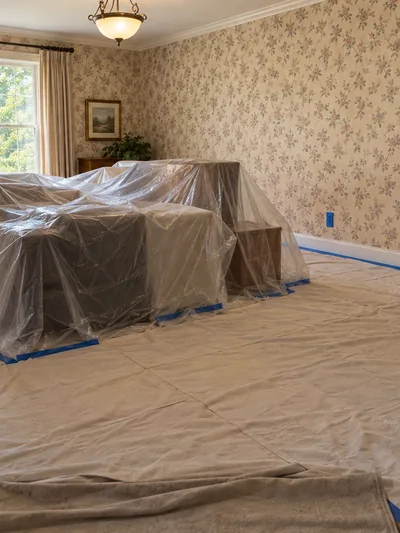
We set up a series of barriers to keep the job contained within one room, and containment is the trade term for that setup. Heavy plastic sheeting and rosin paper cover the floor, sheeting is taped up the walls, fixtures and cabinets are masked, and doorways are closed off. We also seal the supply vents and air returns so nothing is pulled into the ductwork and blown into a bedroom at the other end of the house.
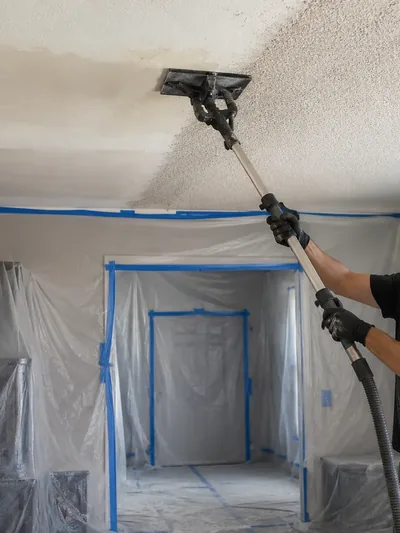
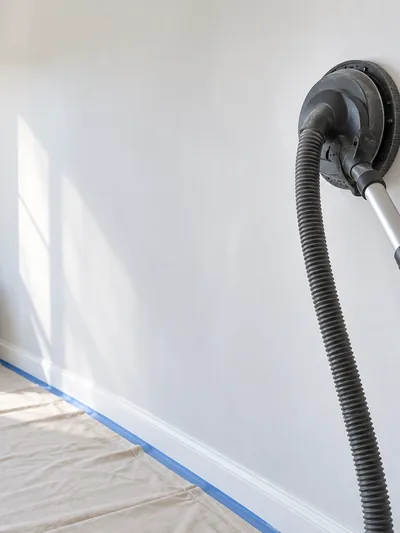
Dust control continues at the tool itself. The fine dust comes from sanding rather than scraping, so we use a vacuum-assisted pole sander with HEPA filtration to capture most of it as it is created. At the end of each workday, the room is swept and vacuumed. That is the difference between a contained job and one that leaves grit on every surface for a week.
Misting, Soaking and the Angle of the Knife
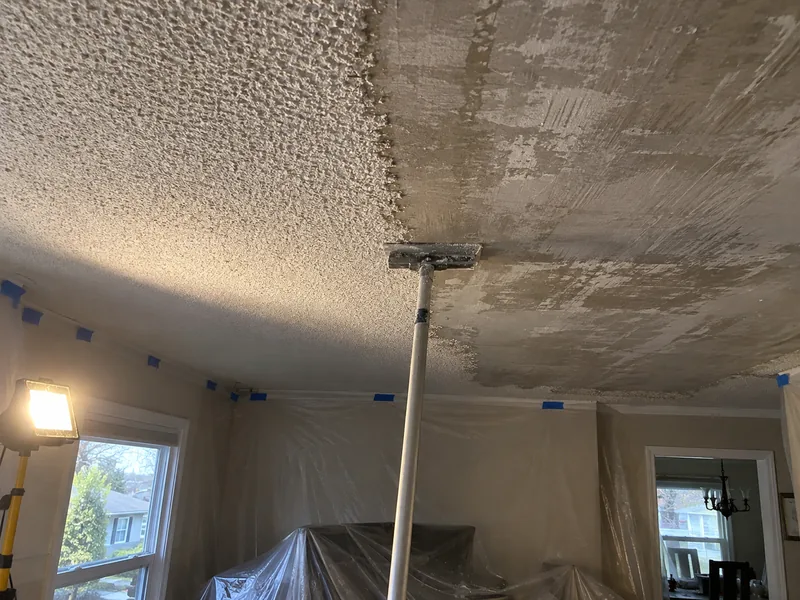
Wet scraping is the removal method itself. A pump sprayer mists one section of ceiling at a time, the texture sits for a few minutes to absorb the water, and a drywall scraper with a broad blade held at a low angle lifts the softened material off in sheets.
Both too little and too much water create problems. Too little leaves the texture powdering under the blade and puts into the air exactly what the sheeting was meant to contain. Too much softens and tears the paper facing on the board above, turning a scrape into a patching job. Water also adds weight, and thin board spanning widely spaced framing is the type most likely to dip under it, so we check board thickness against framing spacing before wetting your ceiling. Working in sections keeps the soak time consistent and prevents any part of the ceiling from staying wet longer than it should.
The Ceiling That Has Been Painted
Paint over popcorn seals the texture, and that sealed surface sheds water instead of absorbing it. As a result, a painted popcorn ceiling usually will not wet-scrape, leaving two clear options. Dry scraping removes the texture without water, but it is slower, much dustier and harder on the board underneath. The other option is to leave the texture in place and skim a smooth surface over it, which is often the better trade and is explained under covering. A test patch tells us which approach suits your ceiling, and we do that before the job is booked rather than discovering it halfway through a room. You hear both options and the price of each before choosing between them.
Once the Texture Is Off, What the Board Shows
Sprayed texture is opaque, so it hides the surface underneath. Until it comes down, nobody has seen the large gypsum board panels that form your ceiling or the drywall tape running along the joints between them. The first clear look at the ceiling condition comes after the scrape, which is why a scope written from the floor includes an allowance for what might be uncovered instead of pretending hidden damage does not exist. If we find anything, we show it to you and explain it before you are asked to make a decision.
Loose Tape, Nail Pops and Soft Board
Texture was often sprayed over joint work that was never finished for a visible surface because the texture was always meant to cover it. That is how the ceiling was built, not poor workmanship, and it is the reason a scrape-only price differs from a finished-ceiling price. Once the texture comes off, joints that were finished only enough to stay hidden still need proper taping and filling before the ceiling is ready to remain exposed.
Loose drywall tape appears as a straight line where a seam has separated, while nail pops show up as small round bumps where a fastener has backed out of the framing and pushed through the surface. Board that has absorbed moisture flexes under a hand, and each problem is repaired differently. A loose seam is re-taped, a backed-out fastener gets new drywall screws driven into the framing, and a soft section is cut out and replaced. Each repair is quoted as its own line rather than folded into the scraping price.
Stains and Moisture Found Above the Texture
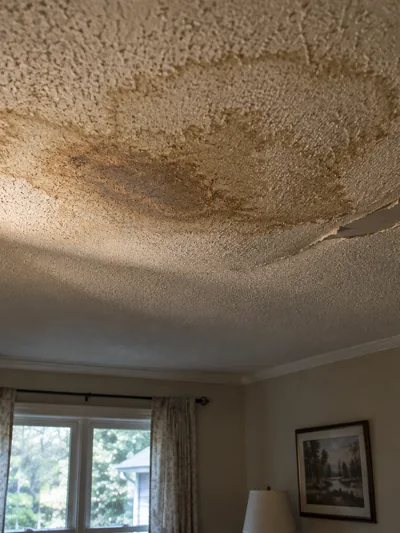
A ceiling water stain beneath the texture points to a problem above the ceiling, and here that is usually a roof leak or an attic condensate pan that has overflowed. We pass a moisture meter over the area to see whether the framing above is still wet, because any new finish applied while the source is still running will fail again in the same spot. Stopping the leak at its source is a separate trade, and we will tell you plainly when your ceiling needs one before we go further. Active mold or the moisture source itself may need another qualified trade first.
Where a stain is old, dry and no longer active, it will bleed through fresh joint compound and latex paint unless it is first sealed with a shellac-based stain-blocking primer. Replacing board that water has already damaged beyond repair falls under our water damage service rather than this one.
The Finish That Goes Back On a Bare Ceiling
Once the texture is removed and the board underneath is sound, the ceiling still needs a new finish. There are two clear options, and you choose between them before the scraping starts rather than after. One is a fully skimmed flat plane with no pattern at all. The other is a light retexture, a shallow pattern sprayed or troweled over the board.
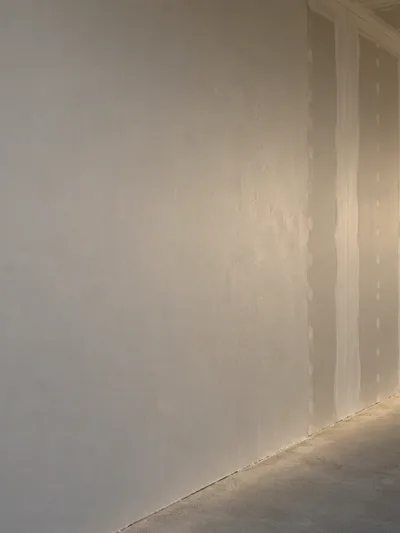
A flat plane costs more because it requires more joint compound, more sanding and more days on site than a light texture. Level 4 and Level 5 are the two finish standards used to measure a smooth ceiling, and those are set during our finishing and texturing work. The right choice comes down to your room and your budget rather than a default written into the quote.
Two or Three Passes to a Flat Plane
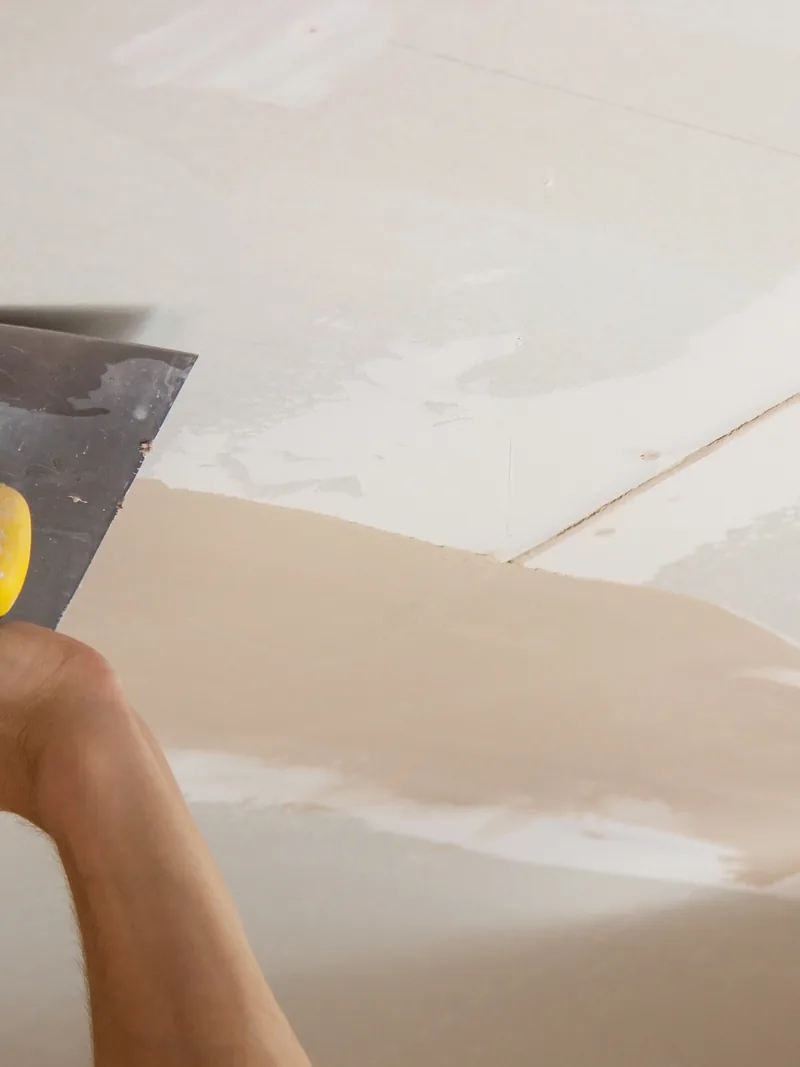
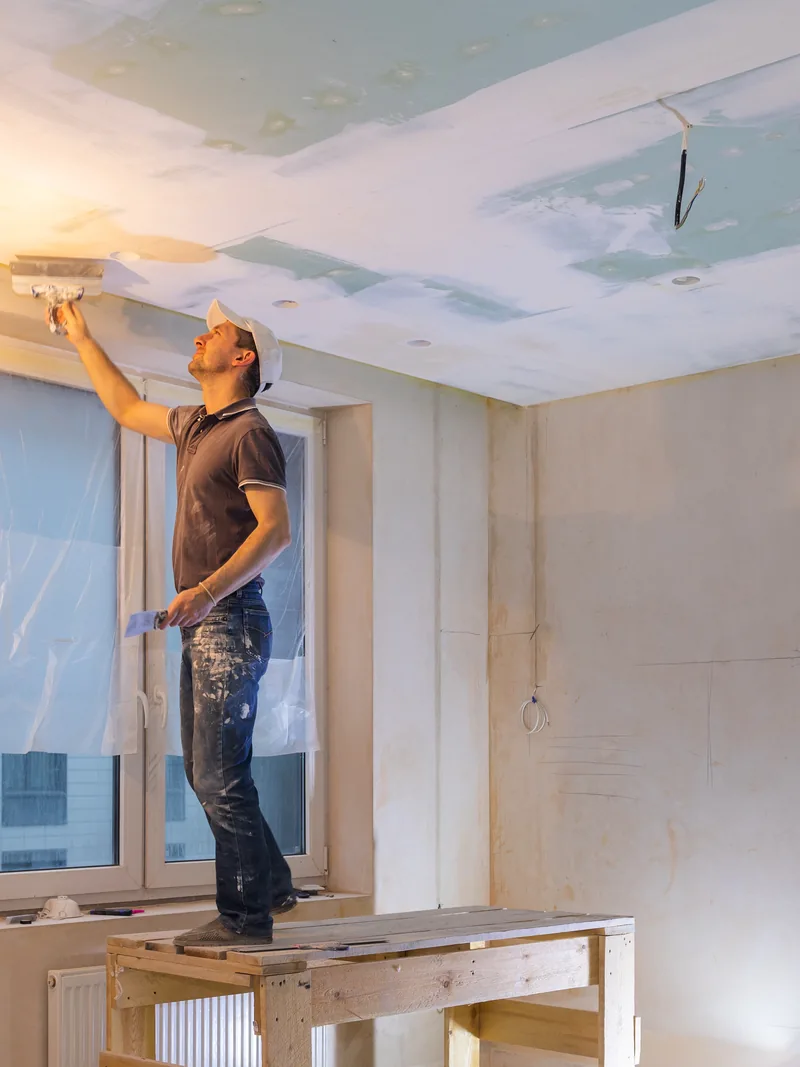
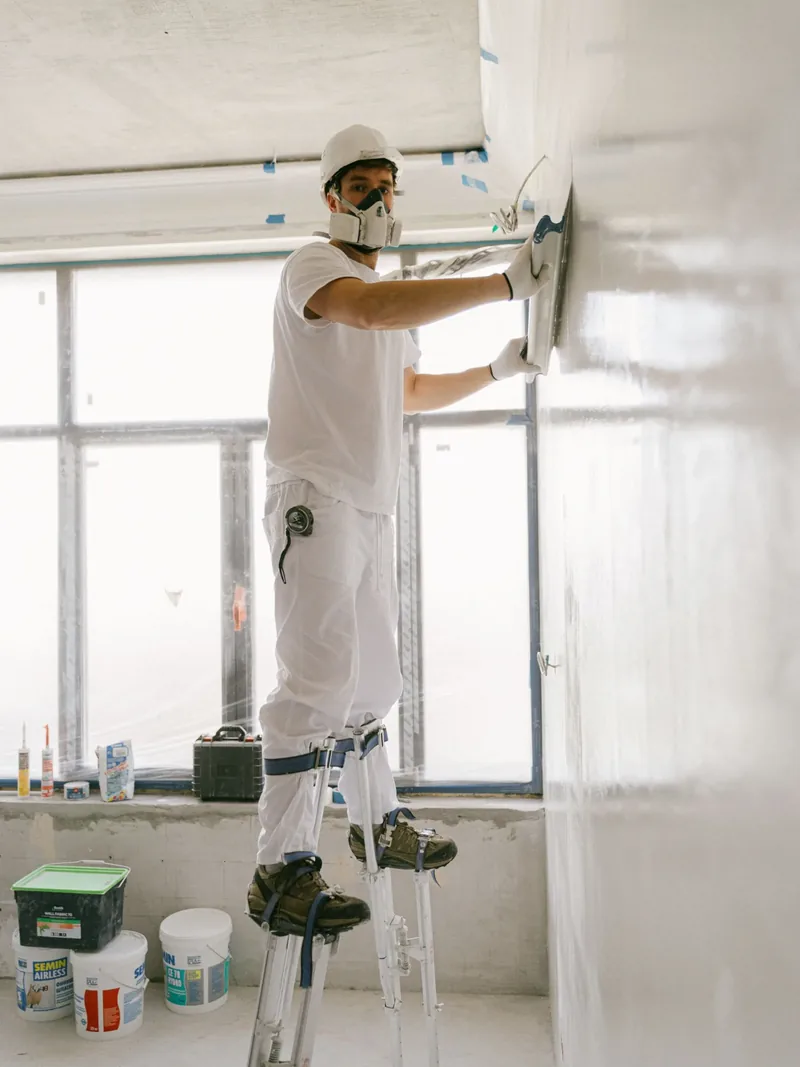
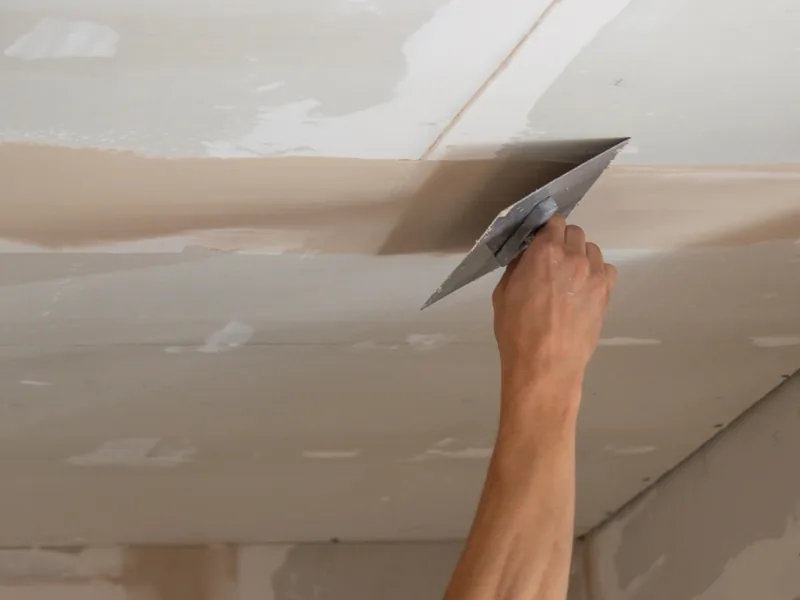
Skim coating means spreading joint compound across the entire ceiling with a wide trowel rather than only over the seams where the boards meet. The full surface needs attention because scraping exposes shallow waves and knife marks that the old texture had been hiding. We build the finish in two or three skim passes, sanding each one flat with a pole and allowing it to dry completely before the next coat goes on.
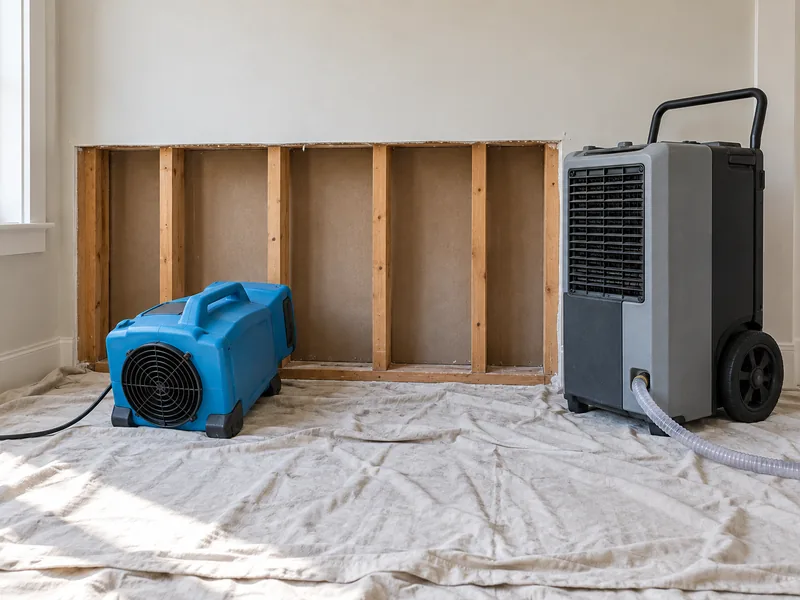
A closed-up house during a Gulf Coast summer stretches the drying time between passes. Two things shorten that wait: a setting-type compound, which hardens through a chemical reaction instead of drying out, and a dehumidifier running in the room. If the next coat goes over a pass that is still damp underneath, the compound shrinks as it finishes drying and leaves a line that shows through the paint.
How the Room's Light Decides the Finish
Light that travels along a ceiling rather than straight down across it is what reveals a wave. That is why rooms with large windows, recessed lighting and open plans benefit most from a flat plane, while a hallway or bedroom with one central fixture is much more forgiving. You can check your own room by standing where the light enters and looking along the ceiling toward the far wall instead of straight up at it. Whatever you see from that angle is what critical light will continue to reveal after the work is finished. A Level 5 finish is the flattest of the standards, and the finishing service determines where your ceiling falls on that scale.
When a Light Texture Is the Better Answer
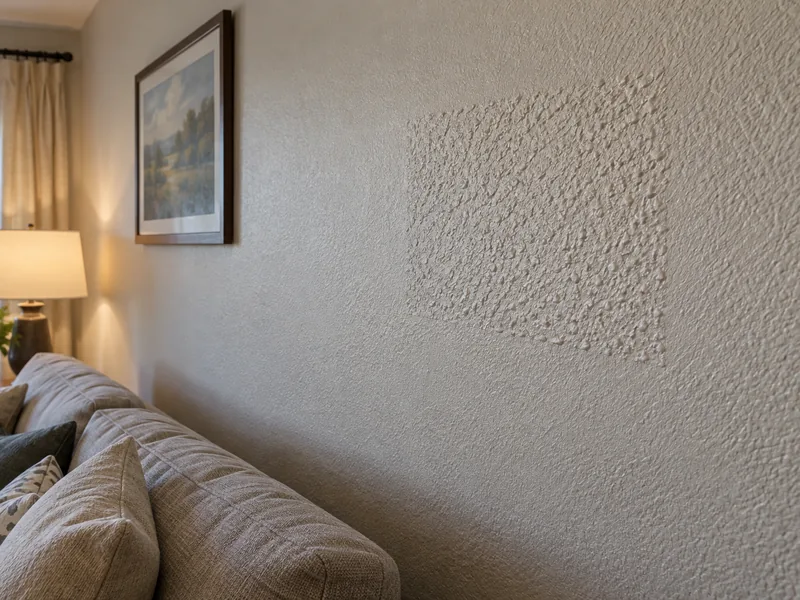
A light texture requires fewer passes than a full skim, so it costs less and is more forgiving on a ceiling that has been opened and patched in several places. Where sections were cut out for a leak or for wiring, a retexture after popcorn removal often gives a better-looking result than a flat plane because a smooth finish puts every patch on display.
It also matches the ceilings in the rooms you are leaving untouched, which keeps the finish consistent when only part of the house is being done.
There is another reason, and it is easy to overlook: popcorn is an extremely forgiving ceiling finish, and it has been hiding every hairline crack your house has developed as the ground moves underneath it. Once that texture comes off and the ceiling is finished perfectly flat, those cracks have nowhere left to disappear. We tape the joints to resist movement and leave the wall angles able to move, and if the house has already cracked once, we tell you before you choose a flat plane.
Knockdown, orange peel and skip trowel are the usual patterns, and applying one of them after removal is part of this job and included in the quote. Matching that pattern to the ceilings in rooms you are leaving untouched requires finer finish work and falls under our finishing and texturing service.
Why Choose Conroe Drywall Co. for Popcorn Ceiling Removal
When a homeowner anywhere in Montgomery County wants an insured drywall contractor to remove popcorn ceiling texture, this is the process Conroe Drywall Co. puts behind the quote before any work is booked.
- Conroe Drywall Co. has been removing popcorn ceilings throughout Conroe and Montgomery County for over 15 years.
- We are insured and follow established industry practices, including ASTM C840 standards for gypsum board installation and finishing.
- Your scope is provided in writing, with the finish you choose listed at its own price, so you know exactly what you are agreeing to before the work begins.
- Lab testing is arranged whenever the age of the ceiling requires it, and nothing overhead is disturbed until the result comes back.
- Work areas stay under containment, keeping the job inside the room being worked on while the rest of the house remains available to you.
- Any allowance for damage uncovered during scraping is listed separately, so there is already a price attached to hidden repairs before anything is found.
- Our on-site estimates are free, and financing is available for larger projects.
We respond promptly to any warranty-related concerns that might arise. To schedule your free on-site estimate, call us at (346) 706-5743.
What Popcorn Ceiling Removal Costs in Conroe
We price this work by ceiling area, the square footage of ceiling being scraped, then adjust that price for the condition of the surface underneath. We do not publish a popcorn ceiling removal cost per square foot on this site because the board above the texture cannot be graded until the texture comes off. A ceiling that scrapes clean and one hiding loose tape or soft board may be the same size, but they are not the same job. The written estimate you receive after the on-site look sets your price, and you can check most of the factors that affect it from your own floor.
What Moves the Price on a Ceiling Scrape
These cost factors determine the labor hours and equipment required for a ceiling scrape:
- the ceiling area, which sets the base price before any other factor is added
- whether the texture has been painted, which can double the labor required
- ceiling height, since an 8-foot standard ceiling is reached from a pole while a 12 to 18-foot vaulted ceiling requires scaffold, the staged platform we build to stand on
- whether the room is furnished or empty, because the floor and anything left in the room are covered before work begins
- how the room is lit, because grazing light, which rakes across the ceiling from a nearby window or fixture, reveals every ridge and raises the finish level we need to reach
- how much repair the scrape uncovers beneath the texture
- whether you want a light texture or a fully flat plane
Removing It or Covering It: the Honest Comparison
Neither route is automatically cheaper, and each puts more of the cost in a different place. Scraping uses more labor and less material because the hours go into wetting the texture, removing it, and then flattening the surface that was hidden underneath. Covering uses more material and less labor because the flat plane is built up with compound over the existing gypsum board instead of uncovered. The ceiling itself determines which route makes more sense. Painted texture resists the water that makes scraping faster, and a ceiling with years of repairs still needs to be flattened either way, so both conditions push the job toward covering. Over sound board with unpainted texture, removal is usually the better buy.
Call us at (346) 706-5743 and we will inspect your ceiling and give you a written price.
What Removal Day Looks Like in Your Home
At Conroe Drywall Co., the job moves from the first look at your ceiling to a primed surface ready for a painter, and the popcorn ceiling removal process follows six steps over a small number of visits. You are there for two of them: the initial inspection and the final walk-through. In between, our crew works in the room you have handed over. When people ask how long does it take, the answer is better measured in calendar days than labor hours because coats dry between visits.
- You tell us what is overhead and send us a photograph.
- We come out, identify the texture, and provide a written scope.
- The room is cleared and fully sheeted for protection.
- The texture is removed.
- Joint compound, sanding and ceiling primer follow.
- We walk the finished ceiling with you, then remove the sheeting.
-
1
Tell Us What Is Overhead
The first contact takes only a few minutes. Tell us roughly when the house was built and which rooms you want done, because the age of the house determines what has to happen before we touch the ceiling. A photograph is more useful than a description, especially one taken from the side with the camera aimed along the ceiling rather than straight up at it, since that angle shows the texture depth and how it was applied. The photograph helps us narrow down what we are looking at, but it does not set the price. Call us or use the quote form, whichever is easier for you.
-
2
The Look, the Test and the Written Scope
We come to your home, identify the texture by sight, and take a small sample when the age of the house requires one. Both happen during the same visit, so there is no second appointment before the next step is decided. Your scope then comes back in writing with two items listed separately: the finish you chose for the bare ceiling and an allowance for whatever the scrape uncovers. That second line gives any hidden repair a price you agreed to in advance instead of producing a new number halfway through the job.
-
3
Sheeting Up, and What You Move First
Before we start, you clear out the small items: ornaments, electronics, anything breakable, and anything you would rather not have someone else move. We handle the heavy furniture, then sheet and seal the room before anything gets wet. Once the sheeting goes up, the room stays out of use until the primer is on.
-
4
Scrape Day
A single room usually takes one day from the first pass to a swept floor. The texture comes off wet, keeping it heavy enough to fall rather than drift, and we bag it as it comes down instead of letting it sit. As each section of ceiling is exposed, we inspect the board underneath and note anything that needs repair before the finish coats go on.
-
5
Coats, Sanding and Primer
The finishing visits are what stretch the calendar, and a humid week in Conroe adds more drying time. We sand the ceiling between coats, capturing the dust at the tool as it is created, and apply ceiling primer last to leave an even surface ready for paint. If a coat needs another day to dry, we give it that time rather than covering compound that is still soft.
-
6
The Walk-Through and the Clean-Up
At the end, we walk the ceiling with you under the room's own lighting rather than a work lamp, because that is the light you will see it in every day. We then remove the sheeting, clean the room down, and hand it back with the ceiling primed and ready for paint. You will also know who to call if anything needs another look. To book the on-site visit, call (346) 706-5743 or send us the details through the quote form.
Lights, Fans and Vents in a Ceiling That Is About to Get Wet
A popcorn ceiling is soaked with water before scraping, so anything set into that ceiling has to be planned around first, especially light fittings, fans and air vents that are wired or open to the attic above. We check what is overhead while preparing the quote and tell you in advance what will be removed, what will be capped, and what only needs to be taped over.
What Comes Down and What Gets Capped
Fans and hanging light fittings come down before the first pass. Ceiling fan removal takes the blades and motor off to the junction box, the metal box in the ceiling that holds the wiring. Recessed lighting, the small cans set into the ceiling so the bulb sits flush, is usually capped or masked in place instead.
We switch the circuits off at the panel while the ceiling is wet, so the room has no working light for part of the job and we use our own lamps instead. If a fan or light fitting is coming down anyway, that is the least expensive time to replace it, and we identify anything we are not qualified to disconnect before the workday begins.
Vents, Returns and the Air in the Rest of the House
An open air vent pulls air from the room into the HVAC vents and sends it back out through the rest of the house, which is how dust in the house starts in one bedroom and ends up everywhere else. Homes here commonly have the air handler in the attic with the return grille cut into the same ceiling we are working on, making that grille the largest opening in the room.
Two more openings sit in that ceiling: the attic hatch, which can drop loose insulation into the work area, and the recessed housings, which are open to the attic above. We seal both, and the system is normally switched off while sanding is underway. Smoke alarms are removed or bagged for the same reason, since sanding dust sets them off. In Conroe summer heat, that shutdown is worth planning around, and the HVAC filter is worth changing once the work is finished.
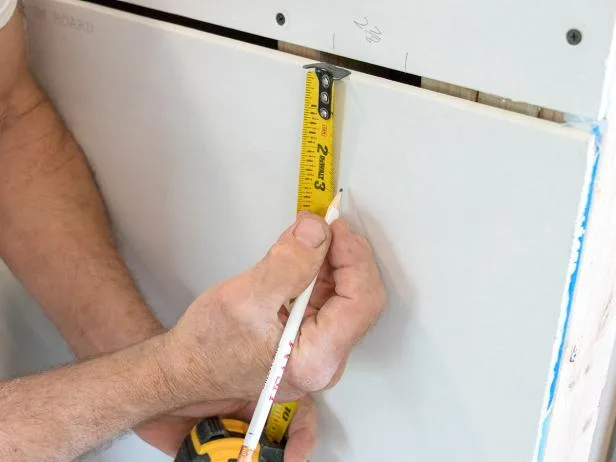
A Smooth Ceiling and What It Changes in the Room
Removing sprayed acoustic texture from a ceiling is work you choose rather than work the building requires, so it is worth being clear about what you are paying for. One benefit is visible every time you stand in the room and look up. The other depends on what a future buyer thinks of the finished ceiling, and nobody can put a reliable figure on that. We do not price this work as an investment or promise that the cost will come back to you.
Light, Shadow and How the Room Reads
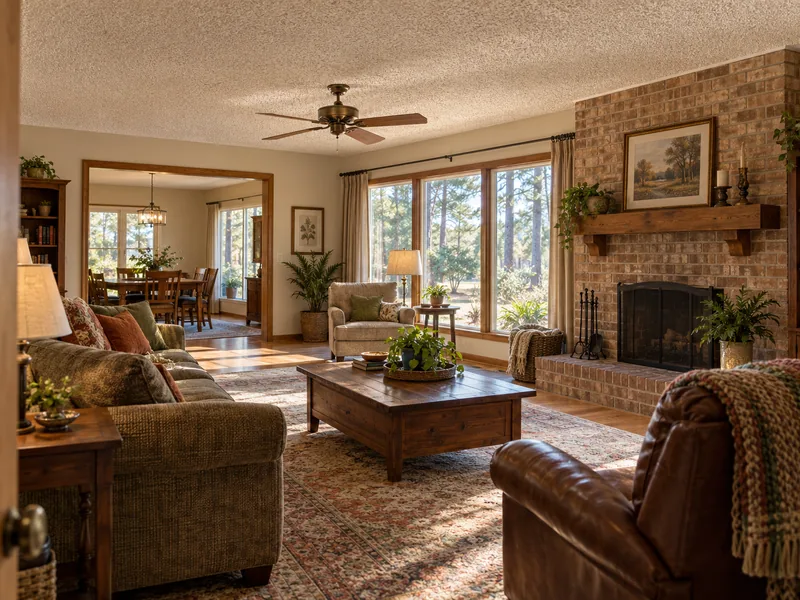
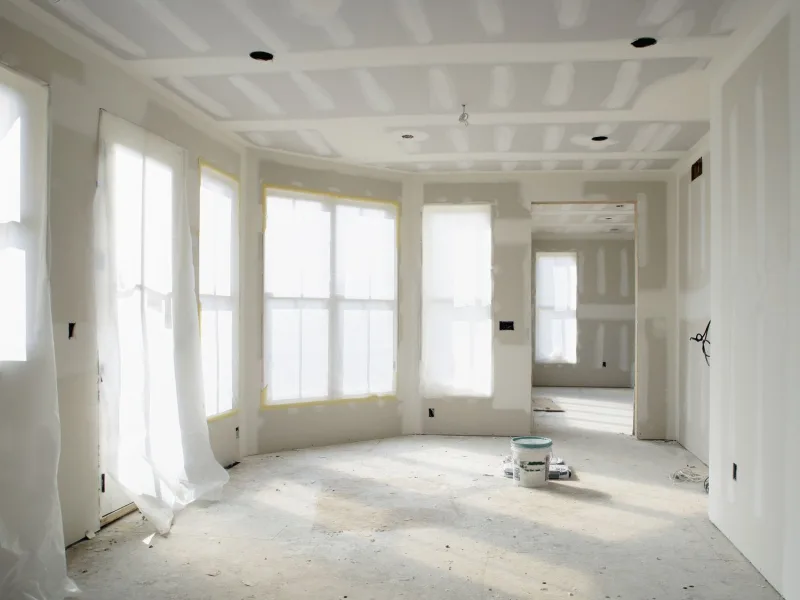
Sprayed acoustic texture stands about an eighth to a quarter of an inch proud of the board, and each small bump casts a shadow beside it. Those shadows absorb light from lamps and windows instead of reflecting it back, so the ceiling looks lower and darker than a flat ceiling hung at the same height. A flat ceiling plane reflects more of that light back into the room, which is what light reflectance means here. The difference is most noticeable in a room with one window and pale walls, and much less noticeable in a small hallway.
Two smaller differences come with the change. Texture catches dust in its raised surface and cannot be wiped clean, while a flat ceiling finished with ceiling paint can be. On the other hand, popcorn was sold as an acoustic finish and does soften the sound in a room slightly, most noticeably in an open plan or beneath a second floor.
What a Buyer Sees, and What Nobody Can Promise
Buyers treat a popcorn ceiling as work they will inherit, and that affects what they are willing to offer. Removing it beforehand takes that future job off their list, which is a real benefit, but it does not create a value increase you can measure in advance. There is no published figure showing what popcorn ceiling removal adds to a home's value, and anyone quoting a percentage is guessing with a decimal point attached. If resale is your reason for choosing a smooth ceiling, spend the money in the rooms buyers are most likely to stand in and look up.
The Jobs That Sit on Either Side of a Ceiling Scrape
Not every ceiling call is a scraping job. Some work needs to happen before the texture comes off, while other work begins after the ceiling is flat again. Each is a separate service with its own price, so asking for the job you actually need by name helps avoid an on-site visit that ends with a quote for something different.
Before: a Ceiling That Is Already Damaged
A ceiling that is cracked, sagging or stained but keeping its existing texture falls under ceiling repair rather than removal. Board that has been soaked by a leak is a water damage rebuild because wet gypsum board loses strength and needs to be replaced instead of patched. A plaster ceiling in an older house requires plaster repair, since it is a different material and is worked differently. If damage is the reason you are calling, we address that first. Scraping over a ceiling that is still failing underneath only lets the problem come back through the new finish and leaves you paying for the same area twice.
After: Texture, Primer and Paint
Matching an existing texture or applying a new one as a standalone job falls under finishing and texturing. The finish coat of ceiling paint over a surface we have already primed is part of priming and painting, while hanging a completely new ceiling falls under ceiling installation. Our scraping work ends with the ceiling plane primed and ready for paint, so finish painting has its own price and adds to the number of visits. Tell us if you want the painting included, and we will explain who handles it.
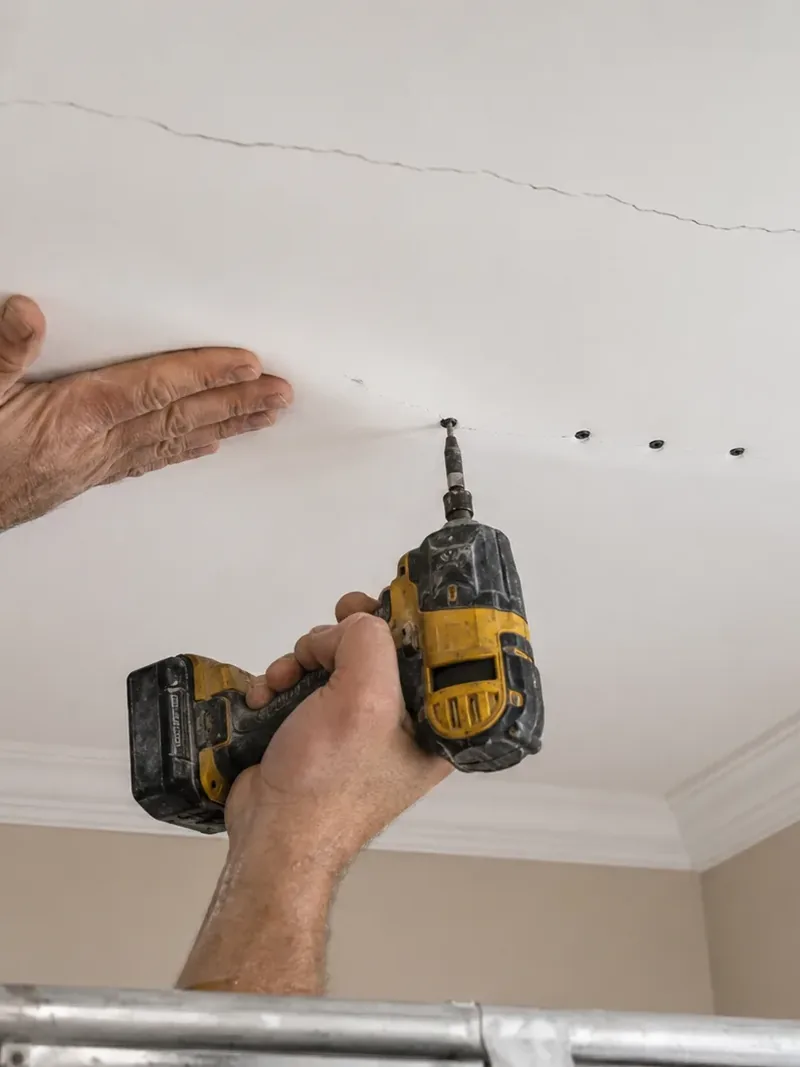

Popcorn Ceiling Removal in Conroe and Across Montgomery County
Sprayed texture was the standard ceiling finish for decades, so the first thing we ask about your house is its age rather than its street. Conroe has a humid subtropical climate and receives about 51 inches of rain a year, and that damp air slows drying between coats, so we plan the finishing visits around those conditions.
Where Conroe Drywall Co. Takes Popcorn Ceilings Off
Conroe Drywall Co. removes popcorn ceilings across a service area of 21 communities, grouped here by location.
Conroe Neighborhoods and Communities
- Grand Central Park
- Graystone Hills
- Rivershire
- Stewarts Forest
- Downtown Conroe
- Wedgewood
- West Fork
- Tejas Creek
Surrounding Cities and Communities
- Willis
- Montgomery
- New Caney
- Splendora
- New Waverly
- Cut and Shoot
- Panorama Village
- Grangerland
- Plantersville
Lake Conroe Communities
- Lake Conroe
- Bentwater
- Walden on Lake Conroe
- April Sound
FAQ
Popcorn Ceiling Removal Questions
How much does it cost to remove popcorn ceiling?
Two things set the price: how much ceiling there is and what condition the board is in once the texture comes off. You will not find a published rate for popcorn removal anywhere on this site because a square-footage figure alone does not tell the whole story. A phone quote based only on ceiling area will change if the texture has been painted, the board underneath is damaged, or the surface needs more filling before it is ready for paint. Your written price comes after we inspect the ceiling in person.
Do I need a permit to remove popcorn ceilings?
Taking one ceiling finish off and putting another back is finish work: no framing is cut, moved or added, and no wiring or ductwork is altered. That is generally not the type of work a building permit is written around. The answer changes if the job expands into new framing or a new ceiling, which falls under a different scope. Because permit rules are set locally, the City of Conroe building office is the authority that can confirm what applies to your address, and that confirmation is free.
How long does it take a professional to remove a popcorn ceiling?
Count the job in visits rather than hours because drying time sets the calendar. Scraping one room usually takes a day, but each coat of compound that follows has to harden before the next one goes on, so a single room commonly takes two or three visits and a whole single-story house stretches across several days. The elapsed time is longer than the hands-on work, and adding more people does not shorten it. What does shorten the schedule is the compound we use and a dehumidifier in the room, not a larger crew.
Is it better to cover popcorn ceilings or remove them?
Remove the texture when it is unpainted and the board above is sound, because it comes off wet and leaves a surface we can finish directly. Covering is the better choice when the texture has been painted or when years of patching have already left the ceiling thick and uneven. Because covering adds both thickness and weight overhead, we check the framing before you choose that route.
Will removing popcorn ceiling increase home value?
Nobody can tell you exactly what the work will return, and we will not put a figure on it. What we can say is that most buyers see a textured ceiling as a future expense, while a smooth ceiling removes that concern from the conversation.
Is popcorn ceiling removal messy?
Yes. Soaked texture comes down in wet sheets, while the sanding that follows creates fine dust, so the entire process is built around keeping both contained inside the room we are working in. The stage people expect to be the messiest is actually the scraping, but the wet scrapings simply drop onto the sheeting and are bagged in the same room. The fine dust comes later, when the dried compound is sanded smooth.
Can you take the popcorn off just one room?
Yes, one room on its own is a normal job for us, and plenty of our work is exactly that. The boundary is worth thinking about before we start. Put it at a wall rather than an opening. An open doorway, arch or ceiling that continues into a hallway places the transition where people look straight at it, while a wall gives the change in finish a natural place to stop.
What happens if the test comes back positive?
The texture stays exactly where it is, and the job passes out of our hands. Someone qualified for that material takes over, and once the ceiling is ready to come back to us, we finish it. The written test result belongs to you, so keep it and give it to whoever handles that work rather than paying for the same test twice.
Get a Price for Your Ceiling
The next step is simply a look at the ceiling, not a commitment. We work throughout Conroe and Montgomery County, and a free estimate gives you a written price before you book anything. Read the quote, take your time with it, and decide when you are ready.
Call (346) 706-5743 or use our quote form for a clear price on your project.