Drywall Contractor in April Sound, TX: Repair, Ceilings & Finishing | Conroe Drywall Co.

Conroe Drywall Co. is a drywall contractor serving April Sound, Texas. We handle drywall repair on walls that are already standing, ceiling repair and re-texturing overhead, drywall installation and finishing when you add a room or open up an existing space, and replacement of board damaged by water.

April Sound is a private gated community about ten miles from Conroe, and three things shape the work here. Crews and deliveries have to be cleared at the entrance, most homes are older and have already been remodeled at least once, and many are second homes used on weekends rather than occupied full time.

We serve Conroe, Montgomery County and the surrounding communities, including April Sound on Lake Conroe. We are insured, have over 15 years of drywall experience in this county, and hang and finish gypsum board to ASTM C840, the standard for drywall installation and finishing. Your on-site estimate is free. Call (346) 706-5743 or use our quote form for a clear price on your project.

Get A Free Estimate

Why April Sound Owners Want a Drywall Contractor Who Has Been Through the Gate

Before a crew opens a wall in your April Sound home, the job has to be coordinated. The crew and its deliveries need clearance at the gate, and the house itself may be empty while the work is underway. A drywall contractor familiar with working behind the April Sound entrance arranges that access before the van leaves the yard, leaves any association approval for you to confirm, and plans around an absent owner instead of discovering it on the first morning. We are insured and follow established industry practices, including ASTM C840 standards for gypsum board installation and finishing.

Four things shape how we work in this community:

  • Conroe Drywall Co. is based in Conroe, about ten miles away on the far side of the lake, so a return visit is a short drive rather than a scheduling problem.
  • We have over 15 years of experience, most of it spent working on walls and ceilings across Montgomery County.
  • We match the existing finish so the repaired area blends into the rest of the wall.
  • We contain the dust and leave your work area clean at the end of each day, not just when the job is finished.

Our on-site estimates are free, and financing is available for larger projects. Call (346) 706-5743 or use our quote form to schedule yours. We also work across the water on the north shore as a drywall contractor in Bentwater.

Drywall Contractor Services Behind the April Sound Gate

One gate serves the entire community, and behind it we work on two very different types of buildings. Most of the work is in homes, but the country club, pro shop and shared community buildings are inside the same gate, and their walls and ceilings are built and used differently from a bedroom wall. That mix is not what most subdivisions hand a drywall contractor, so the services below range from a small patch to full drywall installation during a complete rebuild. Whatever your April Sound property needs done to its walls or ceilings, you will find it here.

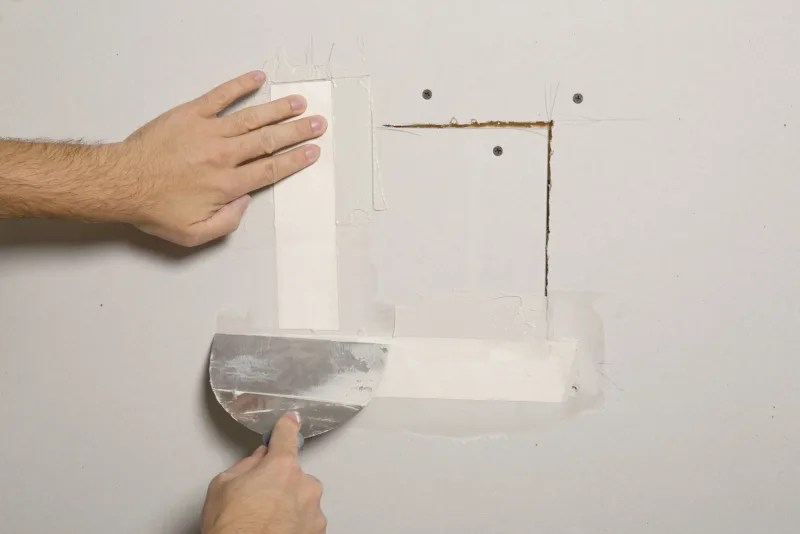
Paper tape bedded in joint compound over a square drywall patch

Drywall Repair

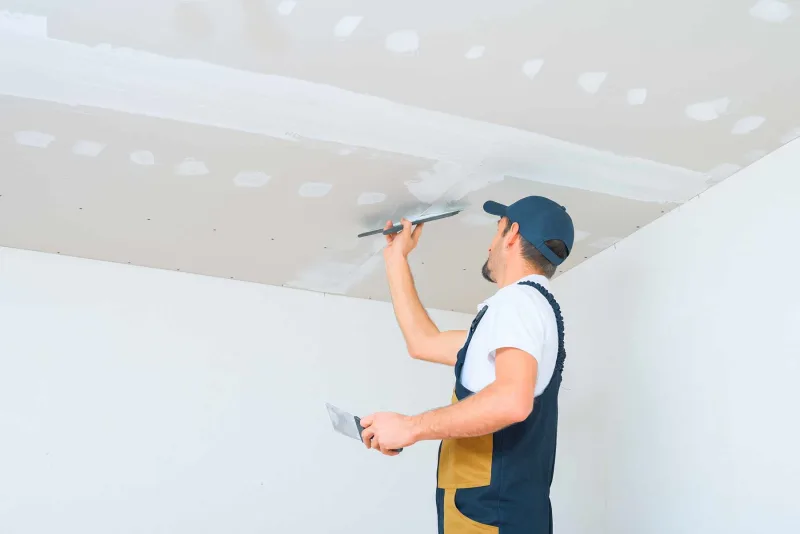
Doorknob holes, damaged corner bead on outside corners, and cracks above door and window openings are among the repairs we handle most weeks. We cut back to solid board, retape the area with drywall tape and joint compound, and match the existing finish rather than guessing at it.

Crew screwing off drywall panels on a wood-framed interior wall

Drywall Installation

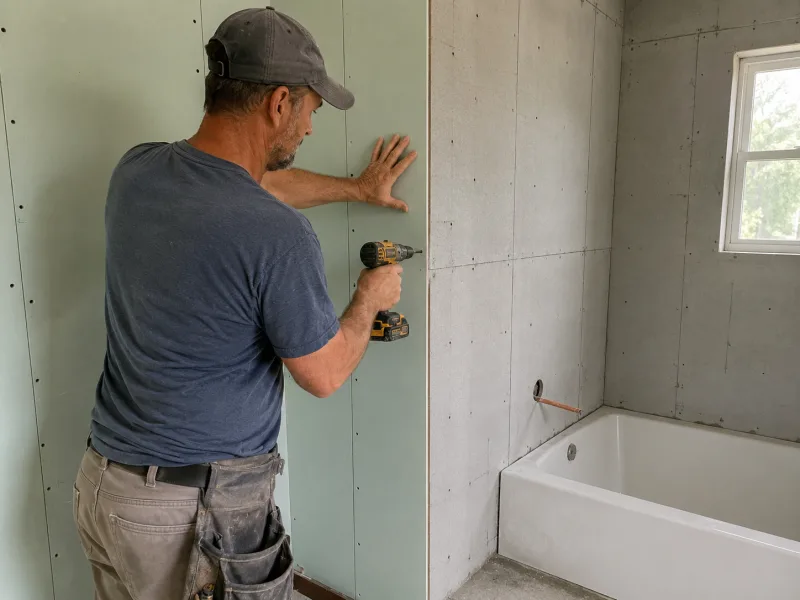
When we hang new gypsum board on your framing, it almost always meets board installed decades earlier. ASTM C840 is the industry standard for how that board is applied and fastened, and following it keeps the new surface flush with the existing wall.

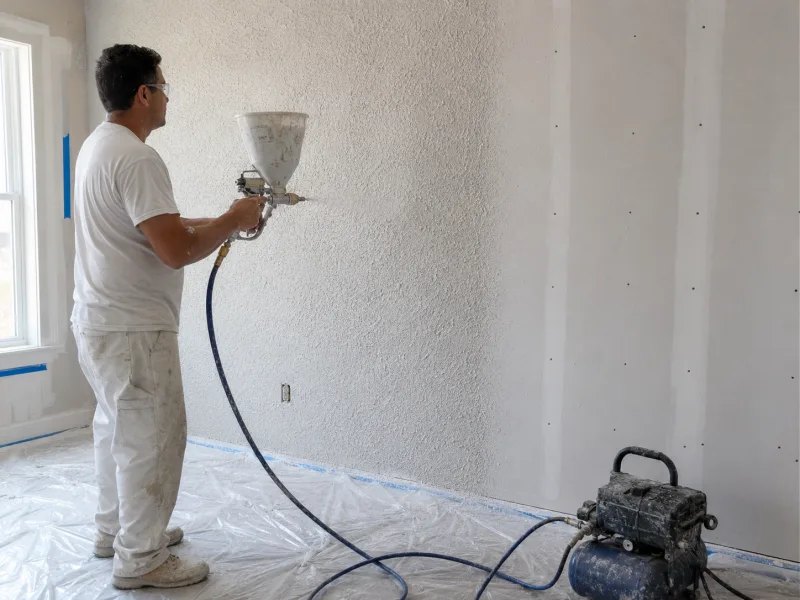
Finisher spraying wall texture with a hopper gun

Drywall Finishing & Texturing

GA-214 is the industry document that defines the levels of drywall finish, from a basic taped surface through Level 5, where a skim coat, a thin layer of compound spread across the entire face, evens out the surface beneath it. Many rooms here face open water or fairways, so low-angle daylight runs across the walls for much of the day and reveals every ridge. We agree on the finish level with you before the board goes up, then match any knockdown or orange peel texture to the surrounding rooms.

Taped and finished drywall walls in a commercial tenant build-out

Commercial Drywall Services

Those shared buildings remain open while we work, so we phase the job room by room and close off only the area we are working in that week. We hang commercial-grade board and repair the ceilings above the spaces members use. A house can stand open for a day, but a building the community relies on has to keep operating.

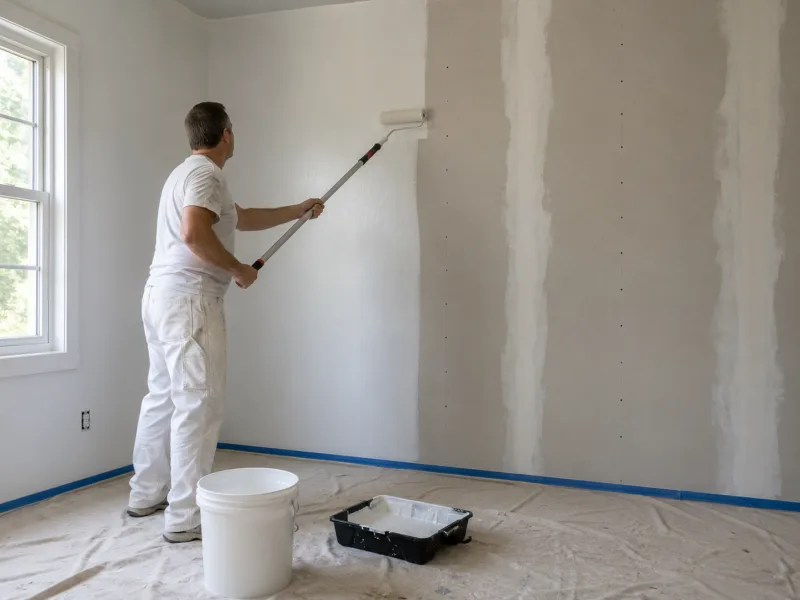
Painter rolling primer over taped drywall seams and compound

Drywall Priming & Painting

A patch that disappeared under the roller can still show as a dull spot once the finish coat dries, because bare joint compound absorbs paint faster than the surrounding wall. We prime the repaired area first to seal the surface, then apply premium paint across the entire wall.

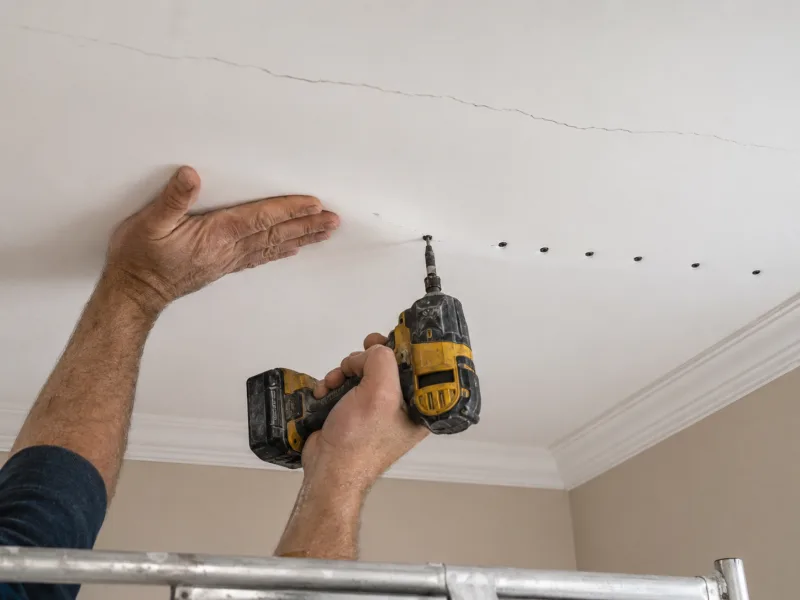
Re-screwing a cracked ceiling panel back to the framing

Ceiling Repair

A stain or sagging seam overhead is usually the first thing you notice because the ceiling is visible as soon as you enter the room. We also find cracks along the joint where the ceiling meets the wall that open in cold weather and close again when temperatures rise. That is truss uplift, the roof framing above moving with the seasons rather than the wall failing, and simply filling the crack does not hold.

Popcorn texture removed with a vacuum sander in a plastic-masked room

Popcorn Ceiling Removal

The oldest homes here were built in the 1970s, so their sprayed ceiling texture is often original and old enough to require testing. Texture installed before 1990 can contain asbestos, so we arrange lab testing before any scraping begins and remove only material the results clear as safe.

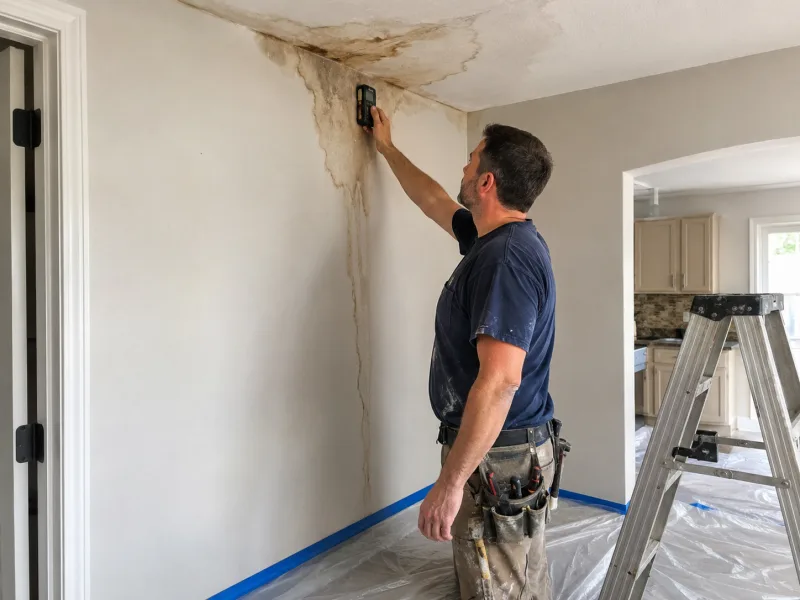
Contractor checking a water-stained ceiling corner with a moisture meter

Water Damage Drywall Repair

Water-damaged board is cut out and replaced rather than left to dry in place. New panels go up only after the framing reads dry, then we tape, float and texture them to blend into the surrounding wall.

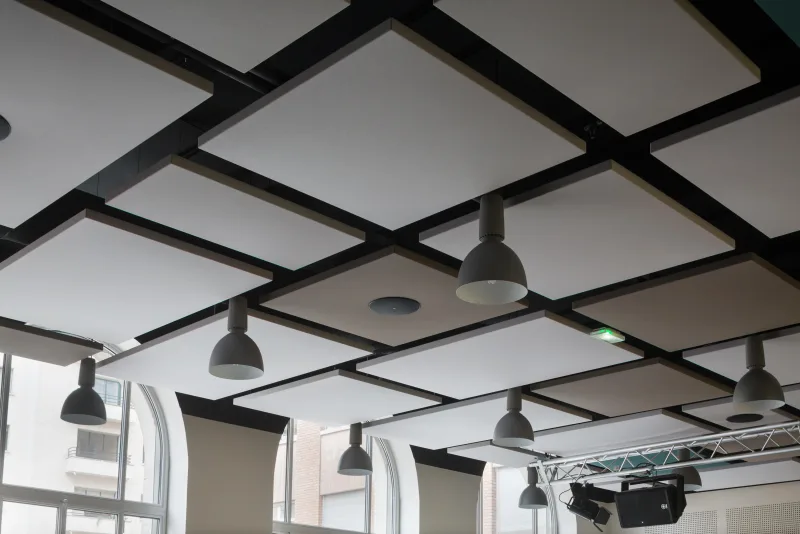
White acoustic ceiling panels suspended in a black grid with integrated lighting

Acoustic Ceiling Installation & Repair

Some ceilings here are not drywall at all but lay-in tile, with lightweight panels resting in a metal grid suspended below the structure. You will find them in the shared buildings and in a few older interiors. When a tile is stained or broken, we lift it out and replace it with a new panel in the existing grid.

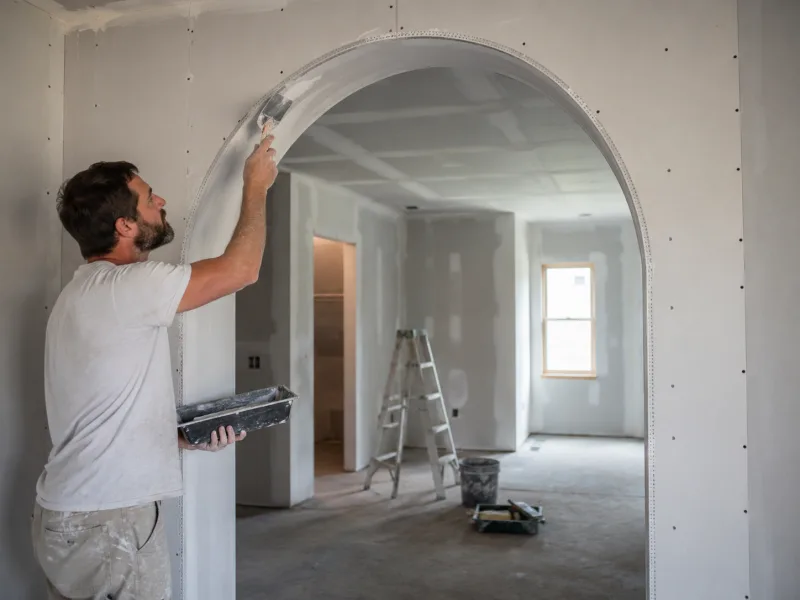
Finisher coating a corner-beaded drywall archway

Custom Drywall & Architectural Features

Arched openings, recessed wall niches, rounded corners and coffered ceiling details usually come to us as part of updating a 1970s floor plan rather than new construction. We bend flexible board around the curves and install corner bead to keep each edge crisp and clean.

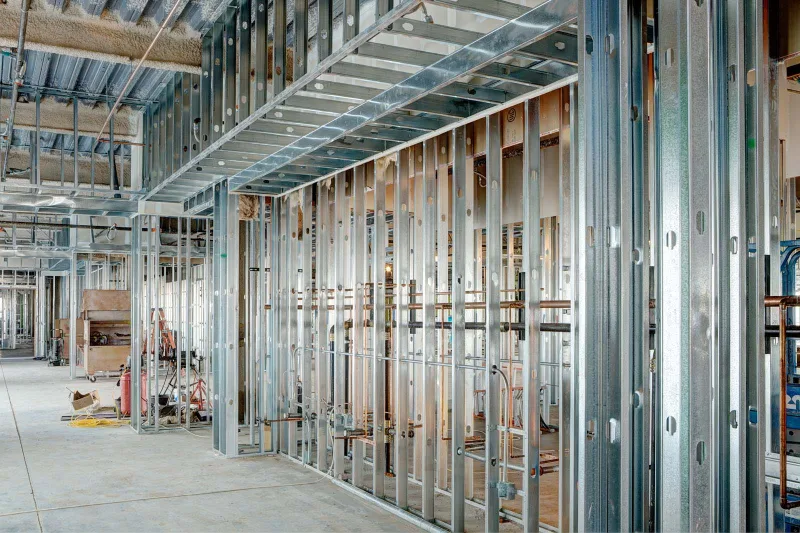
Galvanized steel stud partition walls framed in a commercial interior

Metal Stud Framing

Interiors in the club and shared buildings are framed with steel rather than wood, so we build those walls with light-gauge studs set into track and use heavy-gauge studs where the wall carries more load. The same system also works in a house for a non-load-bearing partition.

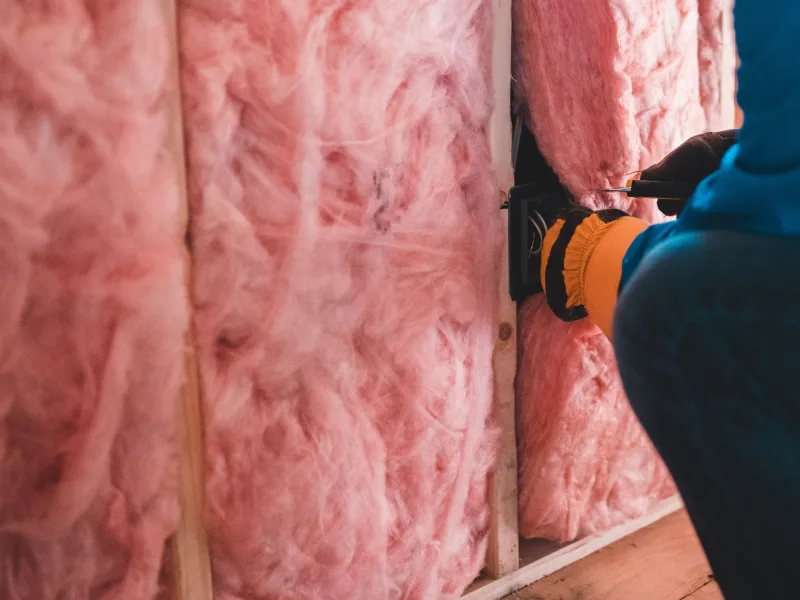
Fiberglass batts trimmed around an electrical box in an open stud bay

Drywall Insulation

While a wall is already open for another repair, we can install batt insulation between the stud bays. The interior wall between your garage and living space is usually the one worth doing, where the insulation reduces noise and slows heat transfer into the rooms you use.

Dated wallpaper scraped from a wall during removal

Wallpaper Removal

Papered bathrooms and kitchens are common in the older homes here. We steam and score the wallpaper to loosen the paste, and when the drywall paper face tears away with it, we skim the wall smooth and match the existing finish before you paint.

Hung and taped drywall throughout a new construction interior

New Construction Drywall

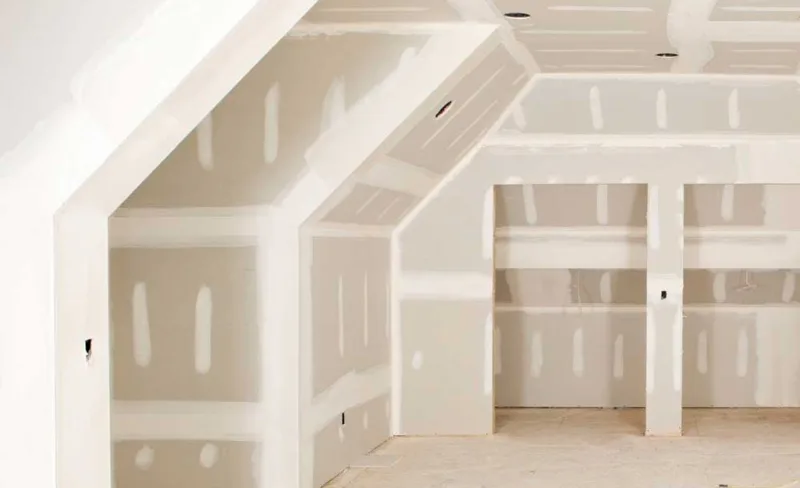
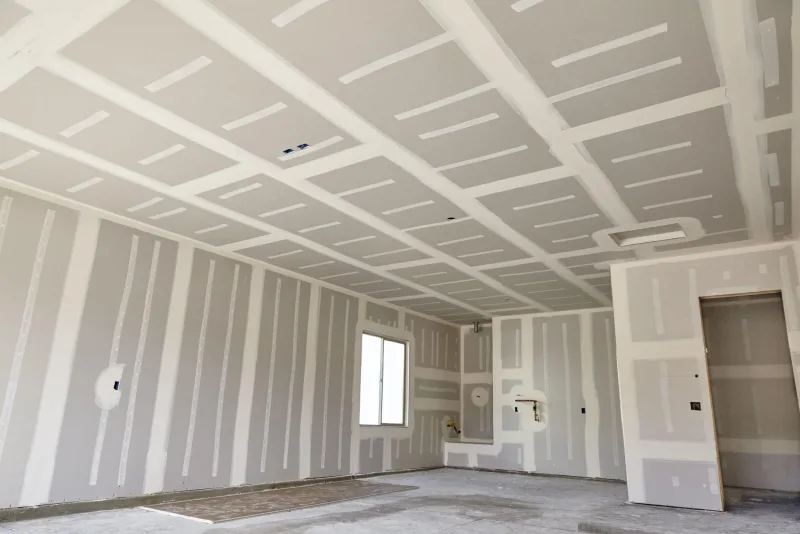
This community is built out, so whole-house drywall work comes to us through a rebuild, an addition or one of the few remaining empty lots. We handle the full scope at once: hanging the board, taping the joints, floating them by spreading compound wide enough on both sides that the seam stops reading as a ridge, and texturing the finished surface. We come in after the trades that need the walls left open have completed their work.

New partition wall framed with a door opening and half boarded

Partition Wall Installation

Older lake houses here were built with rooms larger than many homeowners now want to use as a single space. If you want to close off a study or create a bunk room at one end of a living area, we frame the new wall, hang the board, tape the joints and match the surrounding texture.

Finisher coating taped seams on a new drywall ceiling

Drywall Ceiling Installation

After water comes through, or after removing ceiling texture that the existing surface cannot survive, you need new board overhead. Ceiling panels are heavier than wall board, so they go up first on a lift, and we hold them flatter than we would a wall.

Finisher coating a gypsum-board soffit box along the ceiling

Drywall Soffits & Bulkheads

Ducts, beams and pipe runs that need to stay in place are boxed in with framing and drywall. In a remodeled kitchen, the duct hidden by the old cabinets needs to be concealed again, so we frame the box square and true for the new cabinet run to meet cleanly.

Taped drywall on an attached-garage wall and ceiling separation

Fire-Rated Drywall Systems

Where a wall or ceiling has to slow the spread of fire, such as between your attached garage and the rooms beside it or inside the shared buildings, we install Type X board, which resists fire longer than a standard panel. The fire rating applies to the entire tested assembly, including the board, framing and fasteners, rather than to the panel alone.

What a Drywall Crew Looks For in a House That Sits Empty Between Visits

A lake house used only a handful of weekends each year can hide problems longer than a full-time home. Nobody passes the same hallway every morning, so small changes that would normally catch your eye can go unnoticed for weeks. That delay between when a problem starts and when we are called to inspect it changes how we approach residential drywall work in April Sound, which is why we open the wall before we close it back up.

Where a Slow Leak Shows Itself on a Wall Nobody Has Looked At

Water that has been moving through a wall for weeks leaves a few signs you can spot from the doorway. You might see a ring or faint brown tidemark where the wall meets the ceiling, drywall tape lifting from the seam, or paint blistering in a line instead of a patch. Press your thumb against the wall below the mark and the surface may give slightly instead of feeling firm. If the room has been closed since your last visit, you will smell the dampness before you find the stain.

None of those are early signs. The painted surface is the last part to fail, so by the time a stain appears, the back of the panel and the framing behind it have already been damp for some time. The moisture source has to be stopped and any active mold dealt with before the wall is closed.

Opening the Wall, and What Gets Checked Before It Closes

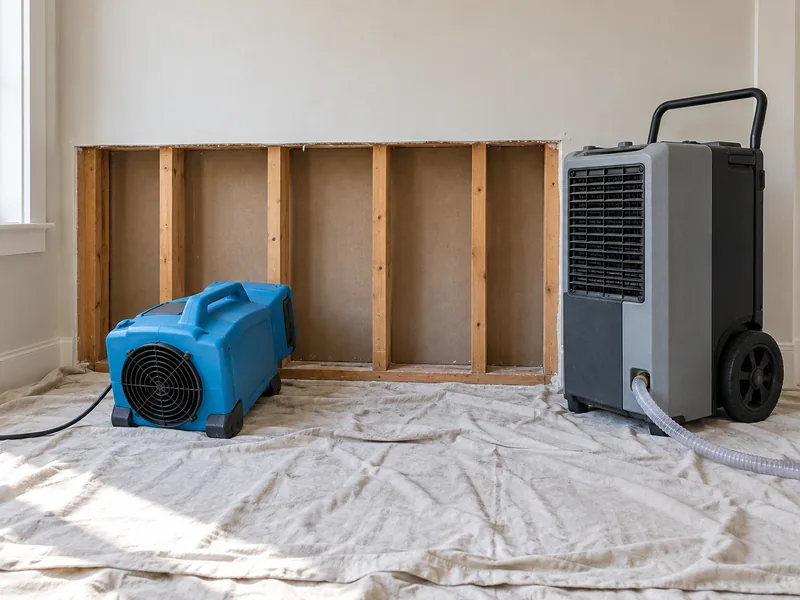
The cut starts beyond the edge of the stain and continues until we reach board that is dry and firm all the way through, because damp material left at the edge will carry moisture into the new work. Once the wall is open, we inspect the framing and insulation behind it, since fiberglass batts hold water long after the surface dries and wet studs stay damp for days. A moisture meter, a handheld instrument that measures how much water is held in the material, gives us a reading instead of a guess about whether the framing is ready.

The back of the board we removed matters too, because it shows the full extent of the moisture where the painted face revealed only the outer edge. New panels do not go up against framing that still reads wet, and we tell you what we found inside the wall before we close it.

Drying First, Rebuilding Second, and Why That Order Does Not Bend

Weekend owners understandably want water damage drywall repair finished in a single visit, but a wall can be closed quickly or closed dry, and only the dry repair holds up. Ordinary joint compound hardens by releasing water into the air, so each coat has to dry all the way through before the next one goes on, and that drying time sets the pace rather than the crew. Setting-type compound hardens through a chemical reaction and is what we use when the schedule truly requires it.

What cannot be rushed is the drying of the structure itself. Primer and paint applied while moisture is still moving through the wall will lift, stain and blister again, and repairing it a second time costs more than waiting for the wall to dry properly.

An air mover and a dehumidifier running in front of an opened wall

Working Across the April Sound Sections

Ask an April Sound owner where they live and the answer is often a section number. The community is organized by recorded section rather than neighborhood name, and that section number forms part of the property's legal description. It is how each lot is identified on paper, making it the clearest way to distinguish one home from another behind the gate. Each part of the community brings its own type of drywall work, and the sections below connect the location with the repairs and installations we are most often called out to handle there.

April Sound Section One: Patching Walls and Matching What Is Already on Them

Section One is a recorded section with its own plat on file, so homes here carry April Sound 01 in the legal description along with a block and lot number. That section appears on the deed, not just on a map, which is why we take the section, block and lot when booking your job instead of relying on the street address alone. Most of our work in these homes is straightforward drywall repair: cracked seams, damaged corners and holes filled with joint compound, then blended into the existing finish.

April Sound Section Three: Ceilings That Stain, Sag or Crack

Section Three is recorded the same way as Section One, and that section number appears in the legal description of every home within it. Ceilings are a common call here, and houses from this period often have wavy ones for a specific reason. Half-inch board was hung on framing spaced twenty-four inches apart and then covered with a water-based spray texture, even though board that thin was not rated to span that distance under the added weight.

Re-hanging or patching a ceiling in that condition leaves the original problem in place because the same span remains underneath. We remove the panel and replace it with board rated for twenty-four-inch framing, manufactured to stay flat under a sprayed finish.

Lakeview Village: Matching the Finish on a Painted Wall

Lakeview Village is the part of April Sound with its own separately recorded deed restrictions, filed in 2002 and part of the public record ever since. Addresses here are village addresses on the water rather than standard street numbers, which is what owners give us when they call about a wall. Most of the work here is drywall repair on an already painted surface, so we match the new finish to the existing one.

The Western and Eastern Sides: Moisture-Resistant Board in the Wet Rooms

The western and eastern sides of April Sound are served by Montgomery County Utility District No. 4, the district owners on this side of the community deal with. Much of the drywall work we handle here is in bathrooms and laundry rooms, where we replace standard panels with moisture-resistant board suited to those wet areas.

Fifty Years Inside One Gate, and the Layers That Leaves in a Wall

April Sound has been under construction for about fifty years, so no single interior style ever became standard across the community. Different drywallers finished the early homes and the later ones, and many were remodeled again as owners changed. When you call us for drywall repair, the first question is which part of that history we are looking at.

Built for Weekends, Lived In All Year

April Sound was laid out in the 1970s as a weekend community, and much of it is now occupied year-round. A second home used only a few days each month was finished for that purpose, with plainer surfaces, less trim, open back porches and attics or bays left as bare framing because nobody planned to sleep there. Full-time living changed those interiors. Rooms were added, porches were enclosed and lined with gypsum board, and spaces that had never been finished were built out.

So the wall a crew opens is often newer than the house around it but older than the most recent remodel that changed the room. That mix of ages is normal in an April Sound home and does not mean the work was done poorly.

Reading a Room That Has Been Worked On Twice Already

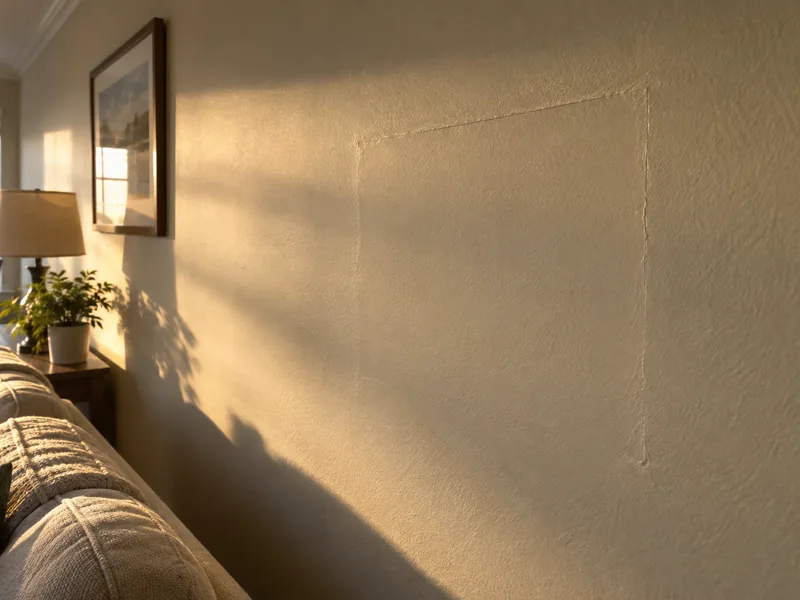
A wall that has already been repaired is a stack of work rather than one continuous surface, and small details reveal that history. A seam running where no stud sits behind it marks an earlier patch. Texture that changes as it turns a corner shows that two different hands finished the adjoining walls. Two shades of white can show through one coat of paint, a patch can shrink slightly at the edges as the joint compound dries, and board of two different thicknesses can meet behind a trim line where an addition joins the original room. Each clue helps us identify which layer came later.

That is the layer the repair has to match, because the finished work needs to meet the surface you actually see rather than the oldest layer underneath. That judgment is made standing in front of the wall, not over the phone.

The rectangular outline of an old patch showing through the paint in low light
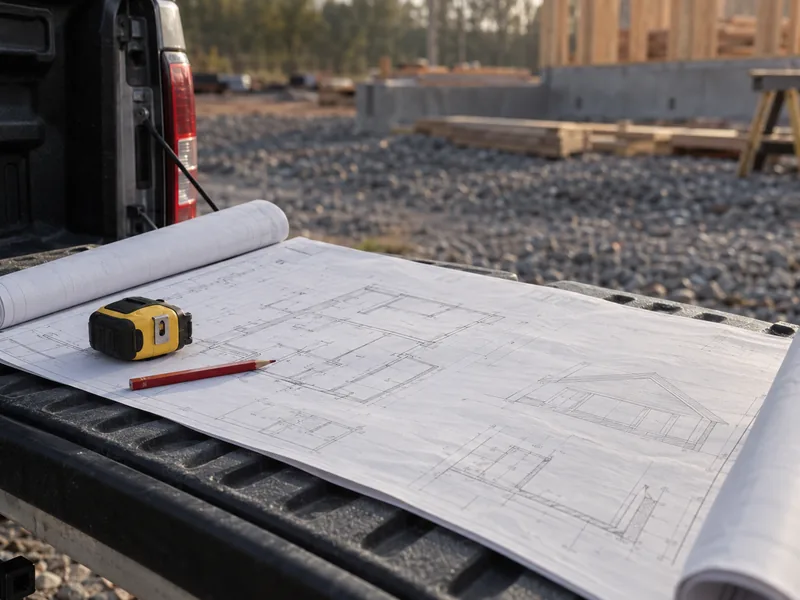
Drawings rolled open on a pickup tailgate with a tape measure and pencil holding them flat

Two Utility Districts, One Property Owners Association

Your address here sits inside a private subdivision rather than a town of its own, which changes who has authority over work inside your house. Two water and sewer districts and a property owners association handle much of what a municipality would otherwise oversee. Knowing which one applies to your address matters more here than it does in most places, because you are expected to confirm that yourself.

Why One Subdivision Has Two Utility Districts

The developer who laid out April Sound formed two Municipal Utility Districts rather than one, and both were created by an Act of the 62nd Legislature of the State of Texas in 1971 under Chapter 54 of the Texas Water Code. A Municipal Utility District is a local government entity that builds and operates the water and sewer systems for an area not served by a city.

Montgomery County Utility District No. 3 serves the center of the community on both sides of April Sound Boulevard, while Montgomery County Utility District No. 4 serves the western and eastern sides.

When a wall turns up wet, the first call goes to the district that serves your address, not to us.

Drywall Questions From April Sound Owners

We are in a gated community. What do you need from us before you start?

Two things happen before work starts: we coordinate gate access for the crew and board deliveries, while you confirm whatever your association requires.

We only use the house some weekends. Can you work while we are away?

Yes, if it is arranged in advance. We tell you what we find the same day we find it, and we can photograph what was behind the board if you want a record of it.

The original ceilings are still up. Do we have to do anything about them?

No. An intact ceiling that is not being disturbed does not need work. Disturbance is what raises the question, not age: a leak, a remodel, or a decision to remove the ceiling texture. At that point, sampling comes first.

A wall is wet. What happens first?

Get the water stopped first. Our work begins after the source is shut off, because new drywall panels will get wet as quickly as we hang them.

Do you only work on houses, or on the club buildings too?

Both. A clubhouse ceiling is usually a suspended grid rather than drywall, so a damaged panel is replaced instead of patched, and each type of repair is quoted differently.

Request a Free Drywall Estimate in April Sound from Conroe Drywall Co.

Conroe Drywall Co. comes to your April Sound home, looks at what went wrong, and puts the repair scope and price in writing so you can review both before deciding anything. The visit is free, and there is no obligation once you have the written scope in hand. Call a drywall contractor who knows the community at (346) 706-5743, or send us the details through our quote form.