Drywall Contractor in Montgomery, TX: Repair, Plaster & Texture | Conroe Drywall Co.

Conroe Drywall Co. is a drywall contractor with over 15 years of experience repairing, hanging and finishing walls and ceilings across Montgomery, TX. We serve Conroe, Montgomery County and the surrounding communities. Drywall repair is the service homeowners call us for most, whether that means fixing one damaged section or restoring an entire room after a leak, followed by new drywall installation, finishing and texturing, and commercial drywall work. We also repair and install ceilings, remove popcorn texture, rebuild drywall after water damage, and handle plaster repair. For projects that need more than board and finish work, we frame walls, install insulation, build soffits, fit fire-rated and moisture-resistant board, and add soundproofing between rooms.

Montgomery was the county's first town, incorporated in 1848, and new streets of houses are still being built along its edges today. In older homes, the wall surface is often plaster applied over wood lath rather than the gypsum board used later, so we match the texture where the two materials meet. On newer drywall, we follow ASTM C840, the standard for fastening and jointing gypsum board, and finish to the GA-214 levels, the trade scale for how smooth the completed wall should be. Level 4 is suited to a standard painted wall, while Level 5 adds a skim coat across the entire surface where strong side light would reveal every variation.

We are insured, and an estimate on your own walls costs nothing. Much of our work here is residential drywall. Call (346) 706-5743 or use our quote form for a clear price on your project.

Get A Free Estimate

Why Montgomery Owners Want a Drywall Contractor Who Has Seen Lath

Before we quote a repair in Montgomery, we first identify what the wall is actually made of. In the newer parts of town, it is gypsum board, and that takes only a moment to confirm. In the old core, it may be plaster, which changes how the repair needs to be handled. A crew that assumes board and starts cutting is learning at the expense of your wall.

Conroe Drywall Co. works on both kinds of wall, and what that means for your job comes down to a few straightforward points:

  • We cover floors and furniture and mask the HVAC returns before the first cut, then leave the site broom-clean at the end of each day.
  • The same crew handles your job from the first cut through the last coat, so the work is never handed off halfway through.
  • Our on-site estimates are free, and financing is available for larger projects.
  • Before work begins, you receive a written scope explaining exactly what will be opened up, repaired and put back.

If you want a price for your own walls, call us at (346) 706-5743 or send the details through our quote form. We also serve homes at Walden on Lake Conroe.

Drywall Contractor Services in a Town Built Before Drywall Existed

Montgomery gives one drywall contractor two very different types of buildings to work on: the old core and the newer edges of the city. The list below starts with repairs owners call about after something goes wrong, then moves into the installation and finishing work used to close in a new or reworked room, followed by the specialist assemblies needed for wet rooms, noisy spaces, and walls next to a garage. Our drywallers work on both kinds of building, and which one you own determines where the job starts, not whether we take it on.

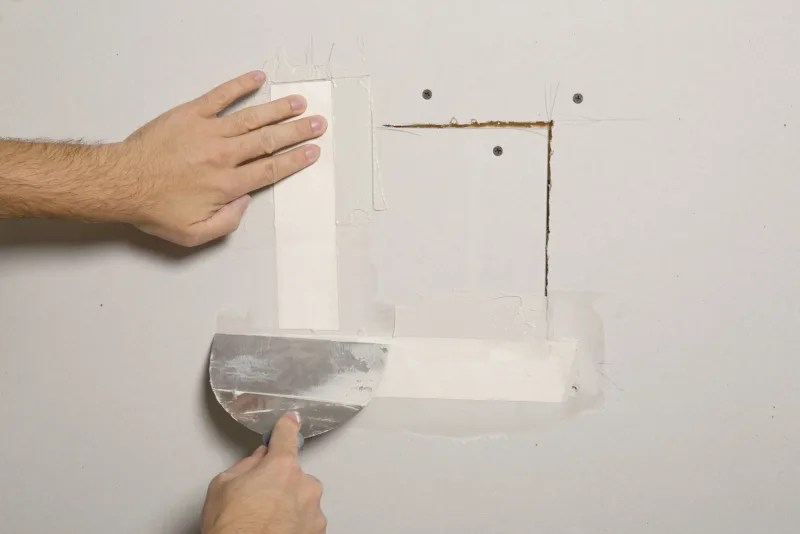
Paper tape bedded in joint compound over a square drywall patch

Drywall Repair

Holes, popped nail heads, damaged corners and hairline cracks are common repairs on both sides of town. In the old core, we check the wall itself first, because repairing plaster with joint compound and drywall tape is different from repairing gypsum board.

Crew screwing off drywall panels on a wood-framed interior wall

Drywall Installation

We hang new board wherever a room did not have it before, including an enclosed porch, a garage converted into a bedroom, or a room rebuilt after damage. In Montgomery, that usually means tying new 1/2-inch gypsum board into existing walls that are already standing and rarely square.

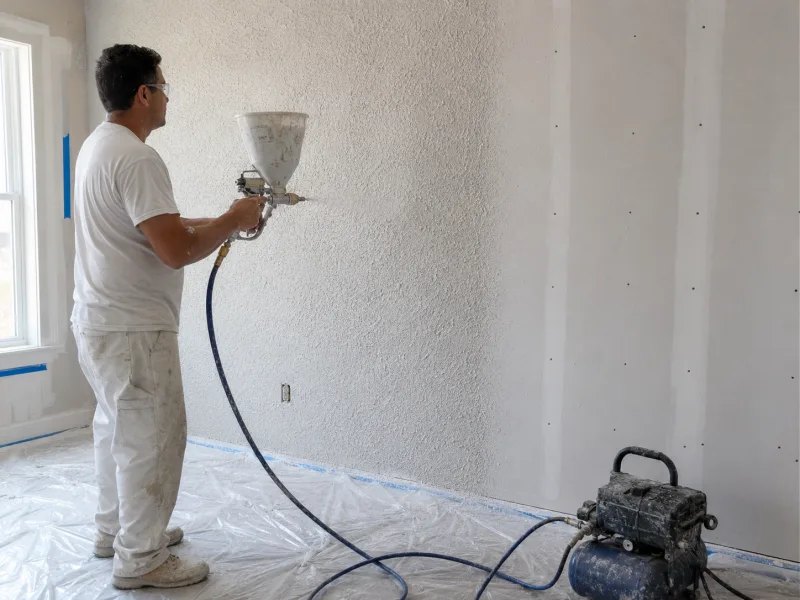
Finisher spraying wall texture with a hopper gun

Drywall Finishing & Texturing

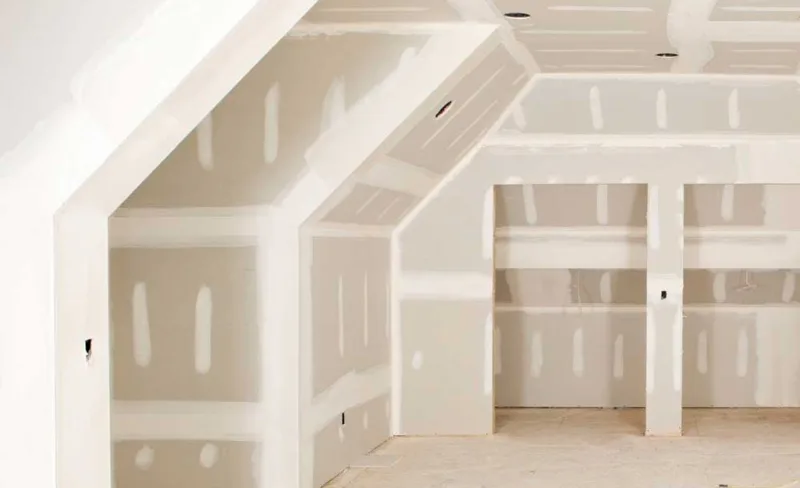
Finishing is the taping, filling and sanding that turns hung board into a paint-ready surface. We specify the finish level instead of leaving it to the crew, and in Montgomery that usually means Level 4 with a knockdown texture over new board.

Taped and finished drywall walls in a commercial tenant build-out

Commercial Drywall Services

Shops and small offices along Montgomery's restored downtown streets need wall and ceiling repairs completed without shutting down the business. We handle commercial jobs in phases, using commercial gypsum board and suspended ceiling grid. After-hours phased scheduling allows us to finish sections while the business continues using other areas.

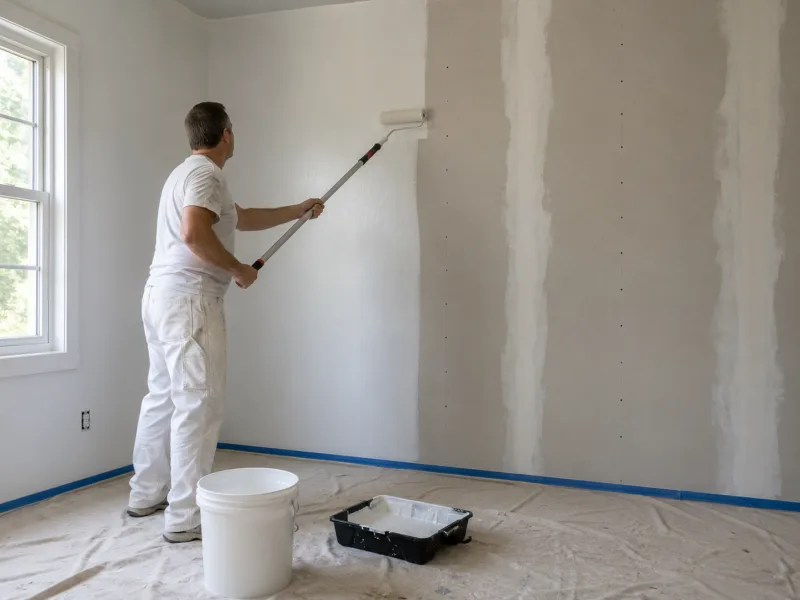
Painter rolling primer over taped drywall seams and compound

Drywall Priming & Painting

A repaired area absorbs paint differently from the surrounding wall, which leaves the patch looking duller or shinier when the room's light hits it. We seal the repair with PVA primer to even out absorption, then carry the paint across the entire surface for a consistent finish.

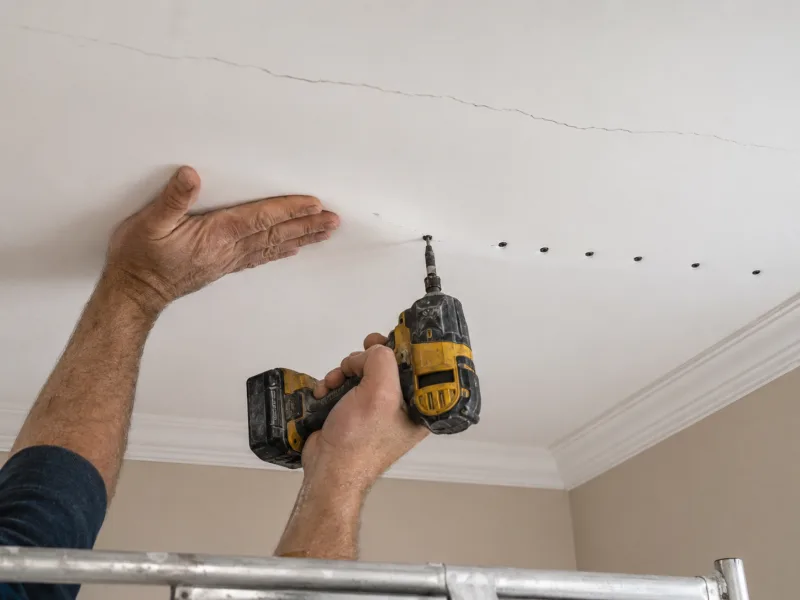
Re-screwing a cracked ceiling panel back to the framing

Ceiling Repair

Ceilings sag, stain and crack before walls do because gravity is constantly pulling on them. In Montgomery's older houses, the ceiling is often plaster over lath rather than board, and the condition of the joists above determines how much material has to come down.

Popcorn texture removed with a vacuum sander in a plastic-masked room

Popcorn Ceiling Removal

Popcorn is the bumpy sprayed texture used on ceilings from the 1950s onward, and plenty of Montgomery County houses still have it. The age of the texture determines where the job starts, and anything from that era gets lab testing before a scraper touches it.

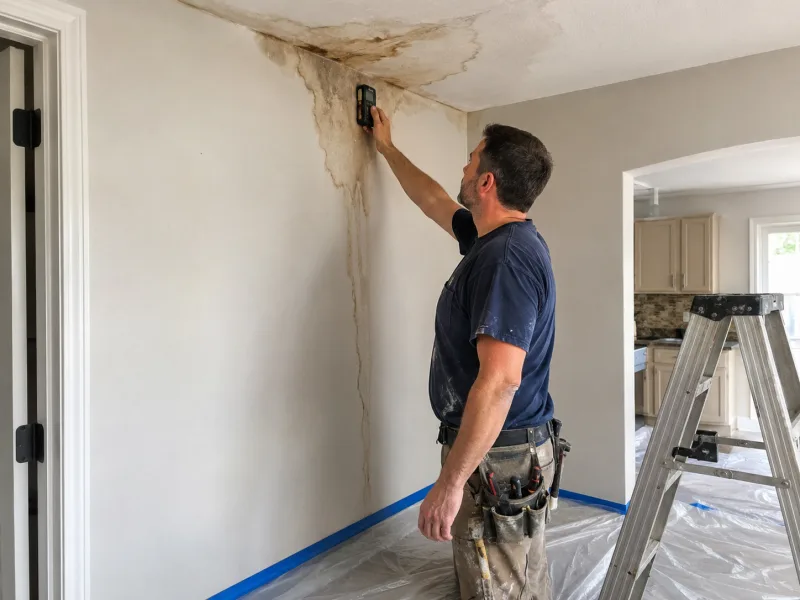
Contractor checking a water-stained ceiling corner with a moisture meter

Water Damage Drywall Repair

Storm water and long humid spells leave drywall soft and swollen. We cut the damaged panel back to sound material, take a moisture reading to confirm the framing behind it is dry, and only then fit replacement panels into the opening.

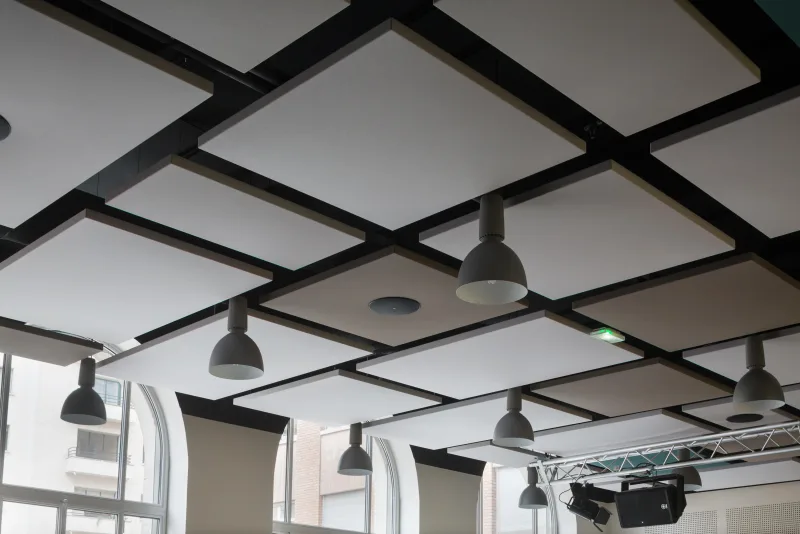
White acoustic ceiling panels suspended in a black grid with integrated lighting

Acoustic Ceiling Installation & Repair

A suspended grid is a lightweight metal framework hung below the structure to hold removable acoustic ceiling tiles. Leased offices and small commercial units around Montgomery use these systems, and we replace stained or broken tiles, straighten bent grid, and reset the perimeter trim.

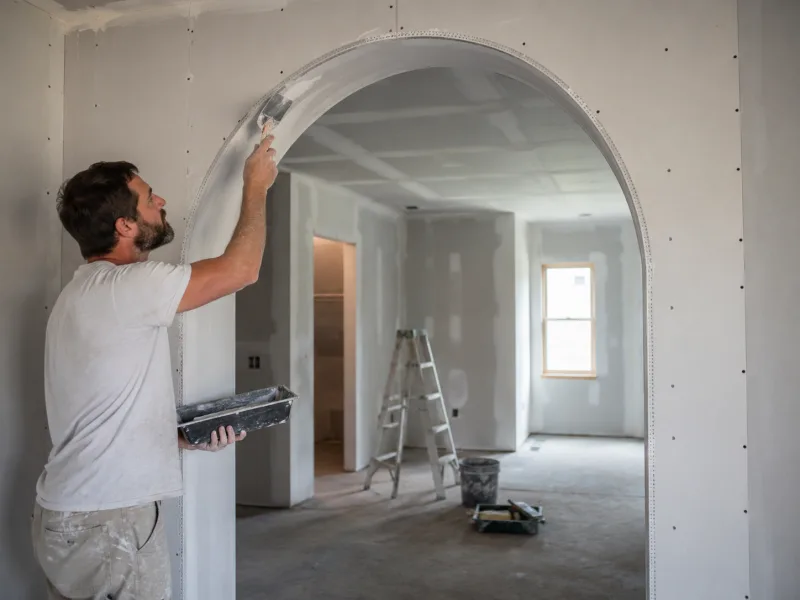
Finisher coating a corner-beaded drywall archway

Custom Drywall & Architectural Features

Arches, wall niches and coffered ceilings, where the ceiling is divided into recessed panels, are most common in Montgomery's newer sections. Radius board and archway bead form the curves, and including these features while the room is being built costs far less than adding them afterward.

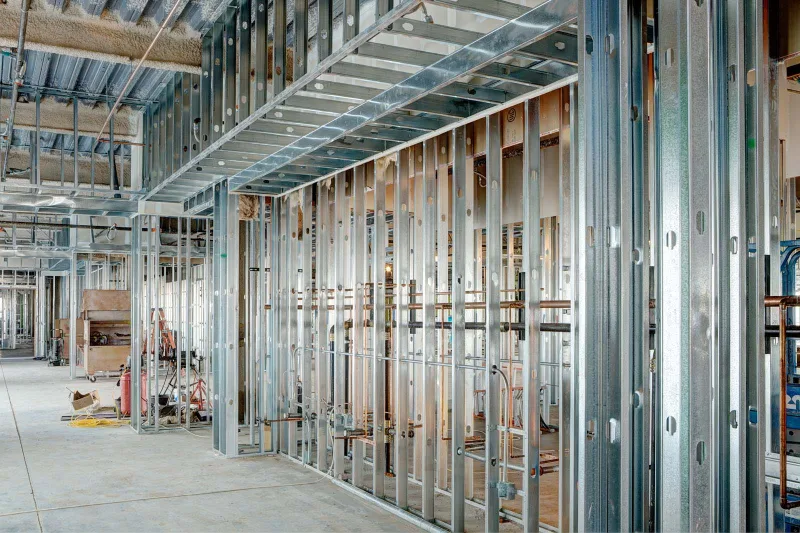
Galvanized steel stud partition walls framed in a commercial interior

Metal Stud Framing

Light-gauge steel studs are the standard framing for commercial fit-outs in Montgomery because steel stays straight and does not feed a fire. We set the floor and ceiling track, space the studs to match the wall layout, and hang board on the completed frame.

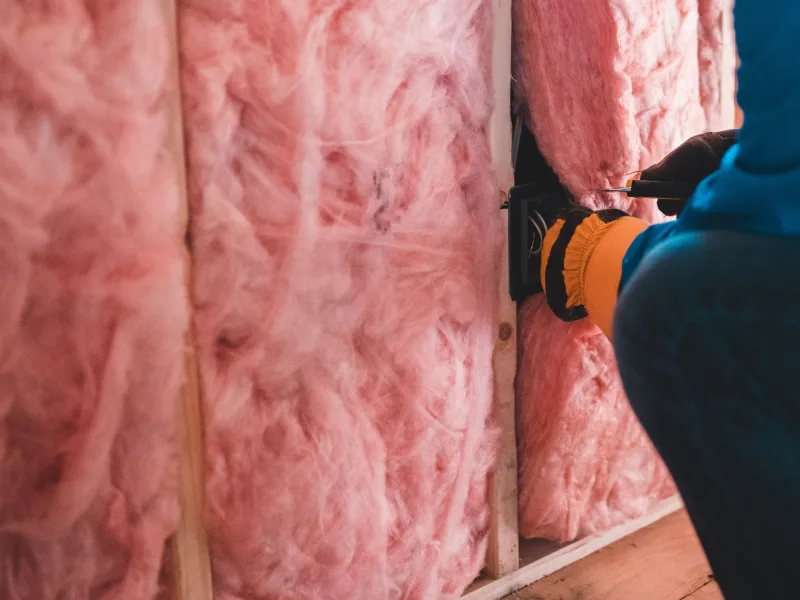
Fiberglass batts trimmed around an electrical box in an open stud bay

Drywall Insulation

An open wall is the least expensive time to insulate it. While the stud cavity is exposed, we install fiberglass batts, which is worth doing in a Montgomery summer whether the wall is open for a repair or being built new.

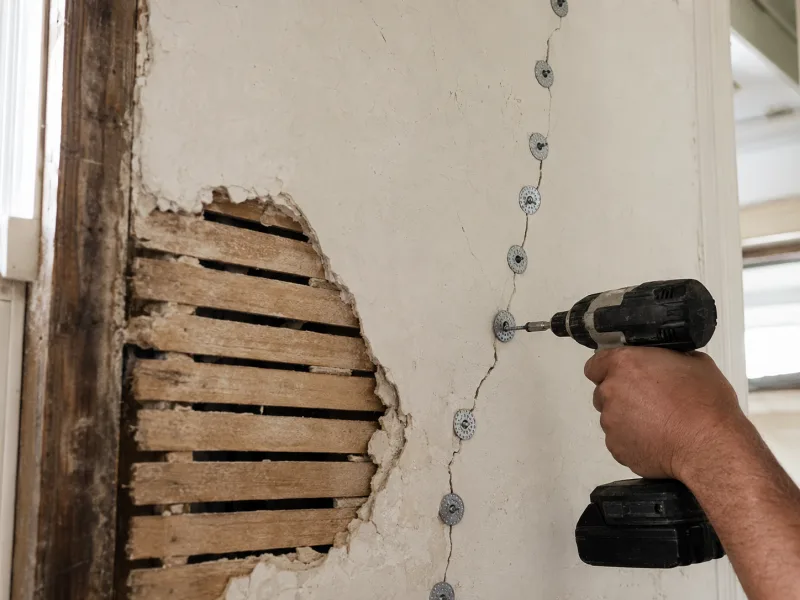
Plaster washers drawing a cracked plaster wall back to its wood lath

Plaster Repair

Montgomery needs this work more than most towns. Where a wall is lime plaster pressed onto wood lath rather than gypsum board, we repair the plaster and restore its grip on the lath instead of tearing out the wall and replacing it with board.

Dated wallpaper scraped from a wall during removal

Wallpaper Removal

Rooms in Montgomery's older houses have often been wallpapered several times, with each new layer applied over the one before it. We steam off the paper and adhesive back to the wall surface, then decide whether a skim coat is needed based on what the wall looks like underneath.

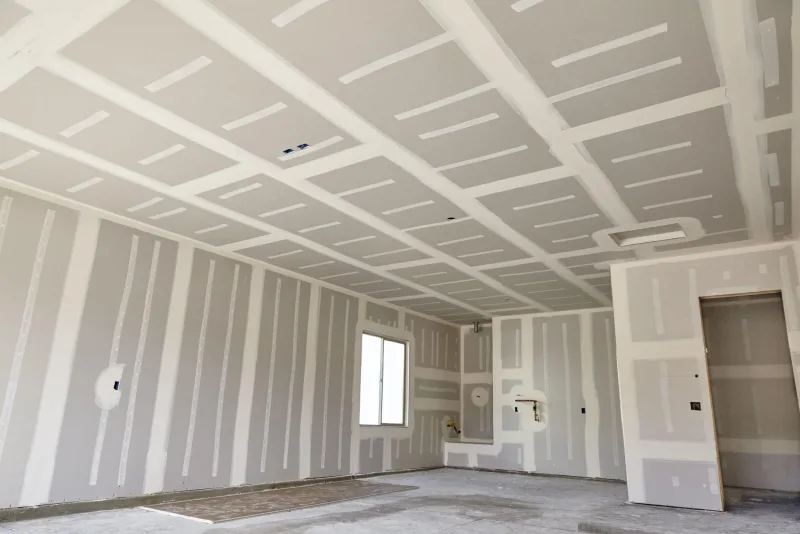
Hung and taped drywall throughout a new construction interior

New Construction Drywall

In the sections still adding new lots along the edge of the city, we hang the board, tape and fill the seams, and texture entire houses to the finish level the builder specifies and the schedule the next trade needs us to meet.

New partition wall framed with a door opening and half boarded

Partition Wall Installation

A partition is a new interior wall built to divide an existing room, whether you are splitting a bedroom in a Montgomery house or creating an office inside a leased unit. We frame the wall, account for the door opening, hang the wall board, and finish the entire assembly as one job.

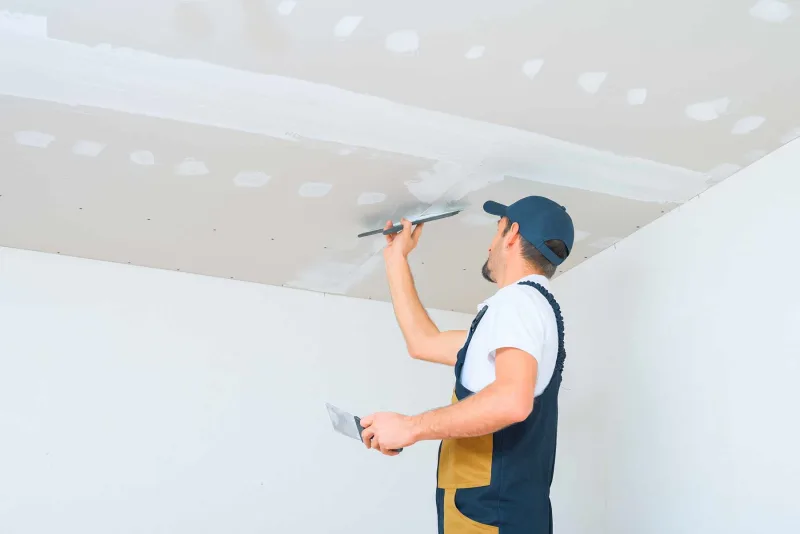
Finisher coating taped seams on a new drywall ceiling

Drywall Ceiling Installation

New ceilings are hung with sag-resistant ceiling board, which has a denser core that keeps it from drooping between supports. In Montgomery's older rooms, the joists overhead are rarely level, so we use furring strips to shim them and create a flat ceiling.

Finisher coating a gypsum-board soffit box along the ceiling

Drywall Soffits & Bulkheads

A soffit or bulkhead is a boxed enclosure built to hide a duct run, beam, or pipe. Montgomery's older houses were built before central air, so later ductwork and plumbing were routed wherever space allowed, often below the ceiling and in plain view.

Taped drywall on an attached-garage wall and ceiling separation

Fire-Rated Drywall Systems

Where a garage meets living space, or one commercial unit meets the next, the wall has to resist fire for a set period. The rating applies to the tested assembly as a whole, not to the fire-rated Type X board by itself, so a one-hour assembly is built exactly as the tested design specifies.

Green moisture-resistant board hung beside cement backer board at a tub alcove

Moisture-Resistant Drywall Installation

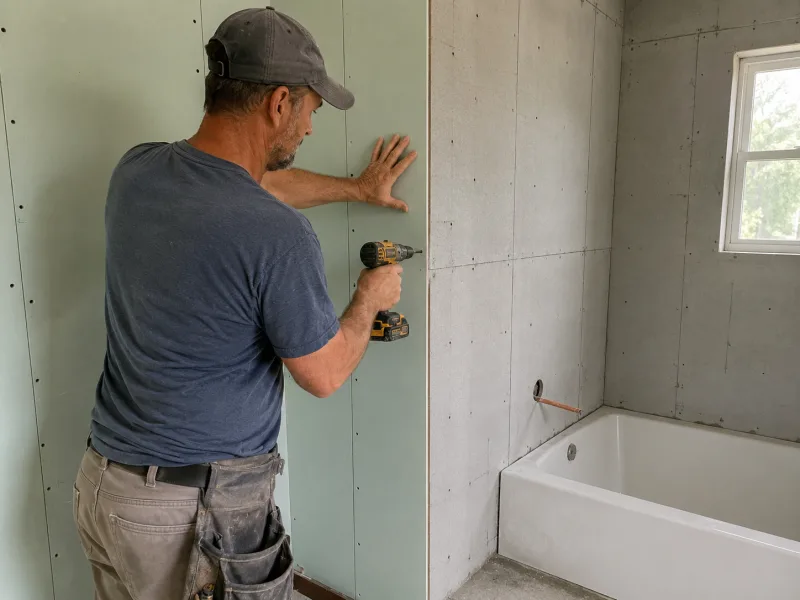
Bathrooms and laundries hold damp air long after the rest of a Montgomery house has dried out. We use moisture-resistant board as standard in those rooms because it is made for that environment. It is not the backer for a tiled shower or tub surround, which requires a board designed specifically for that use.

Installer setting drywall over resilient channel and mineral wool insulation

Drywall Soundproofing

Sound travels through a wall by making it vibrate, so quieting the room means adding mass and breaking that path. Resilient channel separates the board from the framing, while an insulated cavity absorbs more of the sound that gets through, making the assembly a good fit for houses on Montgomery's highway side and shops that share a wall.

Working On Walls That Were Never Drywall

A wall that was never drywall has no manufactured replacement panel to match. Drywall comes in a known thickness, so a patch is cut from the same type of board to fit the opening, while plaster was built up wet and by hand on site. Much of Montgomery's older housing predates gypsum board, so the first step in residential drywall work here is identifying exactly what the wall is made of.

What Is Behind the Surface in Montgomery's Oldest Houses

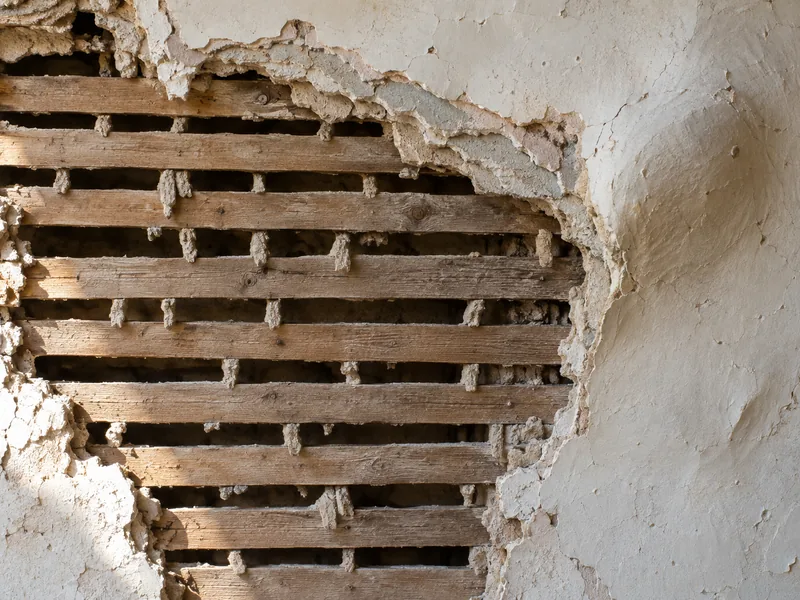
In Montgomery's oldest houses, the wall surface may be lime plaster over wood lath, the thin wood strips nailed across the framing, while later houses may use rock lath instead. We confirm what is behind the surface before choosing the repair rather than assuming from the age of the house.

Matching a Finish That Was Not Made by a Machine

A wall finished by hand a century before spray equipment existed has no catalog texture to match and no product you can simply order. The target is the room itself: the exact flatness, ripple, or trowel pattern already present on the surrounding wall. Texture matching means reproducing that pattern across the repaired area so the seam does not catch the eye. Because the finish was never standardized, we judge the match on site in the room's actual light rather than against a sample viewed somewhere else.

Where the finish is flat rather than textured, the remaining decision is which finish level the room needs. Level 4 suits most rooms, while Level 5 is used where a window or light fixture throws light across the wall at a shallow angle.

Plaster broken away from a wall to expose the wood lath behind it

About Montgomery, Texas

Montgomery began as the Lake Creek Settlement in 1837 and is the oldest town in the county, incorporated eleven years later. It served as Montgomery County's first seat before that role moved to Conroe in 1889, and much of what was built during the town's early decades still stands today. The 2020 census counted 1,948 residents across about five square miles, up from 621 ten years earlier, so Montgomery is preserving some of its oldest buildings while new streets continue to take shape around its edges.

Several of those early buildings are open if you want to see them. The Arnold-Simonton House, built in 1845, is the oldest house in town and a Recorded Texas Historic Landmark. It now stands within Fernland Historical Park, which opened in 2012 and brings several other early structures together on the same site. The Davis Cottage and Museum and Old Montgomery Baptist Church are nearby. Children in Montgomery attend Montgomery Independent School District rather than Conroe ISD.

The Parts of Montgomery We Work In

Montgomery is small enough to cross in a few minutes, but the walls inside it span two different centuries. The old core sits at the center of town, where many buildings went up long before gypsum board was sold, while newer streets around the edges are still being laid out and built lot by lot. The four parts of town below cover both ends of that range, and where your property sits tells us much of what the work will involve before we ever open a wall.

Downtown Montgomery: Patching Plaster in the Historic Business District

The restored shopfronts along Liberty, Caroline and Prairie Streets, together with the houses directly behind them, form the commercial heart of town. These buildings went up before gypsum board existed, so beneath the paint you find lime plaster spread over wood lath. Plaster of that age tends to crack along old lines and break away in patches rather than full sheets. We repair those areas and bring the new surface flush with the surrounding wall, so the repair does not catch your eye when light comes in from the street. Questions about exterior approval for a downtown building go to the city.

The Streets Around the Lake Creek Settlement: Ceilings That Have Started to Sag

The oldest part of town surrounds the downtown streets, and a marker on Liberty Street records where the settlement began. Houses here have carried their original ceilings through generations of Texas summers, and ceilings are often where age shows first. A ceiling hangs from the joists above it, the horizontal timbers it is fastened to, and that connection weakens before the walls start giving trouble. Owners here usually notice a soft bulge or a line of cracks overhead, and we secure the ceiling back to those timbers before rebuilding the surface.

The Hills of Town Creek: New Board Going Up Section by Section

This subdivision is still growing outward in stages, with Section 5 the most recent phase to come before the city's Planning and Zoning Commission. The houses being built here have gypsum board from day one, so there is no old surface to work around and no existing finish to match. We hang and finish entire houses to the builder's schedule, moving through each run of rooms once the framing and wiring have been signed off, then bring the walls to a Level 4 finish before the painters come in.

Town Creek Crossing: Finishing and Texture Across a Run of New Houses

Town Creek Crossing was added to the larger Buffalo Springs development, and the city recorded 102 house plots and one commercial plot in its first section. On a run of new houses that size, the work is mostly about finishing. The board is already hung when we arrive, so we tape and fill the seams, then apply the knockdown texture, a sprayed pattern flattened with a blade while it is still wet. Because texture applied by different hands on different days will not match from wall to wall, we keep the same crew and the same mix across the entire run, so a buyer moving from one house to the next sees a consistent finish.

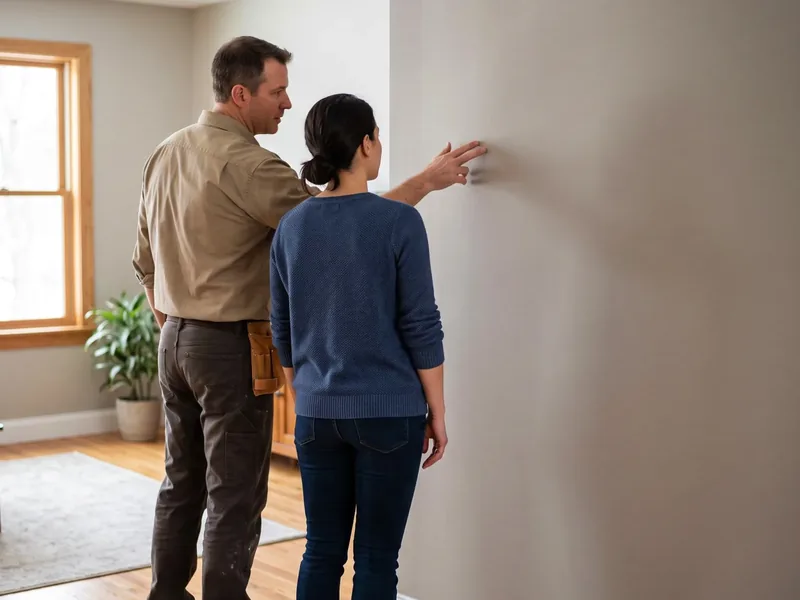
A contractor and a homeowner standing at a wall together, the homeowner pointing at a spot on it

Do You Need Permission to Work Inside Your Own Walls?

Two different things are called historic, and only one tells you what you can change in your own building. A designation recognizes that a property is significant, while a regulation sets local rules for what an owner may alter. Before assuming your project needs approval, find out which one applies to your address, because a marker on the wall and an ordinance in force have very different consequences for interior work.

What the City Reviews, and What It Does Not

Montgomery handles its own historic review rather than leaving that decision to the county or state. The city adopted a historic preservation ordinance and assigned approval to its Planning and Zoning Commission, a group of local appointees that reviews proposed changes before work begins. That review applies to exterior work and features visible from a public right-of-way, meaning anything a person standing on the street or sidewalk can see.

Interior walls and ceilings are not the focus of the ordinance. A Recorded Texas Historic Landmark is something different again: a state marker recognizing a building's historical significance, not a set of rules governing its interior. Because district boundaries and building lists change, confirm your own address with the city rather than relying on us.

A Montgomery Address Is Not Always a Montgomery City Address

Montgomery mailing addresses extend well beyond the city limits, so many properties that read Montgomery are actually in unincorporated Montgomery County, including much of the area toward the lake. Inside the city limits, permitting goes through the city's planning and development office. Outside them, it goes through the county, and the city's historic ordinance does not apply. The difference is in where you file and what that office requires, not in the wall itself: the same repair, the same board, and the same finish. If you are unsure which side of the line your property sits on, the city can confirm it from your address before you plan the work.

Drywall and Plaster Questions From Montgomery Owners

How quickly can drywall repairs be completed?

Most repairs take one day, including texture. A single hole, cracked corner, or run of popped nail heads is patched, coated, and textured in one visit, while a larger repair takes longer. Water-damage rebuilds usually require 2 to 3 visits because the coats dry between visits.

Our house is inside Montgomery's historic district. Do we need approval before you work on the inside?

No. Patching a bedroom wall or replacing a ceiling inside your own house does not go before the Planning and Zoning Commission. Where commission approval is required, it comes in addition to the regular building permit rather than replacing it. The city can confirm exactly what your address requires.

We pulled a switch plate off and the wall behind it is not drywall. What is it?

What you are looking at is almost certainly the plaster-and-lath wall used in Montgomery before gypsum board existed. Finding it behind a switch plate in an older house here is normal, not a sign that something is wrong. We repair both plaster and board, so you do not need two contractors for the same wall.

The ceilings in our older place still have the sprayed-on texture. Can you take it off?

Yes, and the first step is testing rather than scraping. Texture installed before 1990 can contain asbestos, so we arrange lab testing before any scraping begins and remove only material the results clear as safe. If the results identify asbestos, removal becomes regulated abatement work for a licensed asbestos abatement contractor, so we hand that part of the job over instead of disturbing the ceiling ourselves. That sequence protects the air inside your home.

Part of a wall got wet after a storm. Can you put it back?

Yes, once a moisture meter confirms that the framing behind the surface is dry. A wall can look and feel dry while the studs behind it still hold water, and closing new board over wet framing traps that moisture, so the meter reading sets the timing rather than appearance alone. The moisture source has to be stopped and any active mold dealt with before the wall is closed. Once the framing is dry, we cut back to sound material and fit the replacement panels.

We are in one of the newer sections off Lone Star Parkway. Is that different work from the old part of town?

Yes, it is a different job from start to finish. On a new house, the finish level is set before the painter arrives, usually at Level 4, and the gypsum board goes up room by room in an empty house. In the old core, the same work has to be carried out around furniture, finished floors, and people living in the house while the job is underway.

Ask for a Free Estimate on Montgomery Walls and Ceilings from Conroe Drywall Co.

A free on-site estimate from Conroe Drywall Co. means we come to your property, inspect the walls and ceilings you want us to work on, and price the job from what is actually there rather than from a description over the phone. Call (346) 706-5743, or fill in the quote form and we will arrange a time to come out and take a look.