
Wallpaper Removal in Conroe, TX | Conroe Drywall Co.
Conroe Drywall Co. has handled wallpaper removal for homeowners and property managers throughout Conroe, Texas for over 15 years. The paper itself often comes down by lunchtime, but the wall underneath is still far from ready for paint. Preparing that wall properly is the work you are hiring us to do.
We strip wallpaper of every kind: vinyl wallcoverings, fabric papers woven from cloth, and textured papers with a raised pattern you can feel. The job can be as small as one border or accent wall or extend through whole rooms and stairwells, including walls covered by several layers applied one over another. What the paper leaves behind is the real work. Adhesive residue is the old paste dried onto the surface, while torn board face is the paper skin of the wall itself pulled away in patches. We correct both with a skim coat, a thin spread of joint compound that brings the wall back flat.
A scoring tool, wallpaper steamer and pump sprayer loosen the paper, while broad knives lift it from the wall. We use taping knives to apply the compound, and 150-grit sanding smooths it before a drywall primer-sealer seals the surface for paint. The finish follows ASTM C840, the published standard for hanging and finishing gypsum board. We take your wall to primed and paint-ready, and stop there. Finish painting and texture work are ours too, priced on their own lines, and we do not install new wallcovering.
We serve Willis, Montgomery and the Lake Conroe communities throughout Montgomery County. Call (346) 706-5743 or send your project details through our quote form, and we will start by taking a look at your walls.
Get A Free Estimate
What Wallpaper Removal Involves
Wallpaper removal is one service, but the job changes from room to room. Four things determine what yours involves: the type of wallpaper, how many times it was hung, how much of the room is covered, and what surface the paper was applied to. We sort out all four during the on-site estimate before giving you a price, because wallpaper that releases in full sheets takes less labor and leaves a different repair behind than paper that comes off in shreds. Each factor is worth looking at on its own.
Vinyl, Fabric and Textured Wallcoverings
A wallcovering is simply whatever was hung on the wall, and the material determines how it reacts when wet. Solid vinyl has a thin plastic face over a paper backing, so water cannot pass through the surface to reach the paste underneath. Many vinyl wallcoverings are peelable, which means the plastic face comes off dry while the paper backing stays bonded to the wall. That backing is the part that matters, and it still needs to be wetted and removed. Fabric wallcoverings and grasscloth are cloth bonded to a paper backing and behave much the same way at the surface.
Textured and embossed papers are pressed into a raised pattern, so they absorb water unevenly as the thicker areas take in more than the thinner ones. Washable and painted-over papers have sealed faces that resist water much like vinyl. In each case, the surface has to be opened before moisture can reach the paste behind it. That is why vinyl wallpaper removal takes longer, not because the material itself is stronger.
One Layer, or Several
Hanging new paper over old paper is faster than stripping the existing layer first, so many owners did exactly that. Each layer added another coat of paste, leaving several separate bonds stacked one over another. Water has to work through every layer before it reaches the bottom one, and the bottom layer is the only one bonded directly to the board. Because of that, it determines whether the board underneath comes through the removal intact.
Wallpaper stripping on a three-layer wall is not simply three times the work of removing one layer. It becomes one extended soak, with each upper layer slowing the water before it reaches the bottom bond.
We determine the number of layers during the estimate, not after the room is already underway.
Borders, Accent Walls and Full Stairwells
How much wall is covered, and where that wall sits, changes the work just as much as the material itself. A wallpaper border is a narrow strip, usually four to nine inches deep, running along the ceiling line, and it looks like a small job because so little paper is visible. The paste behind it still runs the full length of every wall in the room, leaving a room-sized band to clean and repair. An accent wall is the opposite: one papered wall in a room where the others are painted.
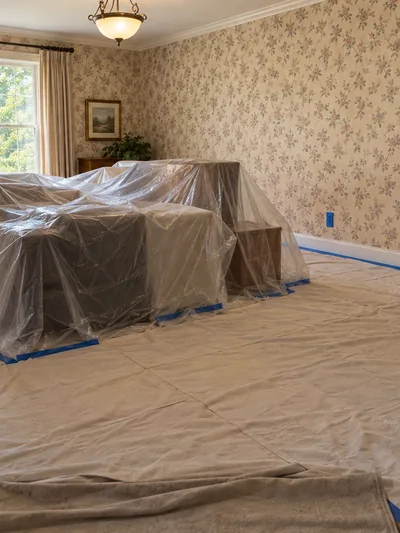
A two-story stairwell is more about access than wall area. The wall above the stairs cannot be worked safely from a ladder set on the treads, so we build a stable platform over the stairs with staging before removing the first sheet. In every room, furniture is moved or covered, and outlet covers and trim are removed before any wetting begins.
Paper Over Board, Paper Over Texture
The substrate is the surface underneath, meaning the material the wallpaper was bonded to. Primed gypsum board is the common case and the easier one because the primer gives the paste a surface it can release from. Bare, unprimed board is the difficult case; wallpaper on unprimed drywall is covered further down. If the wall behind the paper is plaster rather than board, that falls under our plaster repair service and is quoted separately.
The fourth case is wallpaper installed over an existing textured wall, which is common in houses here. Removing the paper pulls the texture away in patches instead of evenly, leaving two straightforward options: we skim the wall flat, or we retexture it to match the rest of the room. Retexturing is a separate service and appears as its own line on your estimate. Because sanding or skimming disturbed texture creates dust, we first need to know what that texture contains. Texture installed before 1990 can contain asbestos, so we arrange lab testing before any scraping begins and remove only material the results clear as safe.
Getting the Adhesive Off, Not Just the Paper
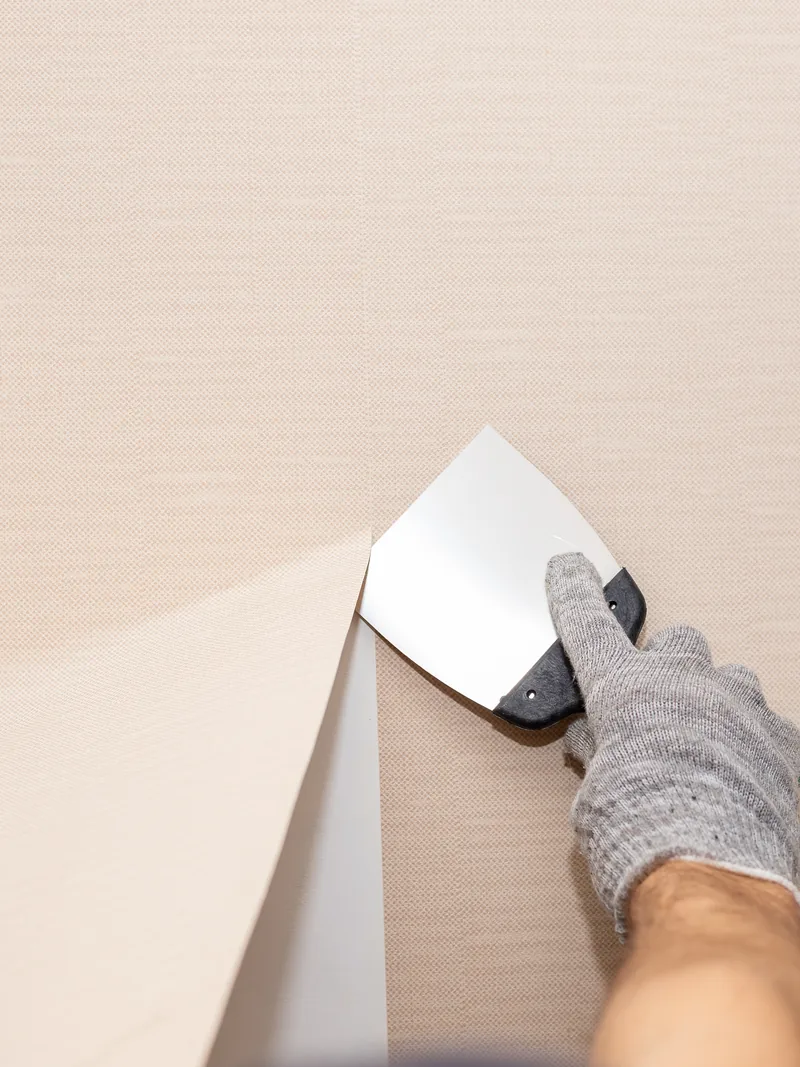
Removing wallpaper from a wall is really two jobs. The first is stripping the paper itself, which comes away in sheets or strips and leaves an obvious pile on the floor. The second is removing the paste that held it there, a thin film left behind on the wall after the paper is gone. That second part is invisible once it has been done properly, but it shows up later when it has been missed. Wallpaper adhesive removal is what separates a wall that is truly ready for paint from one that only looks ready.
The paste comes off with water, not force. We wet the wall in stages and give the water time to soften the wallpaper glue before scraping begins, rather than dry scraping a hardened film off the surface and gouging the wall underneath.
Scoring, Soaking and Steam
Most wallpaper faces repel water, so the moisture needs a way through. Scoring creates that path: a small wheeled tool makes fine perforations in the surface so water can reach the paste underneath. Set too shallow, the moisture never reaches the adhesive and the paper stays stuck. Set too deep, the wheel cuts into the paper face of the wall board itself, turning a stripping job into a drywall repair.
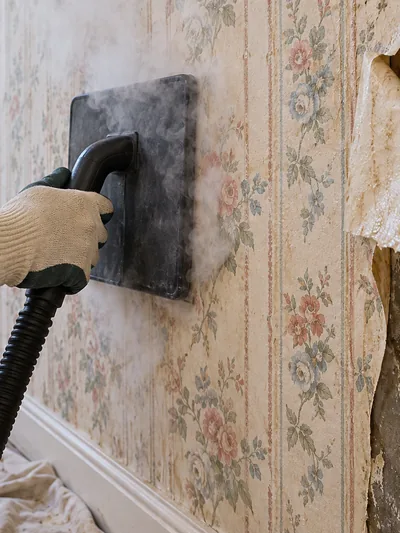
Once the face is open, the softening agent goes on. A pump sprayer spreads warm water and wallpaper stripping solution across the wall quickly, while a thicker enzyme or gel stripper clings to the vertical surface instead of running down to the baseboard. A wallpaper steamer works differently by driving heat and moisture through the scored face and into the paste, making it the better choice for heavy or stubborn papers that a sprayer cannot penetrate.
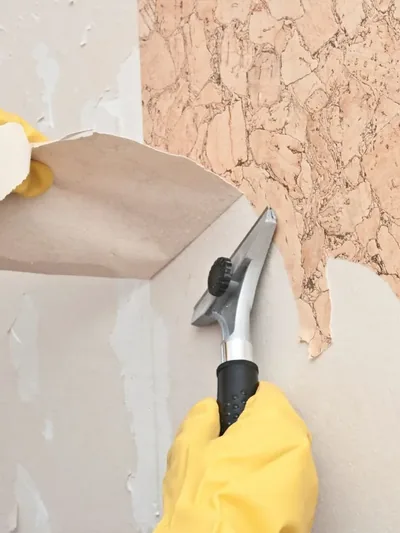
In every case, dwell time does the real work: the wetting agent needs several minutes on the wall before removal begins. Force is no substitute. Once the paper has softened, a 6-inch broad knife lifts it away at a low angle rather than digging in like a chisel, because forcing the blade into the wall only creates repairs that need filling afterward.
Why the Paste Has to Leave the Wall
Wallpaper paste is water-soluble, and it remains that way after it dries. That is the problem. Primer and paint are water-based coatings, so applying them over a wall that still carries wallpaper glue adds moisture back into the paste. The adhesive softens and swells, the coating above it loses its bond, and the surface begins to release.
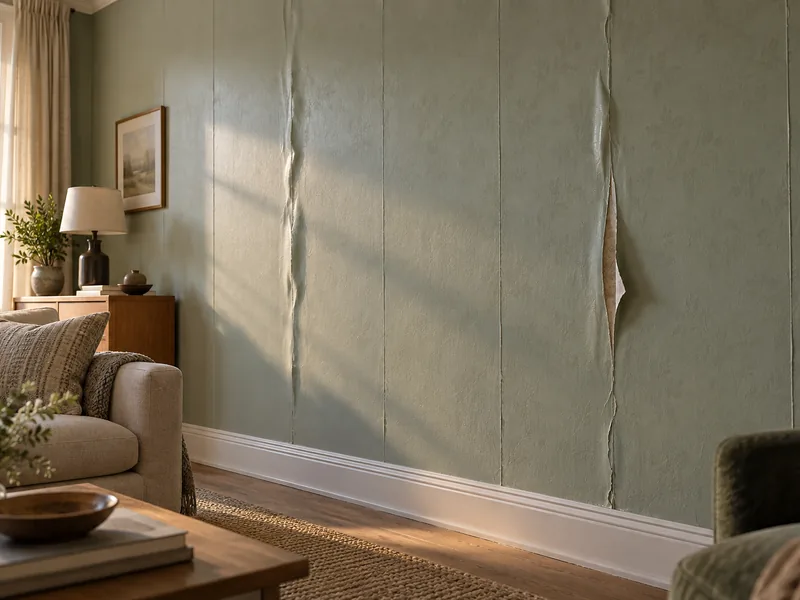
You would not see any of this on the day the wall is painted. It shows up weeks or months later as bubbles beneath the paint, edges peeling away from corners, or a patchy sheen where some areas dry glossier than others. Skipping wallpaper glue removal causes paint failure for exactly this reason, and repairing that failure costs more than removing the adhesive properly in the first place.
Dry adhesive residue is hard to see but easy to find once the wall is wet, which is why we wash the surface, rinse it with clean water and then check it instead of wiping it once and calling it done. A hand run across the rinsed wall still feels slightly tacky wherever paste remains. We keep washing and rinsing those areas until the entire surface feels uniformly clean.
Testing a Corner Before Committing the Room
A wallpaper test patch is a small area stripped in an inconspicuous corner before we price the job, which is why we come out to inspect the wall instead of quoting over the phone. Looking at the surface tells you the color and pattern. Stripping a square foot tells you how many layers are stacked there, how easily the paper releases, and whether the wall board underneath was sealed before the wallpaper went up.
The way the paper releases tells you what is underneath. If it comes away cleanly and leaves a hard, painted-looking surface, the board was primed. If a fuzzy gray face pulls away with the paper, it was not. We make one test patch for each wall condition because a hallway and bathroom in the same house can behave very differently.
Because we do that test during your wallpaper removal estimate instead of waiting until the first workday, we know whether the job is larger than it first appears before you commit to it.
Kitchen Grease and Damp-Room Walls
Damp rooms are where we find solid vinyl over paste that has been on the wall for years. Kitchen walls bring a second issue: cooking leaves a thin film of grease above and beside the range, and neither primer nor joint compound will bond through it. We wash those areas with a degreaser and let them dry before applying any sealer, because sealing over grease only traps the problem underneath.
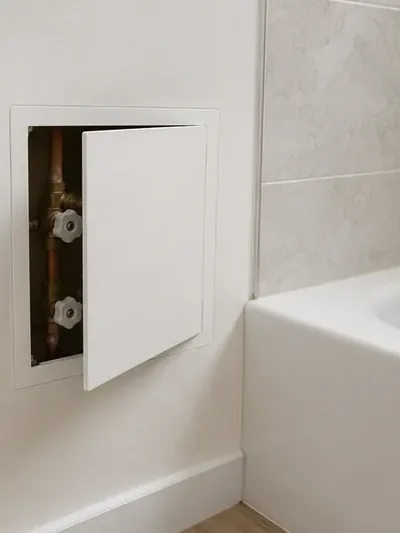
Around a vanity, tile edge or cabinet run, we cut the wallpaper tight to the fixture instead of pulling against it. If the board behind the paper is too damaged to repair, we replace it with moisture-resistant board, priced as a separate line item.
Painting Over Wallpaper, and Why It Comes Back
Painting over wallpaper means applying finish paint directly to the paper already on the wall instead of stripping it first. It costs less at the time, but more when the wall has to be corrected properly a year or two later. There are rooms where it is a reasonable choice, usually when the paper is thin, flat and firmly bonded.
In most rooms, painting over wallpaper postpones the work rather than eliminating it, because the seams and edges remain underneath and eventually show through the new color. That creates two problems: what the coating does to the paste beneath it, and what it costs to strip the wall after someone has painted over the paper.
What the Paint Does to the Paste Underneath
Waterborne paint brings moisture with it, and that moisture passes through the paper to the wallpaper paste underneath. The paste can remain soft long after the paint feels dry. The seams usually show first, rising into fine ridges within the first year, followed by blistering across the open field of the wall. Bubbling paint over wallpaper is not a coating defect, and extra coats will not hide a seam that is still moving. Choosing the right primer and finish for a stripped wall falls under our priming and painting service.
Taking Off Paper That Has Already Been Painted
The paint film is the main obstacle. It forms a continuous plastic skin that blocks the water needed to soften the paste, so the coating has to be opened across the wall before moisture can get through. Scoring a painted surface is heavier and slower than scoring bare paper, and once the bond releases, the paint and wallpaper come off together in pieces rather than full sheets.
That process exposes more of the board face, so the wall needs more joint compound afterward to bring it back flat. To remove painted wallpaper therefore costs more than stripping the same room before it was painted, and your written estimate reflects that before you commit.
What Wallpaper Removal Leaves Behind
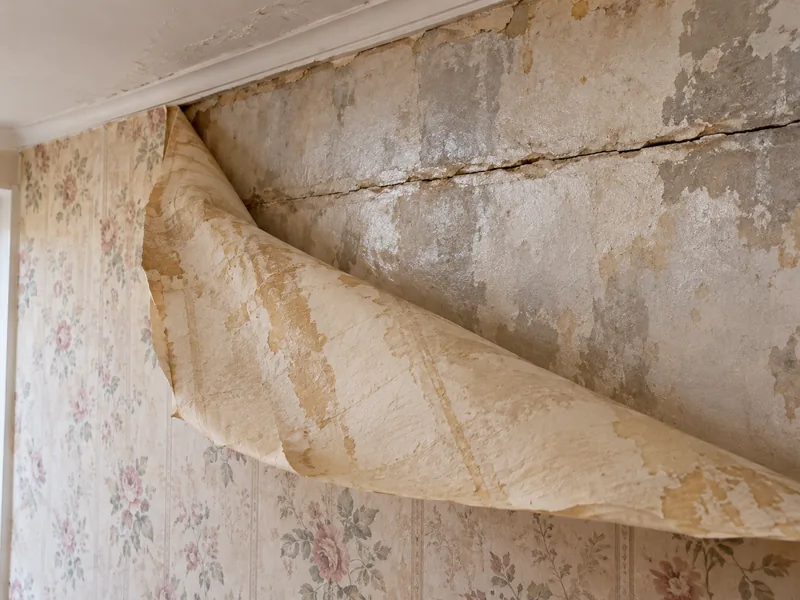
A stripped wall is rarely a finished wall. Once the last sheet comes down, the surface usually shows several conditions at once: dried paste that washing alone does not resolve, torn board face, dents and scoring marks in the surface, and fastener holes the wallpaper had been hiding.
Restoring the wall face is included in the work we quote, not added as a second job after the room is bare. Removing the paste, sealing torn facing, skimming, sanding and priming are all included in the strip price. Damage that extends deeper than the surface, such as board that needs replacement or texture that needs to be sprayed back, appears as a separate line on the same estimate and is priced before you agree to it.
Wallpaper Hung Straight on Unprimed Board
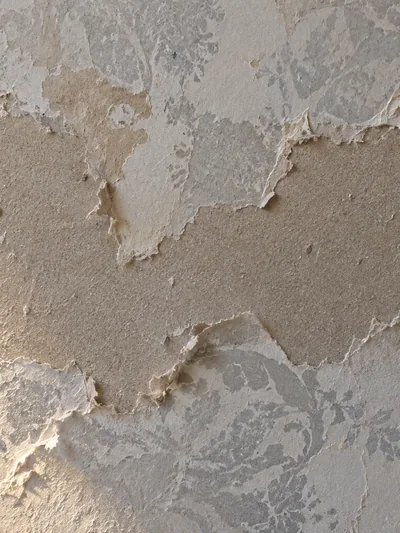
Gypsum board has a paper face, and wallpaper paste bonds directly to paper. A coat of primer-sealer between the two, or sizing, which serves the same purpose for a paperhanger, creates a sealed film for the paste to grip instead. When neither was applied, the paste and board face bond together, so the face lifts away with the wallpaper. You see the damage as fuzzy gray patches and exposed brown backing, and unprimed drywall wallpaper adds real labor to the job because every damaged area has to be repaired before the wall can move on to the next step.
Drywall face tearing leaves loose fibers that absorb moisture and swell under anything applied over them. We lock those fibers down with a penetrating sealer made for torn facing before any compound goes on, then seal the repair again after sanding. If torn facing is left unsealed, it bubbles beneath the compound weeks later, after the room has already been painted. When the damage extends deeper than the paper face, cutting out and re-taping the board falls under our drywall repair service rather than the wallpaper strip.
Glue Ghosting, Gouges and What Each One Needs
Wall damage after wallpaper removal falls into several classes, each requiring different work and carrying a different price. Glue ghosting is the shadow left where paste once sat, still visible after the wall has been washed, and we seal it rather than keep scrubbing, usually with a shellac-based sealer that blocks the stain from bleeding through the paint. Scoring marks and shallow gouges are filled with joint compound and sanded flat. Deep tears that reach the gypsum core, along with nail pops and old anchor holes exposed once the paper is gone, fall under our drywall repair service.
When the Wall Behind the Paper Is Wet
Conroe has a humid subtropical climate and receives about 51 inches of rain a year. A vinyl face blocks water vapor, so moisture that reaches the wall cavity stays trapped behind it. In this climate, warm outdoor air moves inward toward an air-conditioned exterior wall, and when that air cools past its dew point, the temperature at which it can no longer hold its moisture, water collects on the cooled surface. The vinyl is on the wrong side to let that moisture dry back out, which is why an exterior wall can be wet even when nothing is leaking. Wallpaper stripping is what exposes the signs: dark staining, soft board and a musty room.
We remove damaged board back to sound material and price that work as a separate line on your estimate. Active mold or the moisture source itself may need another qualified trade first. If water is still getting in, stopping the leak at its source is a separate trade, and that work has to be completed before we close the wall again.
Skim Coating a Stripped Wall Flat
A skim coat after wallpaper removal is a thin layer of joint compound spread across the entire surface instead of applied only to individual spots. A stripped wall usually needs that full-surface treatment because spot-filling leaves repaired areas smoother than the surrounding wall, and those differences show as flat patches once the paint goes on. We start skim coating a wall over a sealed surface, then pull all-purpose compound flat with a 12-inch taping knife in two thin passes rather than one heavy coat, sand to 150-grit and remove the dust before priming. GA-214 is the published standard that defines the finish levels used to judge this work.
What Paint-Ready Means
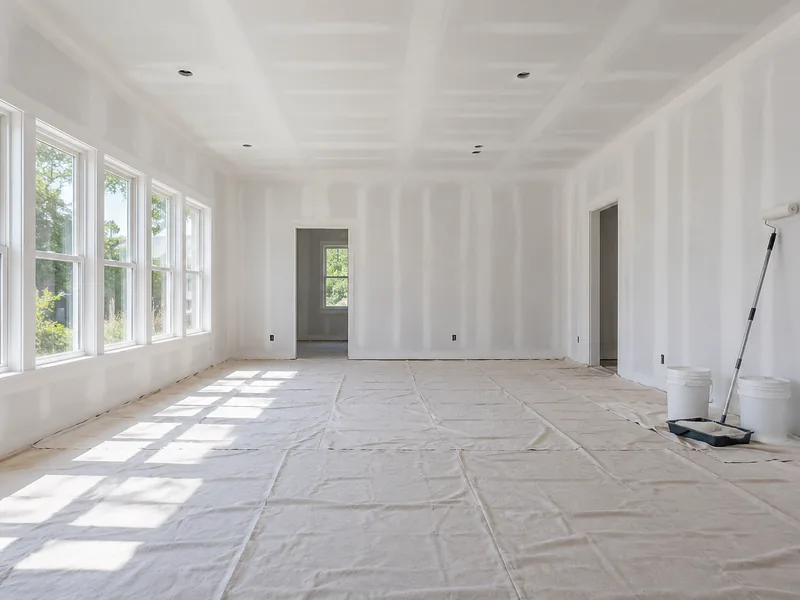
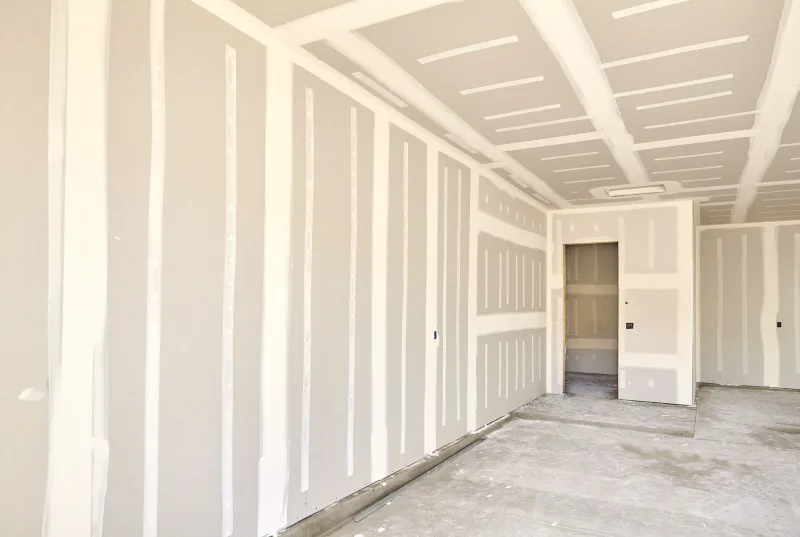
Paint-ready is the condition we leave the wall in, and it is worth knowing exactly what that includes before you agree to anything. The wall is prepared for whoever comes next, not delivered as a finished room.
What a Paint-Ready Wall Actually Is
Paint-ready drywall is something you can check for yourself rather than a promise you have to accept. Run your hand across the wall and there should be no tacky patches of paste or raised ridges where a repair sits above the surface. Then look along the wall with a lamp shining across it from the side.
That raking beam is critical light: it hits the wall at a shallow angle, traveling across the surface rather than straight onto it, and casts a shadow from anything sitting proud of flat. It is the kind of light an entry hall gets from the door, and it is why a hallway with no furniture to break up the wall plane shows imperfections more clearly than almost any other room.
A wall that holds up under that light should also be sealed evenly, so no repaired area absorbs more paint than the surrounding surface and dries to a different sheen, a defect known as flashing. The finish level beyond that is a decision for whoever handles the painting.
What Is Quoted Separately, and What We Do Not Do
Your strip price covers the work through a sealed, paint-ready surface. Several services we provide are priced separately on their own lines, including finish painting, texture work, drywall repair that extends deeper than the wall face, plaster work, and rebuilding after water damage. New wallcovering installation is not included because we do not offer it. What you receive is a wall ready for a painter or paperhanger to start on the day we finish, along with a written estimate that clearly states which services are included in your job and which are not.
What Wallpaper Removal Costs
Wallpaper removal is priced from the condition of the wall, not square footage alone. Two rooms of the same size can differ by hours of labor once the paper starts coming down because what lies underneath determines how much repair the wall needs before it is ready for paint.
That is why we do not publish a per-square-foot rate for wallpaper removal. A range wide enough to cover both an easy room and a difficult one would tell you very little about your own walls, while a narrower range would be wrong for many of the jobs we see. Our on-site estimates are free, and financing is available for larger projects. We measure the rooms, inspect the wall conditions, and base the wallpaper removal price on what we find.
What Moves the Price
These are the wallpaper removal cost factors we review during the visit, and you can check most of them yourself before we arrive. Each one either adds to the labor involved or reduces it.
- The number of paper layers on the wall. Each extra layer adds another wetting pass.
- Whether primer or sizing was applied before the wallpaper went up. Unprimed board is the biggest single labor factor in this service.
- Whether the wall has solid vinyl or traditional paper, since they release differently and take different amounts of time to remove.
- How much of the wall face comes away with the paper.
- Whether the surface needs a full skim coat or only spot filling with joint compound.
- Whether the room's wall texture needs to be restored afterward to match the existing finish.
- Reach. A stairwell or two-story entry takes more labor than a bedroom because access is more difficult.
- Whether an existing texture has to be identified before it is disturbed.
- How much furniture needs to be moved and protected.
Stripping a Wall Against Replacing the Board
Compared with removing and replacing the board, wallpaper stripping is almost always the less expensive option. Board replacement requires demolition, hauling away the old gypsum board, hanging new sheets, taping and finishing the joints, and matching the room's existing texture. After all of that, the wall still has to be finished and primed before paint goes on, which is the same point stripping reaches with far less labor.
When the board is genuinely beyond saving, we handle the work under our separate drywall repair service.
Board that is soft, crumbling or structurally unsound is beyond saving, and no amount of stripping will restore it. We will tell you which approach your walls need once we inspect them. Call us at (346) 706-5743 or use the quote form to tell us what is on your walls, and we will price the work from the condition we find.
How a Room Is Stripped and Made Paint-Ready
Conroe Drywall Co. follows the same five-step wallpaper removal process on every job, with one crew staying with your walls from the initial visit through the final sanding.
-
1
Tell Us What Is on the Wall
Call us or fill in the form for a wallpaper removal quote. It helps to know which rooms are papered, roughly when the paper went up, and whether anyone has already tried to pull it off. We book the visit on that call.
-
2
The Visit, and the Test Patch
We walk your rooms, look at every papered wall, and take a test patch for each different wall condition. Your wallpaper removal estimate is built on what those patches show. We also note the furniture and the high work, and the visit costs you nothing.
-
3
A Written Scope and a Price
You receive a written estimate, one line at a time: strip, wash, seal, skim, sand and prime each carry their own price. Work outside the stripping is named on the same page. Financing is available on larger projects, and nothing is scheduled until you say go.
-
4
Strip Day, and What You Need to Move
Wallpaper removal preparation is mostly the room itself: furniture to the middle or out, floors covered, outlet covers off so the paper behind them goes too. The room is wet work for part of the day, so plan to stay out of it. We sweep at the end of each day.
-
5
The Wall You Get Back
A fine sand, a dusting, then primer-sealer. Your outlet covers and furniture go back, and we walk the rooms with you before the crew leaves. You are handed a paint-ready wall.
Why Choose Conroe Drywall Co. for Wallpaper Removal
Stripping the wallpaper is the easy half. What comes next is drywall work, and that is what we do every day. The difference is that we do not just remove the paper and leave you to find someone else to repair and flatten the wall afterward.
What you get when your wallpaper removal service is handled by a drywall contractor:
- Your price is based on a test patch in an inconspicuous corner, not just a visual check of the room.
- The same crew strips the walls and restores them, with no handoff or subcontracting for the repair work.
- Every repair is listed in your scope line by line, so you know exactly what is included before you agree to the job.
- We have over 15 years of drywall work behind us in Conroe and Montgomery County.
We are insured and follow established industry practices, including ASTM C840 standards for gypsum board installation and finishing.

Stripping Wallpaper Across Conroe and Montgomery County
Papered walls show up in every kind of home we work on around Conroe, from older downtown houses to newer subdivision homes and properties near the water. The older neighborhoods are where we find paper layered two and three deep, each owner having covered what was already there rather than stripping it. Whatever the house, the wall underneath gets the same treatment: the paper comes off, the paste comes off, and the surface is brought back flat. What changes from one street to the next is how many layers you are dealing with and what is underneath them.
Where Conroe Drywall Co. Strips Wallpaper
Conroe Drywall Co. provides wallpaper removal in 21 communities, grouped into the three areas below so you can quickly find yours.
Conroe Neighborhoods and Communities
- Grand Central Park
- Graystone Hills
- Rivershire
- Stewarts Forest
- Downtown Conroe
- Wedgewood
- West Fork
- Tejas Creek
Surrounding Cities and Communities
- Willis
- Montgomery
- New Caney
- Splendora
- New Waverly
- Cut and Shoot
- Panorama Village
- Grangerland
- Plantersville
Lake Conroe Communities
- Lake Conroe
- Bentwater
- Walden on Lake Conroe
- April Sound
FAQ
Wallpaper Removal Questions
How much does it cost to have wallpaper removed professionally?
We do not publish a square-foot rate because the price depends on the number of layers, the surface underneath, the type of wallcovering, the wall height and how much restoration is needed afterward. Two bedrooms on the same hallway can look identical from the doorway and still carry very different prices. The on-site visit that settles the price costs you nothing.
What is the fastest way to remove wallpaper from a wall?
Score the face, wet or steam it, then give the moisture time to work. Dry scraping is faster at the stripping stage but slower everywhere afterward, because the time saved with a scraper is spent again filling and sanding the damage it leaves behind. If you are paying for a finished wall rather than simply a stripped one, the fastest removal method is rarely the least expensive job.
Is it cheaper to remove wallpaper or replace drywall?
Removing the wallpaper is the better route in nearly every room we are called to. Tearing out one wall does nothing about the paper on the other three, so you end up paying for both replacement and stripping instead of one job. New board also starts bare and still has to be taped, finished and textured to match the surrounding walls.
Will stripping wallpaper damage my drywall?
What determines that is the surface the wallpaper was bonded to, and we identify which condition you have during the estimate rather than after work begins. If tearing is expected, the filling and sanding that follows is included in your price from the start.
Does wallpaper glue have to come off before painting?
Yes. A wall can look clean and feel dry while still carrying enough adhesive residue to lift a coating, which is why appearance alone does not settle it. The better test is by touch: run a damp sponge across the board, and a slick, slightly tacky surface means paste is still present.
Do you hang new wallpaper after you remove the old?
No. We remove wallcovering and restore the surface underneath, then leave the installation of new paper to a paperhanger. What we hand back is flat, sealed and ready for either a paperhanger or painter to begin on the day we finish, so you are free to choose either finish.
How do I tell how many layers of wallpaper are on the wall?
Lift a corner at a seam with your fingernail, or remove a switch plate and inspect the cut edge around the box, where the wallpaper was not trimmed tightly. Each layer appears as a separate edge. You will not always reach the bottom layer, because older paper can be bonded firmly enough to feel like part of the board.
Why did the paint I put over my wallpaper start bubbling?
The paint added moisture back into the paste behind the wallpaper, causing the bond to release. You now have a wall where the paint and paper come off together as one layer, making removal more labor-intensive than stripping bare wallpaper.
Get Your Walls Stripped
The next step is simply a look at your walls, with no commitment required. Conroe Drywall Co. serves every community listed above, both in Montgomery County and just beyond it, measures the papered rooms and gives you a written price. The on-site estimate costs you nothing, and no work starts until you approve it. Call (346) 706-5743 or use our quote form for a clear price on your project.