
Drywall Finishing and Texturing in Conroe, TX | Conroe Drywall Co.
Conroe Drywall Co. has spent over 15 years providing drywall finishing & texturing for homes and businesses across Conroe, Texas. Two walls can be built equally flat yet look completely different once the light hits them, and the difference comes down to the finish level specified for the room: the number of coats applied and how thoroughly the surface is smoothed before paint.
Our drywall finishing and texturing work covers those finish levels, texture matching for repairs and additions, and finishing new board after it is hung. We work with knockdown, orange peel, hand-applied skip-trowel and smooth finishes; a smooth wall is built with a skim coat, which is a thin layer of joint compound spread across the entire surface. The finish level numbers come from GA-214, the published finishing standard we follow. The lighting on your wall determines how refined the finish needs to be, and each coat of joint compound has to cure before the next one is applied.
You receive the scope in writing before any work begins. Call (346) 706-5743 or request a free quote.
Get A Free Estimate
Finish Levels and Texture Families We Work In
Every drywall finishing & texturing job comes down to two decisions about the same wall: how smooth the surface underneath needs to be and what finish goes over it. The first is the finish level, a numbered standard describing how much compound work the gypsum board, the panel most people call drywall or Sheetrock, receives before the final surface is applied.
The second is the texture, the pattern sprayed or troweled over that finished surface, and the sections below address those two questions in order.
Because the finish level and texture are chosen separately, they can be paired in different ways, and that combination determines most of the price and the final appearance. One does not dictate the other, so two rooms in the same house can reasonably call for different combinations.
The Finish Level Ladder, From Level 0 to Level 5
The drywall finish levels come from GA-214, the published Gypsum Association standard we follow on every drywall finishing job. People usually ask about five levels, but GA-214 actually defines six, numbered 0 through 5. The scale starts with no finishing work and moves upward, with each level describing how much joint compound is applied over the joints and screw heads.
The first three levels are rarely what a homeowner is paying for. Level 0 is board hung with no tape or compound, used when a partition is temporary or the final finish has not been decided. Level 1 embeds tape in compound and is specified for plenums and other spaces above a ceiling. Level 2 adds a thin coat over the tape and screw heads, and it is the level used behind tile.
The three levels you are most likely choosing between are 3, 4 and 5, and the difference is how many coats go over the taped joints. Level 3 uses one coat over the tape and is specified beneath medium and heavy textures, whose pattern hides joints that are not perfectly flat. A Level 4 finish adds a second coat and is the usual specification beneath flat paint and light textures. Level 5 adds a skim coat over the whole surface and is specified where the wall will receive gloss paint or strong lighting that exposes any surface variation.
The standard is a guide to the finish typically specified for each use, so in an ordinary room you choose the level rather than having it set by code. The exception is an assembly designed to resist fire, smoke or sound, where the tested design and building code determine the required finish, and we build to that specification.
Knockdown, Orange Peel and Hand-Applied Skip-Trowel
A wall texture is thinned joint compound applied to a finished wall in a deliberate pattern. We work with three wall texture types, along with a flat wall that has no texture, and each one differs in how the compound is applied and how it is finished afterward.
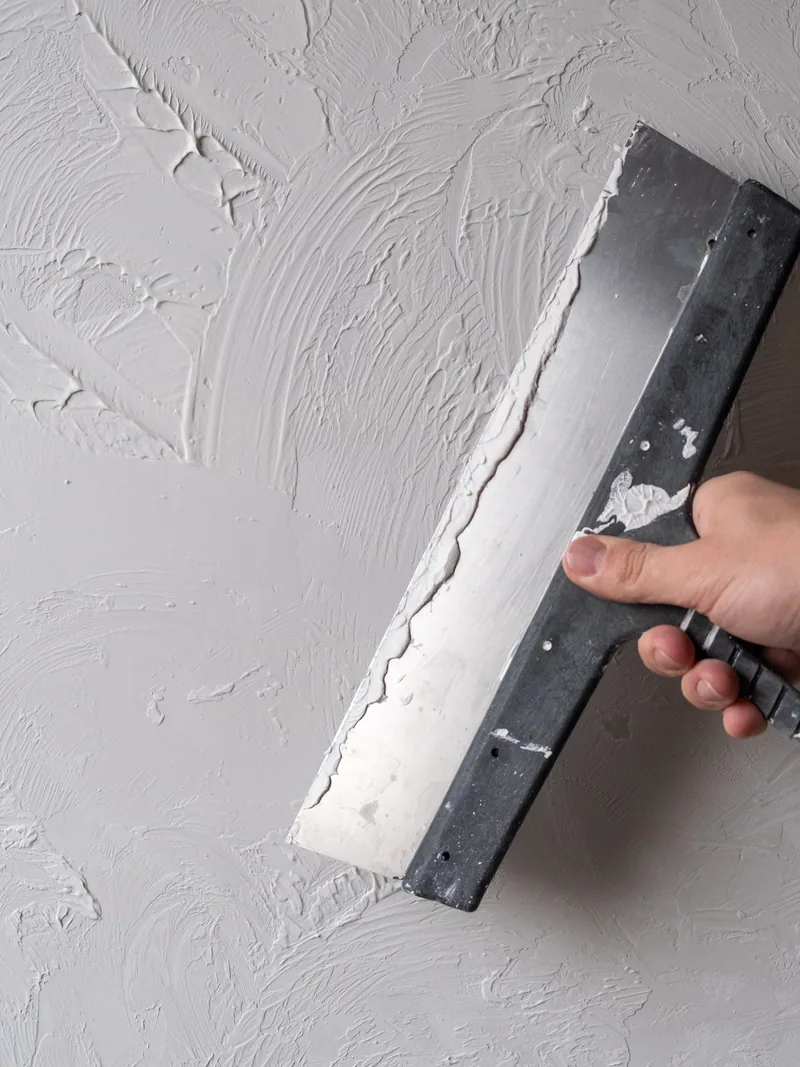
Orange peel texture is sprayed on and left to dry, forming a fine, even stipple of small raised dots. Knockdown texture starts the same way, but after the sprayed compound sets for a few minutes, a knife is drawn flat across the surface to flatten the peaks into the mottled pattern the name describes.
Skip trowel texture is applied by hand, with a trowel dragged across the wall so the compound catches in some areas and skips over others. The result is coarser and more irregular than either sprayed pattern, and because no two walls turn out exactly alike, that variation is part of its appeal and part of why the work takes longer.
A flat wall is the fourth option and the least forgiving of the four. Any texture hides small differences in the surface beneath it, and the heavier the pattern, the less of that underlying work you see. Remove the texture and there is nothing left to disguise those imperfections, which is why achieving a flat wall costs more than any textured finish.
Popcorn is a coarse sprayed ceiling texture found in many older homes. We match existing popcorn where a repair requires it, but we do not install new popcorn texture. Removing a popcorn ceiling is handled through our popcorn ceiling removal service and quoted separately.
The Skim Coat and the Smooth Wall
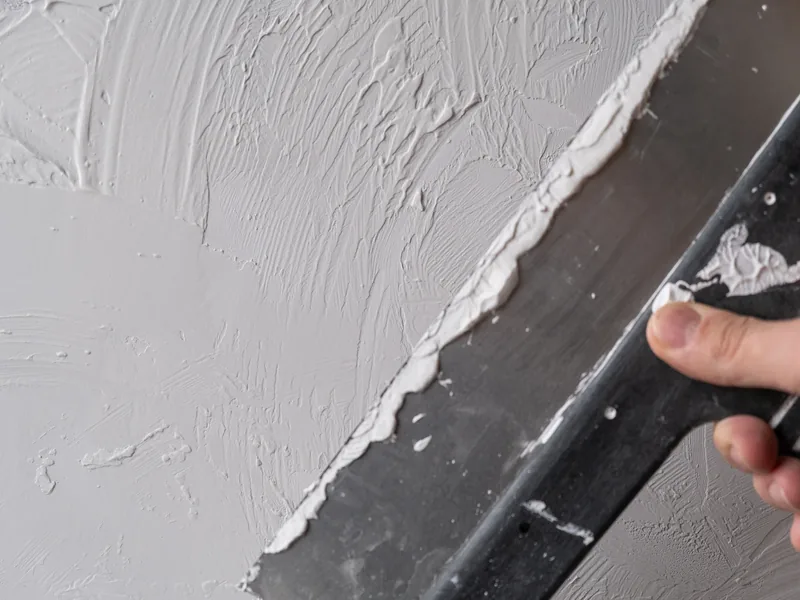
A skim coat is the final drywall finishing step before paint: joint compound is thinned so it spreads under a trowel, worked into the face of the wall and then drawn back off with a broad knife. Most of the compound comes away, leaving behind a single continuous skin rather than a built-up layer, which is exactly the purpose.
What a skim coat fixes is a difference your eye notices before you consciously register it. A finished wall is mostly the paper face of the gypsum board, interrupted by bands of dried compound over the joints and spots over the screw heads. Because paper and compound absorb paint at different rates, a roller leaves a slightly different sheen over each, causing the joints to show through as faint shadows. A skim coat places one material across the entire surface, so the paint meets the same porosity everywhere.
Two limits go with that, and both come directly from the standard. A skim coat does not replicate a plastered surface, which uses a different material applied by a different trade, so plaster repair is quoted separately. And after a skim coat dries but before decoration, the treated joints and spotted screw heads can still remain visible. That is expected at that stage: the smooth wall finish you were quoted is the painted result, not the bare compound.
Finishing New Board After the Hang
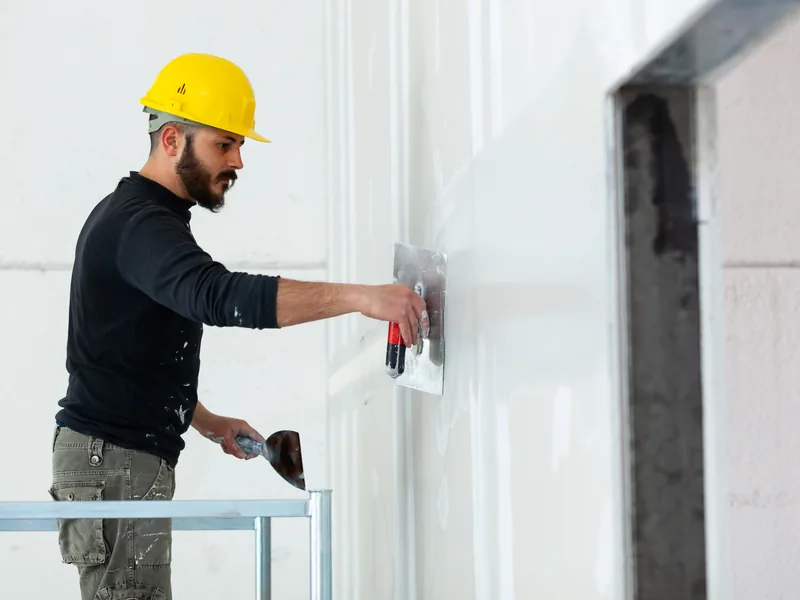
Drywall taping and finishing is what turns hung board into a finished wall. Hanging the board, fastening it to the framing and cutting it to fit is drywall installation, which we also provide and quote separately. New drywall finishing begins as soon as the board is hung and the fasteners are properly set.
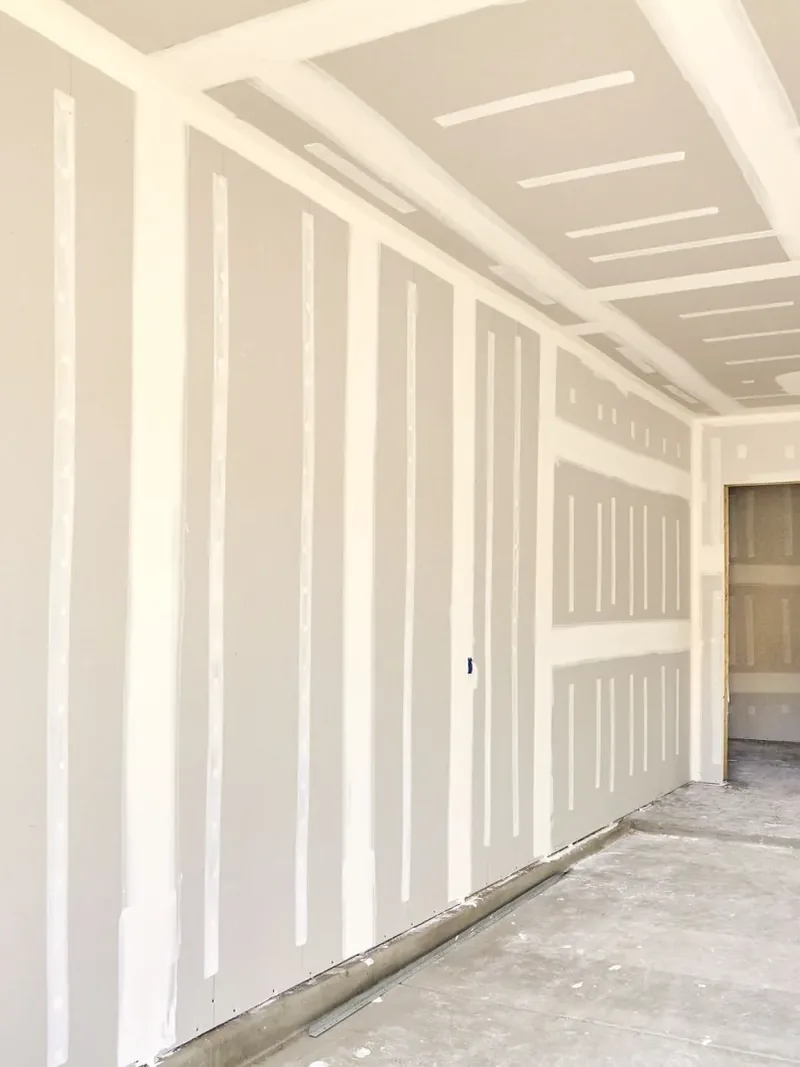
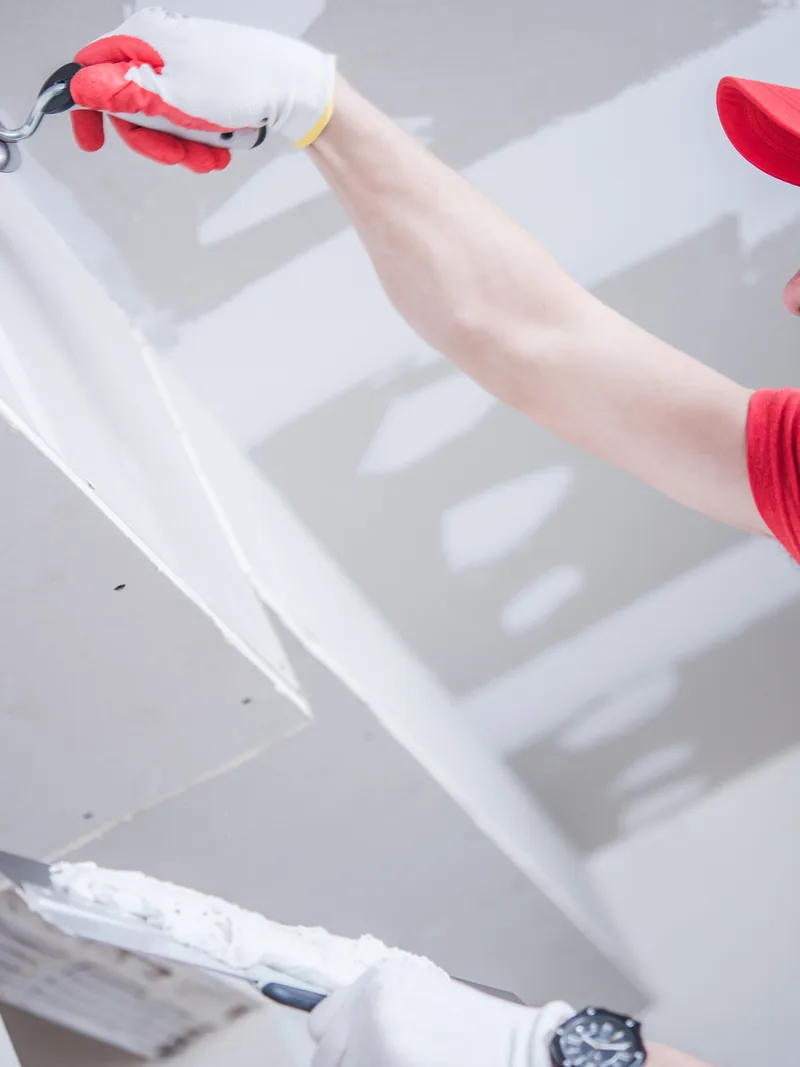
Tape is embedded over every joint in a bed of compound, and then the finish coats begin. Each coat is spread wider and thinner than the one before because the goal is not to fill a hollow, but to feather the transition far enough that you cannot see where it ends.
Sanding takes less time than any other step in the sequence, yet it has a major effect on the final result. This is where the last ridges are removed, but too much sanding cuts through the compound and into the paper, so we sand only to the finish level agreed for the wall and stop there.
What we hand over is paint-ready drywall finished to the agreed level, cleared of dust and ready for the painter.
Retexturing a Room That Is Changing
When a room is being changed, the texture decision comes down to two options: match the existing texture where new work meets old, or retexture the entire wall or room so everything has one consistent finish.
When the existing texture is heavy, retexturing walls to one new finish is often the less expensive and more reliable choice, because creating one consistent surface costs less than trying to reproduce a pattern that still has to look right from across the room.
Two remodel situations point toward the same choice. Texture matching between rooms finished decades apart rarely produces a convincing result, and if the existing remodel drywall texture simply looks dated, that alone is enough reason to change it; you do not need a defect.
The repair underneath is handled separately, and the texture is applied once that surface is sound.
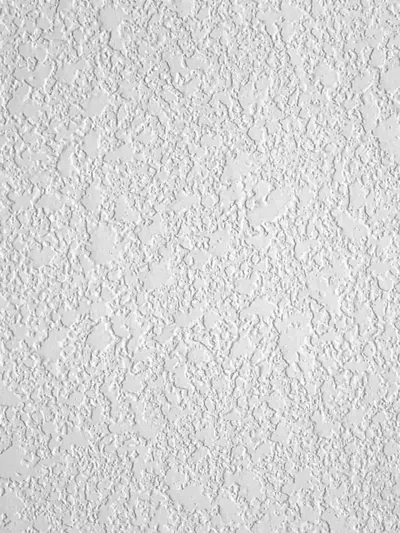
How a Texture Is Matched to the Wall Beside It
We match texture by making a newly finished area look like the wall around it, so the work starts with the existing surface rather than a catalog of patterns. The wall next to the repair becomes the specification: its pattern, coarseness and depth are what the new work has to match.
Reaching straight for a pattern name produces a texture, but not necessarily one that matches the wall beside it, so drywall texture contractors first read the existing surface. The work that creates the match happens around the repaired area as much as on it, and the goal is a seamless drywall patch: a stretch of wall a visitor walks past without noticing.
Reading the Existing Texture Before Anything Is Mixed
Before any joint compound is mixed, we study the wall and record what is there: the texture family, whether it was sprayed or applied by hand, how coarse the pattern is and how far the material stands off the board. Paint changes that profile. Every coat applied since the texture went on fills the pattern slightly and softens its edges, so matching existing texture means matching the wall as it looks today.
A mix made to the original recipe would look sharper than the softened surface beside it, so we assess the age of the texture at the same time. Texture installed before 1990 can contain asbestos, so we arrange lab testing before any scraping begins and remove only material the results clear as safe. Asbestos texture testing confirms that before any older material is disturbed. Taking a whole textured ceiling down is popcorn ceiling removal, a separate service.
The Sample Board, Made On Site in the Room's Own Light
Four variables shape the result, and each is controlled by hand: how thin the joint compound is mixed, which nozzle or trowel applies it, how much pressure is used, and how long the material sits before it is worked. A texture sample board is a scrap of gypsum board used for those trials instead of your wall. We dial in the variables on the sample, then hold it flat against the existing surface under the room's own lighting.
Two textures can look identical under a work lamp on the floor yet look different under a window at three in the afternoon, because low-angle light from one side deepens every shadow in the pattern. For finish levels where appearance matters, the standard calls for exactly this: a drywall mock-up viewed under the lighting the finished room will use. A few minutes spent checking the sample board is what prevents a second trip later.
Feathering New Texture Into Old
Feathering drywall texture means extending the new material well beyond the repair and gradually thinning it out so there is no visible line where the new work ends and the original surface begins. The result is something you should expect from the start: the textured area will always be larger than the damaged area, because a match succeeds or fails at the edge, not in the middle.
Where new texture stops abruptly, the ridge is nearly invisible in bare compound but shows again after paint is applied, because the paint reflects light evenly and exposes the change in thickness as a faint band. A corner or run of trim provides a natural stopping point because the eye already reads that change of plane as a boundary. We leave the feathered area ready for paint, with a seamless texture blend for the painter to finish over.
What Conroe Humidity Does to Drywall Finishing & Texturing
Joint compound has to release its water and dry before the next step can go over it. That change from wet to dry sets the finishing schedule, which is why drywall drying time depends on the air inside the house rather than how many people are working in the room.
Air that already holds a lot of moisture pulls water from a fresh coat more slowly, and Conroe has a humid subtropical climate with moisture-heavy air through much of the year. Three practical points follow from that, and none of them comes down to skill: how many days a higher finish level adds, the conditions required by the published standard, and the material we mix.
A High Finish Level Costs More Days, Not Just More Money
The higher the finish level you choose, the more wall surface is covered with wet compound, and every square foot of it has to dry before the next step begins. At Level 4, the compound sits in narrow bands over the seams and screw heads, so the drying is limited to those areas. At Level 5, the entire surface is wet at once.
More surface area holds more water, and more water takes longer to dry. Skim coat drying also has to happen evenly across the wall, because a coat that dries faster in one area than another leaves the uneven surface the skim coat was meant to prevent. In a humid August, the difference between Level 4 and Level 5 shows up on the drywall finishing schedule in days rather than hours, so it is worth choosing the level before your painter, flooring date and move-in depend on it.
The 50-Degree, 48-Hour Window the Standard Asks For
GA-214 requires a minimum temperature of 50 degrees Fahrenheit to be maintained continuously for 48 hours before finishing begins and throughout the work, because joint compound has to release its water before the next coat is applied. For excessively humid conditions, it points to a separate document, GA-236, which covers joint treatment in extreme weather, and Conroe air shows why that guidance matters. Drywall finishing temperature and moisture are why a new build with no power takes longer to finish than an occupied house, and running the air conditioning or setting up fans is usually what closes that gap. We set your schedule from the conditions we measure inside the house.
Setting-Type Compound, and Why It Is the Humid-Weather Answer
Two different materials share the name joint compound, and the difference between them explains everything above. Ready-mixed compound comes wet in a bucket and dries by releasing its water into the air, so humid weather slows that process and a closed-up house slows it further. Setting-type joint compound, which the trade calls hot mud, cures through a chemical reaction and hardens on its own schedule regardless of the weather. Hardening and drying are not the same, though, and even a set coat still has to release its water before paint goes on.
Setting-type joint compound arrives as a dry powder in a bag labeled for the number of minutes it takes to set, and we mix it on site. That joint compound cure time lets us apply a fill coat during a wet August or in a house where the air conditioning is not yet running, and in some cases complete more than one coat in a day. Because it hardens too firmly to sand easily, we use it for the fill coats underneath and finish with ready-mixed compound, which sands smooth for the surface you will see.
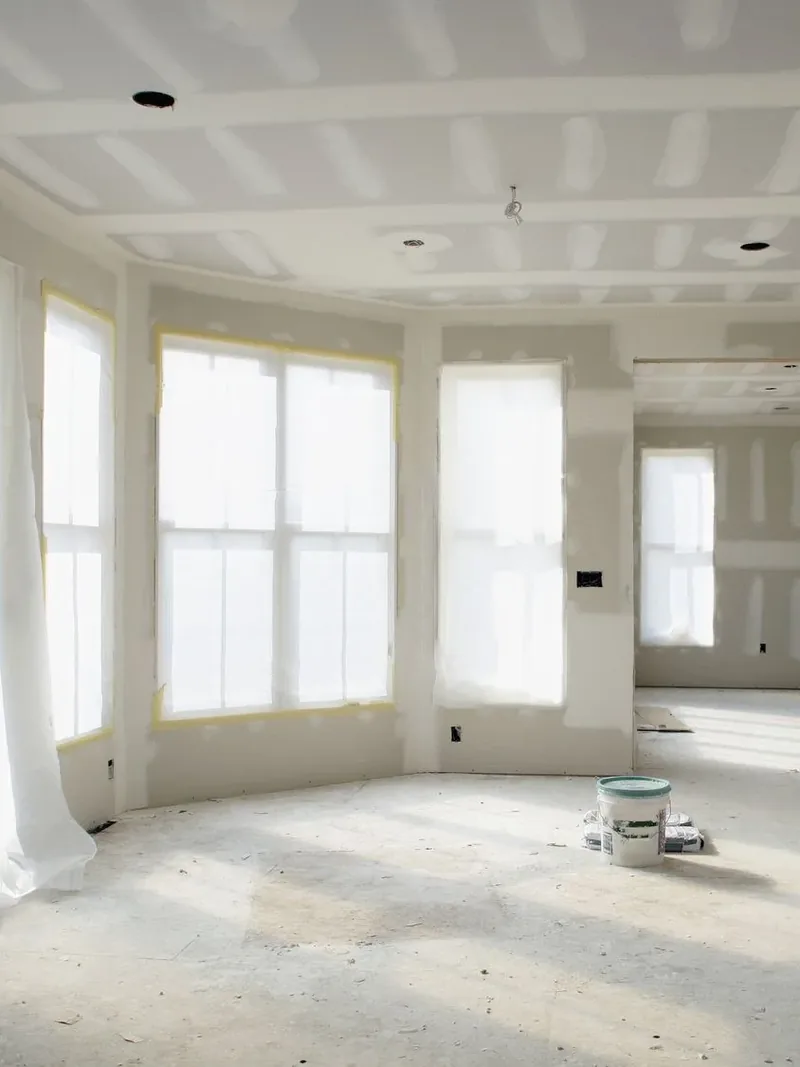
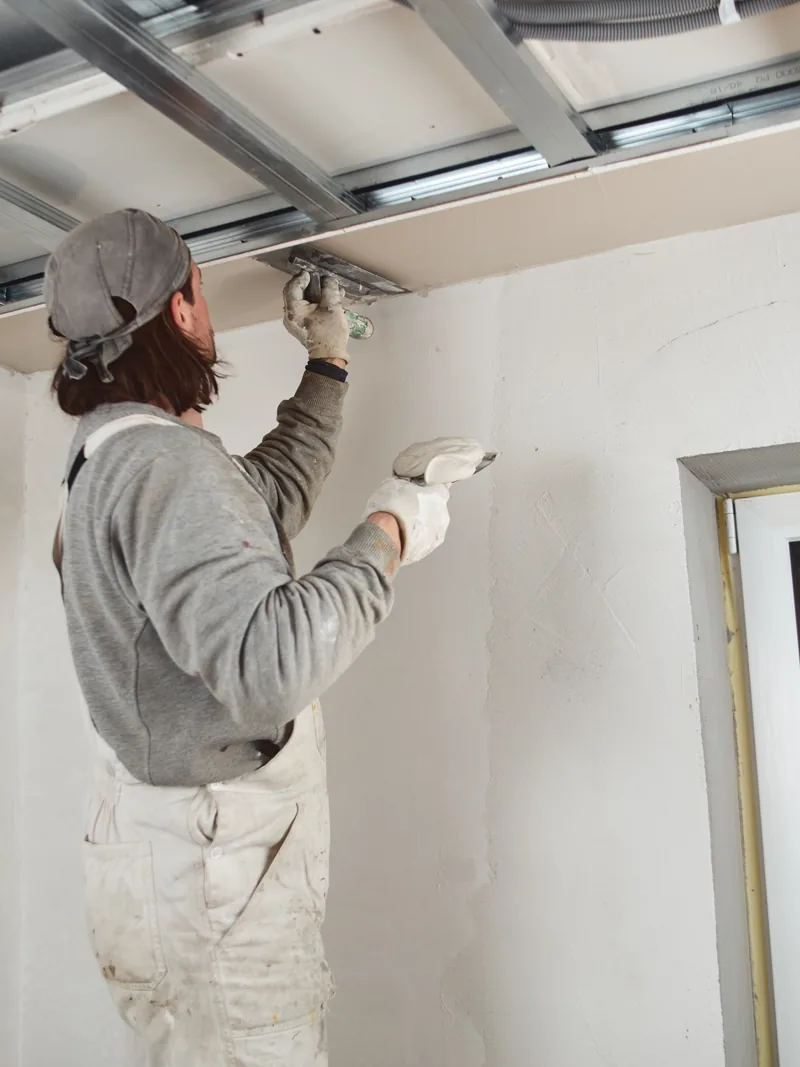
Spotting a Poor Finish Under Critical Light
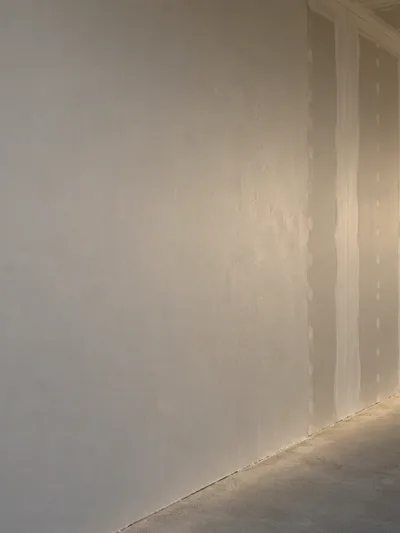
A wall that looks acceptable while the compound is still bare can look very different once it is painted and the room's own light falls across it, and that is where the difference between a good finish and a bad drywall job usually becomes visible. What makes the result checkable rather than a matter of taste is that the inspection method is written down: the trade judges the wall from a specified distance under the lighting the room already has, so anyone can stand in the same spot and see the same surface.
Joint Photographing and the Five-Foot Rule
Joint photographing is the trade term for joints showing as faint shadows through the finished paint; some people call the same effect telegraphing drywall. You will not see it while the walls are bare because it appears after the paint goes on, which is why an owner often notices it only after the job is finished and the crew has left.
Critical lighting is strong light that strikes a wall from the side rather than head-on, usually from a window running along the same plane as the wall or from a fixture mounted on it. The standard also calls this severe lighting. Because light at that angle exaggerates small differences in level and sheen, a wall that looks flat under a ceiling fixture can reveal every band when low winter sun crosses it.
The standard gives you a specific position for judging the finish: stand at least five feet back, face the wall squarely rather than looking along it, and use the room's normal lighting. Blemishes should not be visible from that position. A defect you can find only with your nose close to the surface or by raking a work light across it is not the test used to judge the finish.
What Putting a Bad Finish Right Actually Takes
If joints are showing through a wall someone else finished, what it takes to fix bad drywall finish depends on how much of the surface is affected. In some cases, one additional coat over the visible joints, followed by sanding and spot-priming, is enough. When the differences run across the entire wall, the proper fix is to skim coat existing wall surfaces from corner to corner, which brings the wall to Level 5 and is quoted and scheduled as such.
Before assuming more compound is the answer, consider the less expensive route. GA-214 notes that texture hides minor surface differences, while non-flat or dark paint makes them stand out. A slightly heavier texture or a repaint in a flatter sheen can solve the problem for far less than remedial mudding, and we will tell you when that is the more practical choice.
One issue is separated out before any of this is priced. A crack that keeps reopening after it has been filled points to movement in the building rather than a finishing failure, and more compound will not solve it. That is treated as a repair first, with someone looking at the cause before we quote a finish over it. We do not promise an outcome until we have seen the wall.
Why Choose Conroe Drywall Co. for Drywall Finishing & Texturing
A hand texture applied with a trowel thirty years ago in an older neighborhood or a lake-area house carries the marks of the person who put it there, so no machine can reproduce it exactly. A sprayed builder finish in a newer subdivision is uniform across the room and has to be matched just as precisely. As a drywall finishing contractor, we handle both in the same week, and texture matching is the part of drywall finishing we are equipped for in Conroe homes with a history.
Everything else we bring to the job follows from that, and each part is about knowing exactly what your wall will receive before the first bucket is opened:
- We finish to the GA-214 finish levels, including Level 5 skim coats, and follow established industry practices such as ASTM C840, the industry specification for installing and finishing gypsum board.
- Your finish level is written into the scope before work begins, so nothing is left to assumption.
- We are insured, and we can send you a certificate of insurance before the work starts.
- Over 15 years of this work in Conroe and Montgomery County stands behind it.
Call us at (346) 706-5743 and we will come out to assess the wall you have.
What Finishing and Texturing Costs
There is no finish-only rate card on this page, and that is intentional: the same room can carry a very different price depending on its condition, ceiling height and how many coats are needed to bring the surface even.
Most finishing and texturing work that comes to us is part of a repair or remodel, so what you are usually pricing is a drywall installation and finishing cost with the finish included in a larger scope. The figure we publish is the repair range because that is how most of this work is structured: Most drywall repairs in Conroe run $250 to $1,800, with the average job landing near $600.
That range is wide because the things that move a drywall finishing cost are things we have to stand in the room to see. Call us at (346) 706-5743 and we will put a free on-site estimate in your hands.
What Moves the Price on a Finish
The finish level you choose affects the price more than anything else, and the reason is simple arithmetic. Level 3 puts one coat of joint compound over the flat joints, while Level 4 uses two. Level 5 goes further by spreading a thin skim coat across the entire surface instead of only along the seams, so the labor grows with the area of the room rather than the length of the joints. That is why Level 5 costs so much more than the other finish levels in the same house.
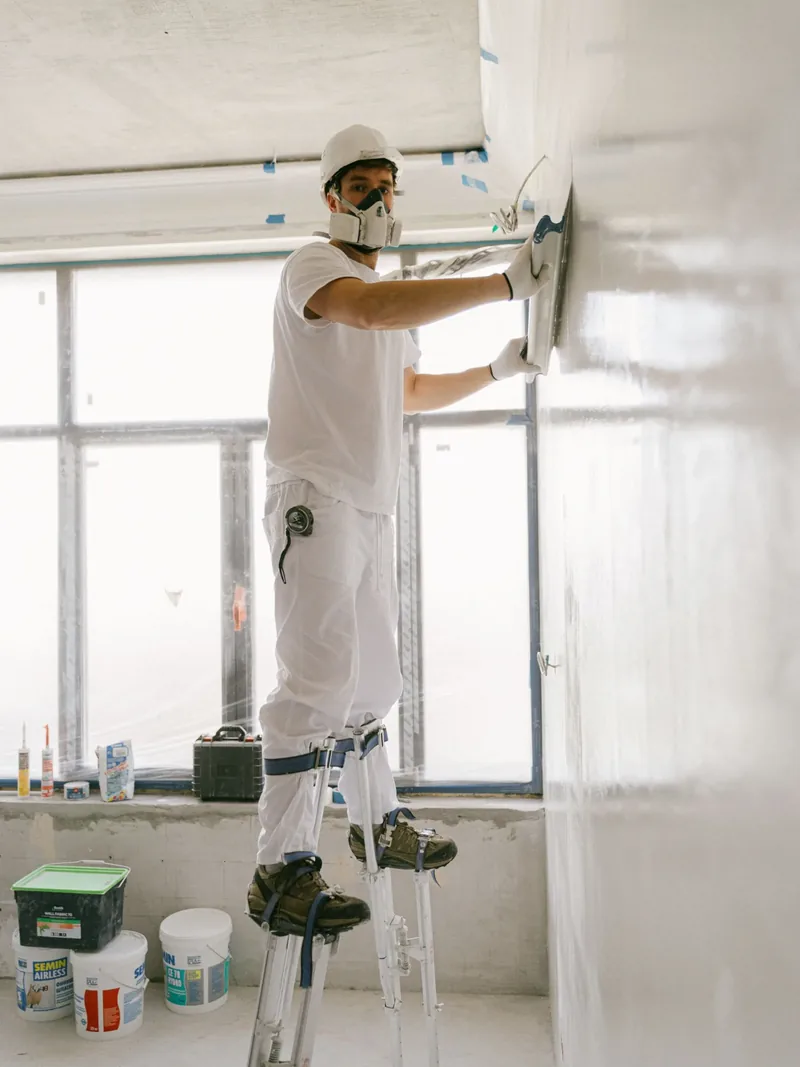
Four other factors change the cost to finish drywall over the same square footage. An uneven surface needs extra coats before it can be brought smooth. High ceilings require staging, the raised platforms a finisher works from, and every trip up and down adds time. Working around trim, doors and windows is slower than finishing open wall because each edge has to be handled by hand. An unconditioned house with no heating or cooling running yet also stretches drying time and spreads the labor across more visits.
Why a Texture Match Can Cost More Than a Plain Wall
A small patch does not mean a small price when the surrounding wall is textured. Matching starts with a sample board made on site before any texture goes onto your wall, and that step is required whether the damaged area is one foot across or ten. The texture matching cost then follows the area we actually texture, not the size of the damage, because the new texture has to be feathered well beyond the repair for the edge to disappear.
Hand-applied patterns cost more per square foot than sprayed textures because every mark is made by hand rather than by a spray gun. Older and heavier patterns also take more time to read from the existing wall and reproduce, which is why a drywall patch cost can exceed what the size of the hole alone suggests. Ceiling work costs more than wall work over the same area.
Two things bring a texture repair price down. When the damage is close to a corner or doorway, the new texture can stop at that natural break instead of being blended across an open wall. When you have already decided to retexture the whole room, we spray or trowel it as one continuous surface, which is often less expensive than trying to match the existing texture across three separate walls.
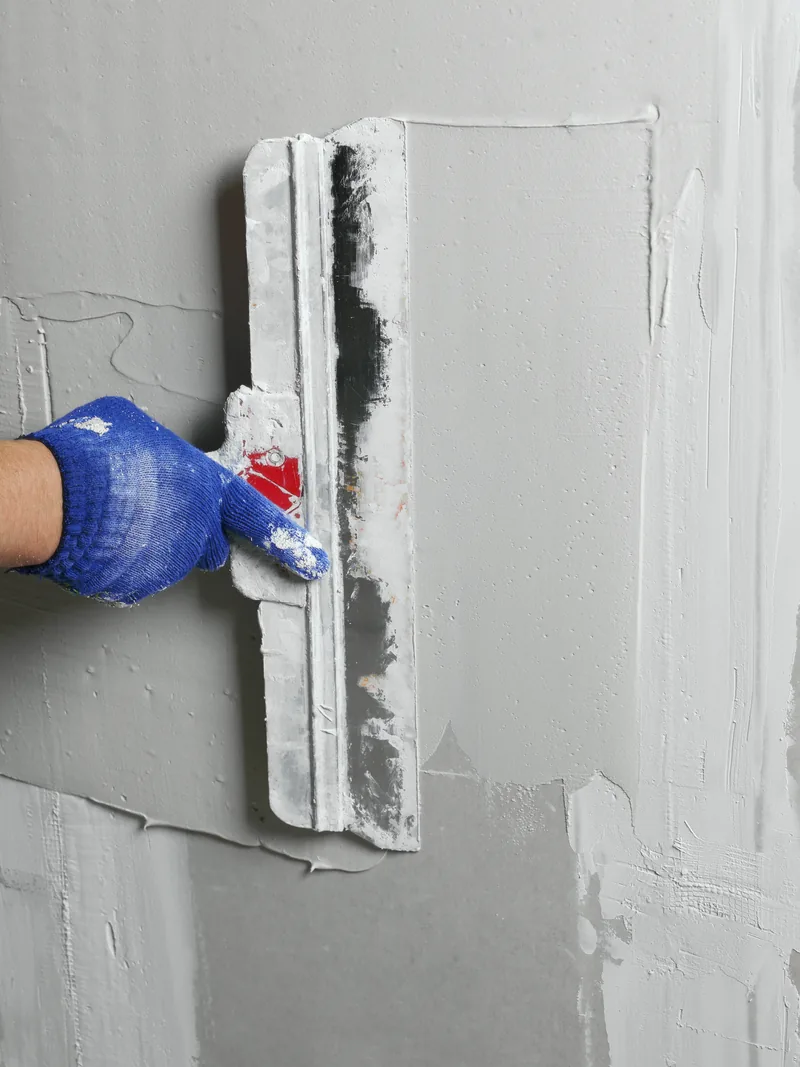
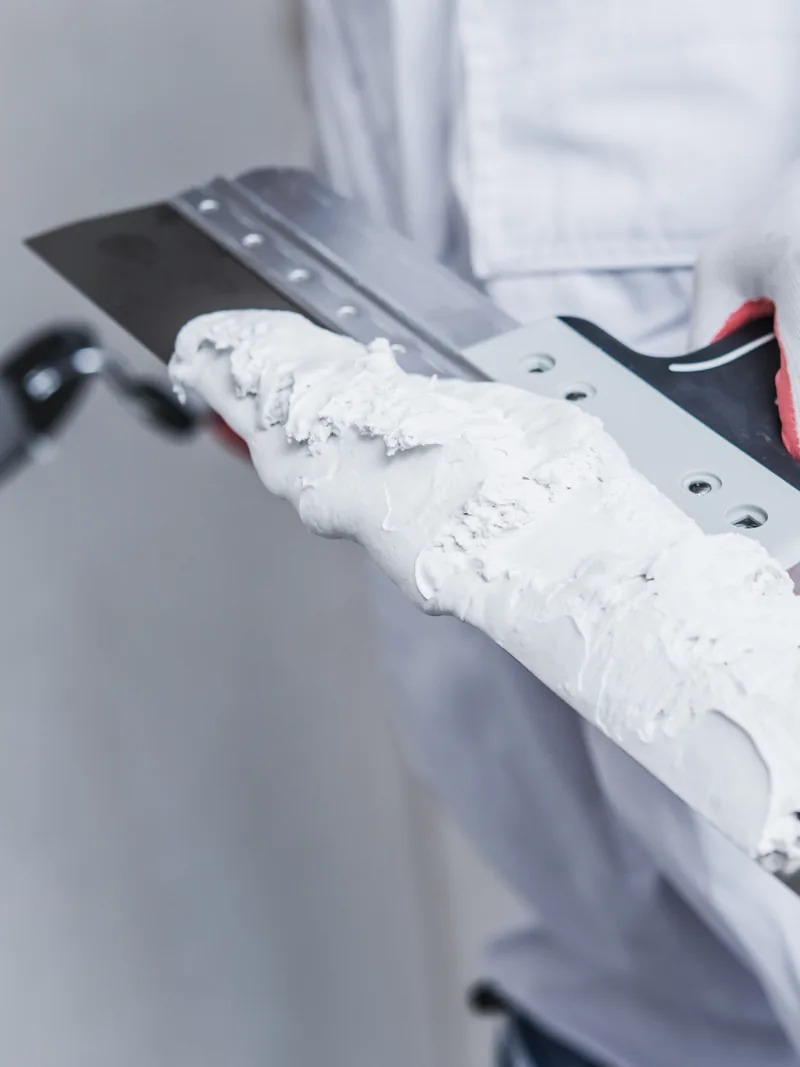
From Taped Board to a Finish That Disappears
The drywall finishing process at Conroe Drywall Co. follows five steps, from your first call through the final walk-through, and each stage includes a clear decision point for you. We lay them out in advance so you know who will be in your house and when.
You choose the finish level and texture with us in writing before any tools come out of the van, giving the texture matching process a clear target you have already approved.
- Tell us what the wall is doing. You call and tell us about the room and the surface.
- We come and look. We inspect the wall under the room's own lighting.
- You get a written scope. The finish level is listed by number.
- Coats, cure and the sample. You approve a sample board before any texture goes on the wall.
- The walk-through. We inspect the finished wall with you and then hand it over.
-
1
Tell Us What the Wall Is Doing
Our office takes your call. On that first call, it helps to tell us which room is involved, what kind of light reaches the wall, whether you are dealing with bare new board or an existing finish, and what will go over the surface afterward, since flat paint and a higher sheen behave differently over the same finish. Photographs are useful to send, but they cannot settle a texture match because a camera flattens the small shadows that distinguish one pattern from another. A drywall finishing quote becomes firm once we have seen the wall in person.
-
2
The On-Site Look and the Light in the Room
We come to you for the free drywall estimate and inspect the wall from where you normally see it, under the lamps and windows already in the room. That is where we identify the existing texture and settle the finish level your room needs, rather than guessing after the compound has already been mixed.
-
3
A Written Scope That Names the Level
Your written estimate lists the finish level by number, such as Level 4 or Level 5, along with the texture family and the area we will texture. A drywall scope of work that says only "finish and texture" leaves room for each side to picture a different result, and that is where most disputes begin. You receive the price and the finish level together in one document.
-
4
Coats, Cure and the Sample
Before the first coat goes on, we cover your floors and furniture. The joint compound is then applied in coats, with each one given the drying or curing time it needs before the next begins. We make a texture sample and get your approval before any texture reaches the wall. Drywall sanding dust is contained throughout the work, and we leave the area broom-clean.
-
5
The Walk-Through, Under Your Own Lights
At the end, we complete the drywall walk through with you, viewing the wall from a normal position under the room's own lighting. We respond promptly to any warranty-related concerns that might arise. We hand the surface over as paint-ready drywall, prepared for priming and painting, which is booked separately. To get started, call us at (346) 706-5743 or use the quote form.
Drywall Finishing Levels in Houses and in Commercial Spaces
A finish level is the agreed standard of smoothness a wall reaches before paint, and how that standard is chosen depends on who is asking for it. In a house, the level is rarely written down in advance, so we choose it with you after seeing the rooms and knowing what paint will go on them. In a leased suite, the level is usually already specified on the drawings, and our job is to build exactly to that requirement. In both cases, the question is the level of finish on the wall, not when we are on site.
In a House, the Light and the Paint Decide
Two things in a room move a residential drywall finish up or down. The first is critical lighting from large windows and wall-mounted fixtures. The second is the paint: the standard is explicit that gloss finishes and dark colors reveal small differences in the surface.
A hallway with flat paint and a light texture is well served by Level 4. A two-story entry with a west-facing window and sheen on the walls is where a Level 5 finish earns its cost, and a drywall finish for gloss paint follows the same logic. You choose the finish level room by room rather than applying one level to the entire house.
In a Leased Space, the Level Is Usually Already Drawn
On a fit-out, the finish schedule that comes with the drawings specifies the commercial drywall finish level for each area, and our job is to build to that requirement and document that we did. The standard also gives us a way to settle the expected result in advance.
A drywall mock-up is a small section of wall finished first and approved as the benchmark for the rest of the work, and it applies to Levels 3, 4 and 5. It is viewed under lighting that matches how the finished space will be lit once occupied. Above a suspended ceiling, where the board is not visible, Level 1 is the correct finish and paying for more is unnecessary. Fire-rated assemblies follow their own specifications.
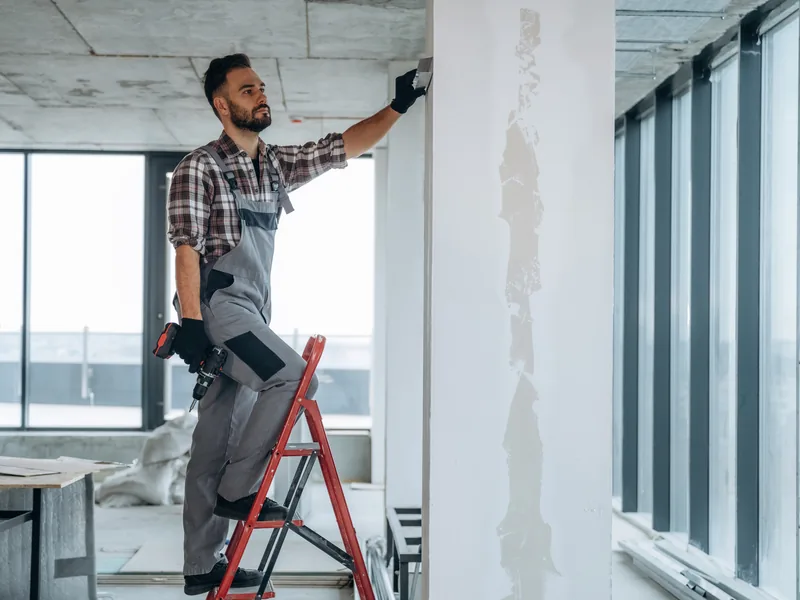
Where Drywall Finishing Stops and Another Trade Starts
Two jobs that come up constantly on a finishing call belong to someone else, and we make that clear before we book the work. A drywall finishing scope covers the joint compound over the board: the coats, the texture and the finish level you agreed to. The work on either side of that belongs to painters and other trades, and knowing where that line falls helps you book the right people the first time. Your estimate states exactly which side of the line your work falls on.
Paint Is the Next Trade, Not This One
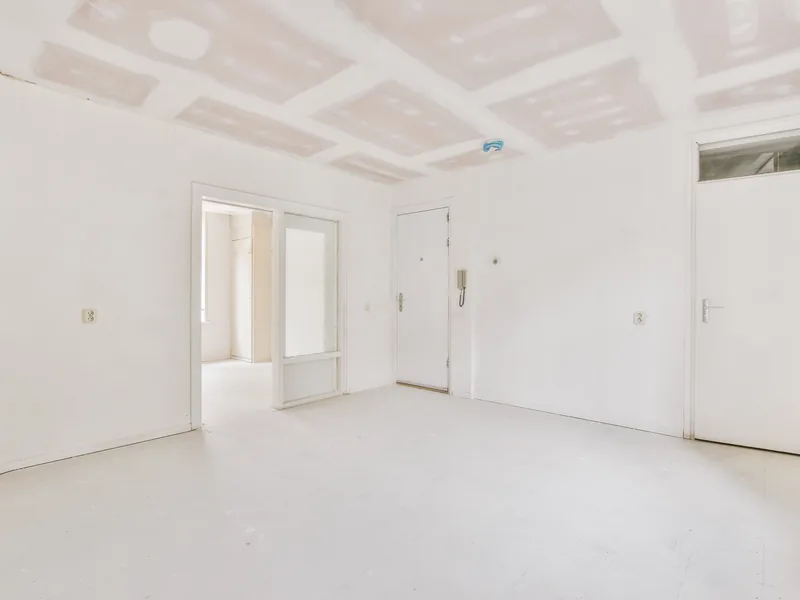
We finish the wall to the level you agreed and hand it over paint-ready, meaning the compound is dry, sanded and ready for primer. Primer is the first coat that seals the surface so the paint above it applies evenly, and the standard recommends it over a prepared surface before decoration and recommends a primer over drywall texture as well. That is where our hand-over ends: the next coat on your wall is the painter's first coat, not our final one. A sprayed texture also has to dry completely before anything goes over it. Priming and painting is booked separately, and paint ready drywall is what we leave behind for that work.
Plaster, Rated Assemblies and the Patch Underneath
Plaster is not gypsum board. It is a wet material troweled onto a backing rather than a panel fastened to studs, so the finish-level ladder does not apply because GA-214 covers gypsum panel products. That is the plaster vs drywall finish distinction: a skim coat is joint compound worked across board, not a plaster finish. A fire rated drywall assembly is different again.
Its requirements come from the tested assembly specified by the builder rather than from a finish level, so fire-rated systems are scoped and quoted as separate work. A drywall patch is separate as well. Cutting out damaged board, adding backing and taping the repair falls under our drywall repair work and is quoted on its own; this service matches the finish that goes over it. One call reaches both.
Drywall Finishing and Texturing Across Conroe and Montgomery County
The humid subtropical air over Montgomery County, along with roughly 51 inches of rain each year, slows the release of moisture from joint compound. That single condition sets the pace of drywall finishing in Conroe homes because a coat that is still holding moisture cannot be sanded or covered. The homes here also pull the work in two different directions.
You may own a subdivision house finished this year or a home with a hand texture troweled on decades ago, and the older surface requires texture matching worked out by hand rather than chosen from a shelf. We finish both, and the wall in front of us determines which approach it needs.
Where Conroe Drywall Co. Finishes and Textures
Conroe Drywall Co. finishes and textures drywall across 21 communities, and your address almost certainly sits in one of the three groups that make up our drywall finishing service area. Our Conroe drywall service areas begin in town:
Conroe Neighborhoods and Communities
- Grand Central Park
- Graystone Hills
- Rivershire
- Stewarts Forest
- Downtown Conroe
- Wedgewood
- West Fork
- Tejas Creek
Surrounding Cities and Communities
- Willis
- Montgomery
- New Caney
- Splendora
- New Waverly
- Cut and Shoot
- Panorama Village
- Grangerland
- Plantersville
Lake Conroe Communities
- Lake Conroe
- Bentwater
- Walden on Lake Conroe
- April Sound
FAQ
Finishing and Texturing Questions
The questions below come up in nearly every drywall finishing FAQ, and the answers are the same ones we give when you call.
What are the 5 levels of drywall finish?
There are six levels, not five. GA-214 numbers them from 0 through 5, starting at zero because the first level describes board that has been hung and fastened with no further finishing. A new house in this area is usually delivered at Level 4, but that is a finish choice made when the house is specified, not a requirement imposed on every project. You can choose a different level for your own work.
Is level 3 drywall finish good enough?
It depends entirely on what is going over it. The standard places Level 3 beneath heavy and medium textures and heavy-duty commercial wallcoverings, while stating that Level 3 is not the right preparation for a smooth wall or light texture because those finishes leave the surface underneath more exposed. Decide first what finish you want on top, and the required level follows from that.
What does drywall finishing include?
Drywall finishing includes taping, the coats applied over the tape, sanding and the texture if you want one, with the wall handed over ready for paint. It does not include the priming and painting itself, which is a separate trade and a separate line in your budget. On a repair, it also excludes the patch underneath, which is quoted separately; finishing begins once that repair is in place.
What is texture matching in drywall repair?
It means reproducing the pattern already on your wall closely enough that the repaired area no longer stands out. The part that catches people off guard is that the target is your wall as it stands today, paint and all, not the surface the builder originally handed over.
How long does texture matching take?
Applying the texture itself is the quick part. The schedule is set by the coats underneath, which have to dry before the next one can be applied. Most repairs take one day, including texture. In humid conditions, or in a house without heating or cooling running, those coats hold moisture longer and the work takes more than one visit.
How to spot a bad drywall job?
Do not judge the finish with your face close to the wall or a work lamp raked across it; step back and view it head-on. Nothing should stand out from that position. The problem we hear about most is different: joints that stay invisible all morning but show as faint bands when low afternoon light comes through a window and travels across the surface.
What kind of wall texture is popular now?
Most new work is specified as smooth or finished with a light orange peel. Knockdown is still common and remains on many existing homes. What the trend question often misses is the cost behind that choice: a smooth wall requires a higher finish level than a textured surface, so choosing it raises that part of your estimate rather than simply changing the appearance.
How much does it cost to finish and texture drywall?
We do not publish a separate rate card for finishing because most of that work comes as part of a repair, and repairs already have a published price range. The finish level you choose is what changes the price, and the jump to Level 5 is larger than any step below it.
Get Your Finish Level Specified
A drywall finishing estimate from Conroe Drywall Co. starts with someone standing in the room, viewing the wall under the lighting it will actually have, and putting the finish level in writing. That written scope turns a vague idea of the finished surface into a price you can plan around. Our on-site estimates are free, and financing is available for larger projects. For a drywall finishing quote you can rely on, call (346) 706-5743 or send us the details through the quote form.